How to Create Instagram-Worthy Seasonal Tablescapes for 50% Less
Ads
Create stunning seasonal tablescapes that look professionally styled at half the cost by combining strategic thrifting, creative repurposing, and smart design principles.
Have you ever scrolled through Instagram and marveled at those flawless table settings, wondering how anyone could afford such elegance? The secret isn’t a massive budget or access to exclusive vendors. It’s knowing where to look, what to prioritize, and how to think like a professional stylist. Creating how to create Instagram-worthy seasonal tablescapes that cost 50% less than professional styling is absolutely within your reach when you understand the foundational strategies that designers use every day. This guide will walk you through every step of the process, from sourcing affordable pieces to arranging them in ways that photograph beautifully and impress your guests.
Understanding the Professional Styling Formula
Professional table designers don’t rely on expensive items alone. They work with a specific formula that balances texture, color, height, and focal points. Understanding this formula allows you to recreate the same visual impact using items from discount stores, thrift shops, and even your own backyard. The key lies in recognizing that professional tablescapes feel curated rather than purchased all at once. They tell a story through layered elements that create depth and interest.
When you examine professionally styled tables, you’ll notice they rarely rely on a single expensive piece. Instead, they combine multiple affordable elements in ways that elevate each individual item. A $5 candle becomes extraordinary when paired with the right greenery and a stylish holder. A simple white plate looks elegant when surrounded by textured napkins and strategic lighting. The professionals understand that the sum is always greater than its parts, and this mindset is your greatest asset when working with a limited budget.
The Five Elements of Impactful Tablescapes
- Texture layering: Combine smooth, rough, matte, and shiny surfaces for visual depth
- Color coordination: Use a cohesive palette with one statement color and supporting neutrals
- Height variation: Create visual interest through candles, florals, and decorative objects at different levels
- Natural elements: Incorporate greenery, flowers, fruits, or branches to add life and freshness
- Lighting ambiance: Use candles and string lights to create warmth and photography-friendly illumination
Professional stylists also understand the importance of negative space. A cluttered table feels chaotic, while a well-spaced arrangement feels sophisticated and intentional. When you’re working with a tighter budget, this principle becomes even more valuable because it allows you to use fewer items while still achieving that polished, expensive-looking result.
Strategic Sourcing: Where Professionals Actually Shop
The truth about professional table styling is that most designers aren’t buying from high-end showrooms. They’re hunting for treasures in unexpected places, and you can do exactly the same thing. The difference between a $500 table setting and a $50 version that looks equally impressive often comes down to knowing where to source each element. This knowledge transforms your approach to decorating entirely, shifting you from a passive consumer to an active curator.
Start with dollar stores and discount home sections. These retailers often carry candles, basic glassware, and simple decorative items that form the foundation of professional tablescapes. The key is selecting items with clean lines and neutral colors that blend well with higher-quality pieces. A $1 glass candle holder from a discount store looks completely different when filled with a pillar candle and surrounded by greenery than it does sitting alone on a shelf.
Top Budget Sourcing Strategies
- Thrift stores and estate sales: Find unique vintage plates, silverware, and decorative objects at a fraction of retail prices
- Online marketplaces: Facebook Marketplace, Craigslist, and local buy-sell groups often feature complete table settings for minimal cost
- Seasonal clearance sales: Buy decorations off-season when they’re 70-90% off and store them for next year
- Craft stores: Use coupons and sales at Michaels, Joann, and Hobby Lobby for base materials you can transform
- Naturals from your yard: Branches, leaves, flowers, and stones provide free, beautiful elements
Estate sales deserve special attention because they often feature high-quality vintage items that professionals would charge significantly more to reproduce. A set of vintage brass candlesticks that cost you $8 at an estate sale would cost $60 or more new. These authentic vintage pieces add character and history to your tablescape in ways that mass-produced items simply cannot match.
Building Your Core Collection Over Time
Professional stylists don’t create their tablescapes from scratch for every event. They build collections of foundational pieces that work together across multiple seasons and occasions. You can adopt this same approach by investing strategically in versatile items that serve multiple purposes. This method not only saves money but also ensures that your tablescapes feel cohesive and well-considered rather than hastily assembled.
Begin with neutral basics that transcend specific seasons. A set of white cotton napkins, for instance, works for every occasion from summer brunches to winter holiday dinners. Similarly, basic white plates provide a clean canvas that allows seasonal accents to shine. Candlesticks in various heights, neutral table runners, and classic glassware all fall into this category of versatile foundations that justify their cost through repeated use.
As you build your collection, focus on quality over quantity. A few well-made pieces will serve you better than dozens of cheap items that fall apart or look tacky up close. Look for solid construction, timeless designs, and materials that photograph well. Your smartphone camera is actually quite revealing—it exposes shiny plastics, flimsy materials, and anything that looks obviously cheap. Investing in items that pass this visual test pays dividends in the long run.
Seasonal Transformations: Making One Base Work Year-Round
The smartest approach to budget tablescapes involves creating flexible arrangements that transform with the seasons using strategic swaps rather than complete overhauls. This concept is revolutionary for your wallet because it means you’re not starting from zero every few months. Instead, you’re building on an existing foundation and simply changing out accent pieces to reflect the current season. A winter tablescape can become a spring wonder with nothing more than swapping evergreen branches for fresh flowers and adding pastel accents.
Consider creating a base arrangement using items that work across seasons: a wooden tray, varying heights of candle holders, a neutral runner, and basic glass containers. These elements stay consistent while you rotate seasonal items like florals, color accents, and decorative objects. This approach reduces both your spending and the time required to set each table, making it practical for busy households while still delivering impressive results.
Seasonal Color Palettes That Coordinate
- Spring: Pastels, soft greens, florals, fresh herbs, light linens
- Summer: Bright primaries, tropical touches, citrus elements, nautical accents
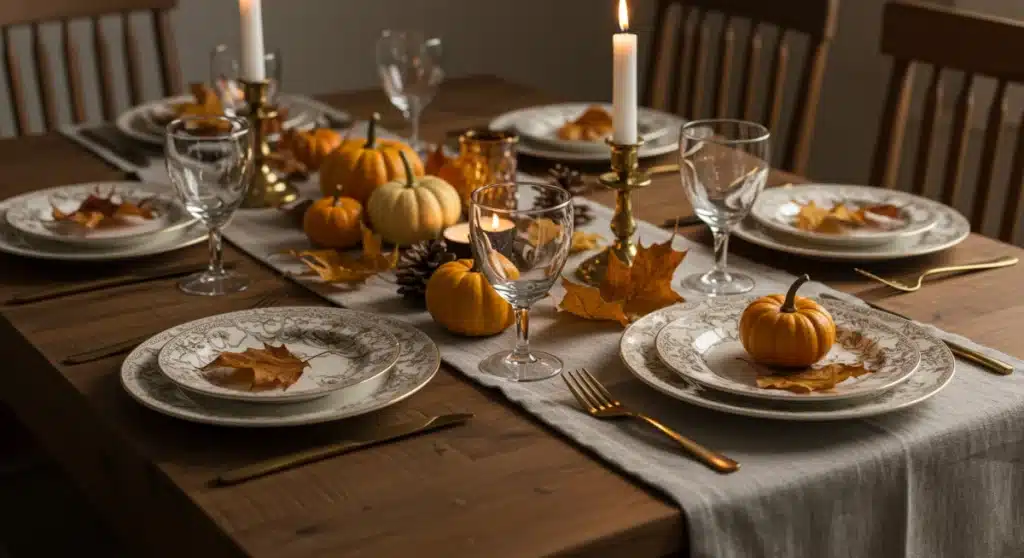
- Fall: Warm oranges, deep reds, browns, harvest elements, rustic textures
- Winter: Silver, gold, deep greens, whites, sparkle, evergreen branches
The key to successful seasonal transformations lies in choosing a base palette that coordinates across seasons. Neutrals like cream, gray, and natural wood provide a foundation that accepts seasonal additions gracefully. When your base elements work together harmoniously, swapping seasonal accents becomes simple and produces consistently beautiful results.
Photography Secrets: Making Your Tablescape Instagram-Ready
Understanding how to photograph your tablescape is just as important as creating it. Even the most beautiful table setting falls flat in poorly lit, badly angled photos. Professional food and table photographers use specific techniques to capture images that stop scrollers in their tracks, and you can apply these same principles with nothing more than your smartphone and some basic knowledge.
Natural light remains your best friend for table photography. Position your table near windows where soft, indirect light streams in during the golden hours of early morning or late afternoon. Harsh midday sun creates unflattering shadows, while evening light adds warmth and intimacy. If you’re photographing at night, use candlelight combined with warm-toned lamps rather than harsh overhead lighting. The soft, flickering glow of candles creates that magical ambiance that makes viewers want to lean in closer.
Angle matters enormously in table photography. Shoot from slightly above eye level to capture the full arrangement while showing depth. This perspective allows viewers to see the layered elements and appreciate the thought you put into each detail. Alternatively, a straight-on shot at table level creates an immersive experience that makes viewers feel like they’re sitting at the table themselves. Experiment with both angles to see which tells your table’s story more effectively.
DIY Elements That Impress Without Breaking the Budget
Some of the most impressive tablescape elements are actually simple DIY projects that cost a fraction of their retail equivalents. Creating custom elements yourself adds a personal touch that guests and followers genuinely appreciate, and it demonstrates creativity and effort in ways that store-bought items simply cannot match. These projects range from simple arrangements to more involved crafts, but all deliver significant visual impact for minimal financial investment.
Fabric napkins offer an excellent starting point for budget-conscious DIYers. Purchasing fabric on sale and hemming simple napkins costs far less than buying cloth napkins retail, and allows you to choose custom colors that perfectly match your seasonal palette. Similarly, making your own cloth runners from remnant fabric provides customization options that simply aren’t available when shopping pre-made. These textile projects require minimal sewing skills but deliver substantial visual rewards.
Simple DIY Projects for Tablescape Impact
- Homemade candle arrangements: Group varying heights and sizes of candles in decorative holders or wooden trays
- Fresh greenery garlands: Use floral wire to attach eucalyptus, pine, or other greenery into flowing arrangements
- Painted accent pieces: Transform plain glass or ceramic items with spray paint in metallic or seasonal colors
- Seasonal centerpieces: Arrange collected branches, fruits, or flowers in vintage containers
- Custom napkin folds: Learn several elegant folding techniques that elevate simple napkins into sculptural elements
Don’t underestimate the power of simple presentation. The way you arrange everyday items dramatically affects their visual impact. A casual pile of bread in a woven basket looks inviting and intentional. Fresh fruit displayed in a beautiful bowl feels curated and thoughtful. These small details matter enormously and require nothing more than attention and intention rather than significant spending.
Common Tablescape Mistakes That Cost You Money
Even well-intentioned decorators make mistakes that either waste money or undermine their table’s visual impact. Recognizing these pitfalls helps you avoid them and allocate your resources more effectively. Many budget-conscious decorators inadvertently sabotage their own efforts by purchasing too many items, choosing quantity over quality, or failing to plan cohesive themes.
The most common mistake involves buying too many seasonal items without considering how they’ll work together. A cluttered table with too many competing elements looks chaotic rather than curated. Professional stylists actually use fewer items but arrange them more thoughtfully. This principle—fewer pieces, better arranged—actually saves money while improving results. When you’re tempted to add one more decorative element, pause and ask whether the table really needs it or whether it would simply create visual noise.
Another costly error involves purchasing trendy items that quickly look dated. Tablescapes built around classic elements age gracefully and can be updated seasonally with small accent changes. In contrast, heavily trend-dependent designs require complete replacement when tastes shift. Invest in timeless foundations and spend your seasonal budget on easily replaceable accents. This approach protects your financial investment while keeping your tables looking current.
| Key Point | Brief Description |
|---|---|
| Strategic Sourcing | Shop estate sales, thrift stores, and seasonal clearance for unique pieces at fraction of retail costs |
| Build Core Collections | Invest in versatile neutral basics that work across seasons rather than buying disposable decorations |
| Photography Matters | Use natural light, thoughtful angles, and proper lighting to capture Instagram-worthy images of your tables |
| DIY Elements | Create custom napkins, centerpieces, and decorations to add personal touches without overspending |
Frequently Asked Questions
Lighting and texture matter most for creating professional appeal. Candles, whether electric or real, instantly elevate any table setting by adding warmth and ambiance. Texture comes from layering different materials—mix smooth plates with textured napkins, shiny glass with matte ceramics, and natural elements like greenery with polished metals. These combinations create visual interest even with budget-friendly items.
Focus on intentionality and restraint rather than quantity. Choose a cohesive color palette and stick to it. Use odd numbers when grouping items—three, five, or seven elements create more visual appeal than even groupings. Leave adequate negative space between items to create a sophisticated, uncluttered look. Invest in a few quality pieces like candlesticks or a wooden tray that serve as foundations for multiple seasonal arrangements.
Estate sales, thrift stores, and dollar stores offer excellent finds when you know what to look for. Focus on natural materials like wood, glass, metal, and ceramic rather than plastic. Online marketplaces like Facebook Marketplace often feature complete table settings or vintage collections. Craft stores provide base materials for DIY projects. The key is shopping year-round and building your collection gradually rather than purchasing everything for a single event.
Use natural light from windows during golden hour for the most flattering images. Position your phone at a 45-degree angle or slightly above the table to capture depth and dimension. Turn off all artificial lights to avoid color casts. Edit minimally—slight adjustments to brightness and contrast help, but over-editing looks unnatural. The best Instagram tablescape photos look warm, inviting, and achievable.
Build a collection of neutral base pieces—candle holders, wooden trays, basic plates, and neutral linens—that work year-round. Store seasonal items separately in labeled bins so you can swap them easily. Create a simple system: keep the base the same and change only accent colors, florals, and decorative objects. This approach saves money and storage space while making seasonal transitions quick and stress-free.
Conclusion
Creating Instagram-worthy seasonal tablescapes at half the cost of professional styling is entirely achievable when you understand the underlying principles that designers use. Focus on strategic sourcing over impulse buying, build versatile collections over time, and prioritize thoughtful arrangement over quantity. Remember that texture, lighting, and intentionality matter far more than price tags. Your guests won’t see the receipts—they’ll simply notice a beautiful table that looks like it required significant investment. By applying these strategies consistently, you’ll develop a signature style that transforms every meal into a special occasion without breaking the bank. Start small, build gradually, and most importantly, enjoy the creative process of making your table uniquely yours.