How to Choose Window Treatments Based on 2026 Energy Efficiency Ratings for Each US Climate Zone
Ads
Window treatments rated for 2026 energy efficiency standards can reduce heating and cooling costs by 25-33% depending on your US climate zone, making informed selection essential for homeowners.
Choosing the right window treatments can feel overwhelming, especially when you consider that windows account for up to 30% of your home’s energy loss. The good news is that 2026 brings updated energy efficiency ratings that make it easier than ever to find treatments specifically designed for your regional climate. Whether you live in the scorching heat of Arizona or the freezing winters of Minnesota, there’s a perfect window solution waiting for you. Let’s explore how to navigate these choices and make a decision that keeps your home comfortable while trimming those utility bills.
Understanding US Climate Zones and Window Energy Performance
The US Department of Energy divides the country into eight distinct climate zones, each presenting unique challenges for home energy management. These zones range from Zone 1, which covers southern Florida and Hawaii with hot, humid summers, to Zone 7, encompassing northern Montana and Minnesota with extremely cold winters. Understanding which zone you live in is the first critical step toward selecting appropriate window treatments, as the same product that works beautifully in one region may underperform dramatically in another.
Energy efficiency ratings for window treatments now include several key metrics that help consumers make informed decisions. The Solar Heat Gain Coefficient measures how much solar radiation enters through the treatment, while the U-factor indicates how well the product prevents heat transfer. For warm climates, you’ll want treatments with low solar heat gain coefficients to block unwanted heat. In cold regions, higher solar heat gain values help capture warmth from sunlight while good insulation prevents heat loss.
Key Climate Zone Categories
- Hot-Humid (Zones 1-3): Florida, Texas, Arizona, Southern California
- Cold (Zones 5-7): Midwest, Northeast, Northern Mountain States
- Mixed-Humid (Zone 4): Central states from coast to coast
- Hot-Dry (Zone 2): Desert Southwest regions
2026 energy ratings also incorporate a new thermal bridging assessment that measures how effectively treatments prevent heat transfer around their edges and through their materials. This comprehensive approach gives homeowners a more accurate picture of real-world performance, moving beyond simple R-value calculations to reflect actual installation conditions.
Hot and Humid Climate Solutions
If you live in a hot-humid climate zone, your primary concern is keeping heat out while managing moisture. Window treatments in these regions face constant exposure to intense sunlight and high humidity levels, which means durability matters as much as thermal performance. The best choices combine reflective outer surfaces with insulating cores that prevent heat from radiating into your living spaces.
Cellular shades, also known as honeycomb shades, have emerged as the top performers in humid climates. Their unique structure creates pockets of air that provide excellent insulation while their smooth surfaces resist mold and mildew growth. Look for cellular shades with silver or white backing that reflects solar radiation before it converts to heat. These treatments can reduce heat gain by up to 60% compared to untreated windows, according to the 2026 energy performance data.
Best Treatment Types for Hot Climates
- Cellular shades with reflective backing
- Solar shades with UV-resistant materials
- Plantation shutters with adjustable louvers
- Reflective film combined with drapery
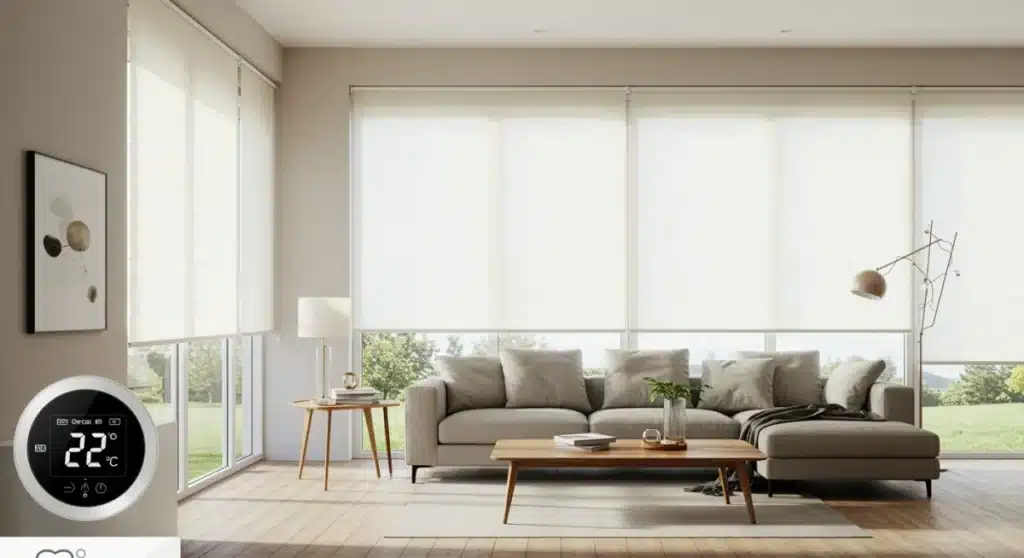
Roller shades made from synthetic materials offer another excellent option for hot climates. Modern solar screen fabrics block 65-90% of UV rays while still allowing natural light to filter through. The key is selecting a weave density appropriate for your specific orientation—south-facing windows typically need heavier solar ratings than north-facing ones. Many homeowners in Zone 1 and Zone 2 report energy savings of 25-35% after upgrading to these specialized treatments.
Cold Climate Window Treatment Strategies
Residents of cold climate zones face the opposite challenge: retaining heat inside the home while allowing beneficial solar gain to warm living spaces during limited sunny hours. Window treatments here must provide excellent insulation against bitter outdoor temperatures while optimizing the sun’s natural heating capabilities. The best choices create an insulating air barrier between the window glass and the room interior.
Double-cell and triple-cell cellular shades offer the highest insulation values for cold climates, with some premium products achieving R-values exceeding 10. These treatments trap air in multiple layers, dramatically reducing heat transfer through windows. The 2026 ratings show that upgrading from standard curtains to triple-cell shades can reduce heat loss through windows by up to 45%, translating to significant savings during long heating seasons.
Optimal Features for Cold Weather Performance
- Triple-cell honeycomb construction
- Side tracks or channels to prevent air leakage
- Light-colored backing to reflect interior heat back
- Full-window coverage extending past frame edges
Window quilts and thermal draperies remain popular in cold regions because they can be drawn closed at night for maximum insulation and opened during sunny days to capture heat. The key is choosing treatments with proper thermal lining and ensuring they extend several inches beyond the window frame on all sides. Some homeowners opt for layered solutions, combining cellular shades for daytime insulation with heavy draperies for overnight protection.
Mixed and Transitional Climate Approaches
Living in a mixed climate zone presents a unique challenge: your window treatments must perform well in both heating and cooling seasons, often within the same week. Zone 4 and parts of Zones 3 and 5 experience hot summers and cold winters, requiring versatile solutions that adapt to changing needs. The 2026 energy ratings specifically address this with seasonal performance categories.
Plantation shutters have become increasingly popular in transitional climates because their adjustable louvers allow precise control over light and heat gain. During summer, you can angle them to block direct sunlight while still allowing air circulation. In winter, opening them fully welcomes solar heat during the day and closing them provides an insulating layer at night. This versatility makes them ideal for regions where temperature swings dramatically between seasons.
Versatile Treatment Options
- Adjustable plantation shutters
- Dual-function cellular shades
- Layered treatments with sheers and drapes
- Motorized systems for automated seasonal adjustments
Layered treatments offer another excellent approach for mixed climates. Combining sheers with heavier draperies allows you to create multiple configurations: sheers alone for soft light, draperies closed for insulation, or both open for maximum solar gain. The 2026 ratings indicate that properly layered systems can achieve performance ratings suitable for both extreme heat and extreme cold applications, making them ideal for uncertain climates.
Understanding 2026 Energy Efficiency Ratings
The 2026 energy efficiency standards for window treatments represent the most comprehensive rating system yet developed. Rather than relying on a single metric, the new system evaluates products across multiple performance categories, giving consumers a complete picture of how treatments will perform in real-world conditions. This approach addresses the common complaint that previous ratings didn’t accurately predict actual energy savings.
The updated labeling system now includes summer and winter performance indices, allowing you to see how a product performs in both heating and cooling scenarios. Products receive ratings from A+++ to G, similar to European energy labels, making comparison shopping straightforward. Additionally, the new system requires third-party testing verification, ensuring that manufacturer claims accurately reflect real performance.
Reading the New Energy Labels
- Summer Efficiency Index: Measures heat blocking ability
- Winter Efficiency Index: Measures heat retention capability
- Solar Transmittance: Percentage of sunlight allowed through
- Air Leakage Rating: Measured in cubic feet per minute per square foot
When comparing products, focus on the efficiency indices relevant to your climate zone. If you live in a hot climate, pay more attention to the summer rating. Cold climate residents should prioritize winter performance. The new labels also include a combined annual performance estimate, which factors in your local climate data to project yearly savings—a feature that makes choosing the right product much easier.
Material Selection for Maximum Efficiency
The material composition of your window treatments significantly impacts their energy performance. Different materials offer varying combinations of insulation value, durability, and aesthetic appeal. Understanding these differences helps you select treatments that not only perform well but also complement your home’s design.
Synthetic materials like polyester and vinyl generally offer better moisture resistance and UV stability than natural fibers, making them ideal for hot and humid climates. These materials won’t warp, fade, or develop mold when properly maintained. Modern synthetics also come in various textures and colors that convincingly mimic natural materials, allowing you to achieve the look of wood or fabric without the maintenance concerns.
Material Performance Comparison
- Polyester cellular shades: Excellent insulation, moisture resistant
- Aluminum blinds: Good heat reflection, lightweight durability
- Faux wood shutters: Moisture-proof, wood-like appearance
- Woven woods: Natural insulation, moderate heat control
Natural materials like cotton, linen, and bamboo offer aesthetic benefits but generally provide less insulation than synthetic alternatives. However, when combined with proper backing or liners, natural woven treatments can achieve competitive energy performance. The 2026 ratings show that the difference between high-quality natural and synthetic treatments often comes down to installation quality and proper sizing rather than material choice alone.
Installation Best Practices
Even the most efficient window treatments won’t perform optimally if improperly installed. The gap around window treatments is where most energy loss occurs, making proper fit critical to achieving rated performance. Professional installation often pays for itself through improved efficiency, though many homeowners successfully install treatments themselves with careful attention to detail.
Inside-mounted treatments should fit snugly within the window frame with minimal gaps. Measure carefully at multiple points—windows are rarely perfectly square—and choose treatments that match your measurements precisely. Outside-mounted treatments should extend several inches beyond the frame on all sides to prevent light gaps and air infiltration. The 2026 performance data consistently shows that properly fitted outside-mounted treatments outperform inside mounts by 15-20% in insulation tests.
Installation Essentials
- Measure windows at top, middle, and bottom width
- Account for window operating mechanisms
- Seal gaps with foam weatherstripping
- Add side channels for cellular shades in extreme climates
Adding weatherstripping around treatment mounting surfaces eliminates drafts that compromise efficiency. For cellular shades in particularly extreme climates, consider upgrading to systems with side tracks that create a complete seal when the shade is lowered. While these upgrades increase initial costs, the energy savings often justify the investment within five to seven years.
| Climate Zone | Recommended Treatment |
|---|---|
| Hot-Humid (Zones 1-3) | Cellular shades with reflective backing or solar screens |
| Cold (Zones 5-7) | Triple-cell shades with side tracks or thermal draperies |
| Mixed (Zone 4) | Plantation shutters or layered treatments for versatility |
| All Zones | Proper installation with weatherstripping for maximum efficiency |
Frequently Asked Questions
Most homeowners report savings between 15-35% on their annual energy bills after installing appropriate window treatments. The exact savings depend on your climate zone, existing window quality, and the efficiency rating of your new treatments. In extreme climates, the savings can exceed 40% when combining high-efficiency treatments with proper installation.
Cellular shades consistently rank among the most efficient window treatments available. Their honeycomb construction provides superior insulation while their compact design fits various window styles. The 2026 energy ratings confirm that quality cellular shades outperform most alternatives in both heat blocking and heat retention, making them worth the investment for most climate zones.
Many energy-efficient window treatments can be successfully installed by homeowners with basic DIY skills. However, complex systems like motorized shades or those requiring side tracks benefit from professional installation to ensure proper sealing and operation. The most critical factor is accurate measurement and proper fit regardless of who performs the installation.
Inside-mounted treatments install within the window frame for a clean, built-in look but may allow more light gaps. Outside-mounted treatments install above and around the window frame, providing better light blockage and insulation coverage. For maximum energy efficiency, outside mounting typically performs better because it creates a more complete seal against the wall.
Quality window treatments typically last 10-15 years with proper care. However, technology continues improving, and treatments over five years old may lack current efficiency features. Consider replacement if you notice wear, reduced operation, or if your energy bills have increased despite other efficiency improvements in your home.
Conclusion
Selecting the right window treatments based on 2026 energy efficiency ratings for your specific climate zone is one of the most impactful upgrades you can make to your home. The new rating system makes comparison shopping straightforward while ensuring you get real performance data. Whether you choose cellular shades for their superior insulation, plantation shutters for their versatility, or layered treatments for maximum control, investing in climate-appropriate window treatments pays dividends in comfort and savings for years to come. Take time to assess your climate zone, understand the new ratings, and choose treatments that match your specific needs—you’ll enjoy a more comfortable home and lower energy bills as a result.