
Ads
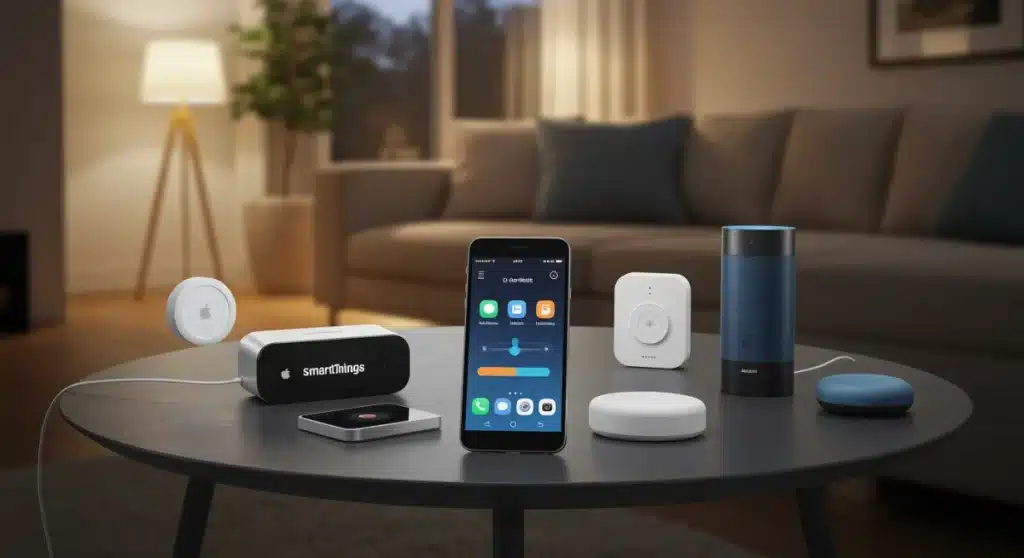
The leading smart home platforms in 2026—Samsung SmartThings, Apple HomeKit, and Amazon Alexa—each offer distinct approaches to home automation, with differences in device compatibility, automation complexity, and daily time savings that directly impact user experience.
Ads
Choosing the right smart home hub can transform how you interact with your living space. The smart home hub comparison landscape has evolved significantly in 2026, with each platform introducing new features designed to simplify daily routines. Whether you’re automating lighting, security, climate control, or entertainment, the platform you select will determine how much time you actually save versus how much you spend troubleshooting connectivity issues. This guide examines the strengths and limitations of each major ecosystem to help you make an informed decision that aligns with your lifestyle and technical comfort level.
Understanding Smart Home Hub Fundamentals
A smart home hub serves as the central brain that connects and coordinates all your compatible devices, from lights and locks to thermostats and sensors. Without a unified platform, managing multiple devices becomes fragmented and time-consuming, defeating the purpose of home automation altogether.
What Makes a Hub Worth Your Investment
The best smart home hubs share several characteristics that determine their long-term value. Device compatibility stands as the most critical factor, as a hub that supports fewer devices limits your options for expanding your setup. Automation capabilities determine how much hands-off control you achieve daily. User interface quality affects how quickly you can set up routines and troubleshoot problems when they arise.
Ads
- Protocol support (Matter, Zigbee, Z-Wave, Thread) ensures broad device compatibility
- Local processing reduces latency and maintains functionality during internet outages
- Voice assistant integration provides hands-free control throughout your home
- Energy monitoring features help optimize consumption and reduce utility costs
The ideal hub should feel invisible in daily use—handling tasks automatically without requiring constant attention or manual intervention. When evaluating the three major platforms, consider not just what they do today but how they will serve your needs as smart home technology continues advancing throughout 2026 and beyond.
Samsung SmartThings has positioned itself as the most versatile option for users who want maximum flexibility in device selection. The platform supports thousands of devices across virtually every major brand, making it particularly attractive for those who have already invested in mixed-device ecosystems or prefer not to be locked into a single manufacturer’s products.
Samsung SmartThings: The Open Ecosystem Approach
Samsung’s commitment to an open ecosystem philosophy makes SmartThings the most inclusive platform for device diversity. This approach appeals particularly to tech enthusiasts who enjoy mixing and matching devices from different manufacturers without worrying about compatibility constraints.
Device Compatibility and Integration
SmartThings supports an impressive range of protocols including Matter, Zigbee, Z-Wave, and Thread, creating a truly universal platform. This broad compatibility means you can start with affordable sensors and gradually upgrade to premium devices without更换 platforms. The extensive third-party integrations span lighting, security, climate, entertainment, and appliance categories.
- Works with over 5,000 compatible devices from hundreds of manufacturers
- Seamless integration with Samsung appliances and TVs
- Strong support for DIY security systems and sensors
- Routine automation handles complex multi-device scenarios
The platform’s automation engine allows sophisticated routines that trigger based on time, location, device status, or sensor readings. You can create scenarios like “Good Morning” that gradually lights bedrooms, starts the coffee maker, and adjusts the thermostat—all triggered by a single action or scheduled time.
Time-Saving Potential
The breadth of device support means SmartThings can automate more of your home than competitors, potentially saving significant time on daily tasks. However, this flexibility comes with a steeper learning curve. Setting up complex automations requires more initial configuration time compared to more streamlined alternatives.
The mobile app has improved substantially in recent updates, offering intuitive controls and helpful automation suggestions based on your usage patterns. The new AI-powered routine builder can recommend automations you might not have considered, accelerating the setup process for new users.
Apple HomeKit: Seamless Integration Within the Apple Ecosystem
Apple HomeKit targets users who already live within the Apple ecosystem and prioritize simplicity over extensive device options. The platform leverages the power and security of Apple devices to create a premium smart home experience that feels polished and reliable.
Apple Ecosystem Benefits
For households invested in iPhones, iPads, Apple Watches, and Macs, HomeKit offers unmatched integration. Control Center provides instant access to frequently used devices, while Siri voice commands work consistently across all Apple devices. The Home app presents a clean, intuitive interface that makes managing scenes and automations straightforward.
- Tight integration with Apple TV and HomePod as hub replacements
- End-to-end encryption ensures privacy across all connected devices
- Thread protocol support provides fast, reliable device communication
- Apple Watch control offers convenient wrist-based access
The platform’s focus on quality over quantity means device selection is more curated, but every supported device meets Apple’s standards for security and performance. This approach reduces the likelihood of compatibility issues or security vulnerabilities that can plague more open platforms.
Automation and Siri Intelligence
HomeKit’s automation capabilities have expanded significantly, now supporting sophisticated triggers based on occupancy, time, and sensor readings. The platform handles most automation locally when possible, ensuring quick response times even when internet connectivity is disrupted.
Siri has become notably more capable in 2026, understanding context better and handling multi-step requests more naturally. You can ask Siri to “turn on the evening lights and set the thermostat to 72” and expect accurate execution without needing to phrase commands in specific ways.
Amazon Alexa: Voice-First Convenience and Skill Ecosystem
Amazon Alexa dominates the voice assistant market and offers the most extensive third-party skill ecosystem. For users who prefer voice-first interaction with their smart home, Alexa provides the most natural and capable voice control experience available today.
The Alexa Advantage
Alexa excels in voice interaction quality and the breadth of compatible devices. The platform supports more smart home devices than any competitor, and new integrations launch regularly as manufacturers seek access to Alexa’s massive user base. The Echo ecosystem provides affordable hub options with built-in Zigbee radios in select devices.
- Superior voice recognition and natural language processing
- Largest device compatibility database in the market
- Routine features support complex multi-step automations
- Affordable Echo devices serve as capable hub alternatives
The Alexa app has matured considerably, offering clear organization and straightforward routine creation. New users often find Alexa easier to get started with compared to SmartThings, thanks to guided setup processes and helpful prompts throughout the configuration experience.
Time Efficiency with Alexa
Alexa truly shines in scenarios where voice control saves time—particularly when your hands are full or you’re moving between rooms. The ability to control devices through voice commands without reaching for a phone represents meaningful convenience in daily life. The platform’s “Hunches” feature proactively suggests automations based on your habits, reducing the manual setup burden.
However, Alexa’s cloud-dependent architecture means some automations may experience delays or fail entirely during internet outages. This reliance on cloud processing can impact the reliability of time-critical automation like security routines.
Direct Feature Comparison: Which Platform Leads
When comparing these platforms side by side, each demonstrates clear strengths that appeal to different user priorities. Understanding these distinctions helps narrow your choice based on what matters most for your specific situation.
Setup Complexity and Learning Curve
SmartThings requires the most upfront investment in learning and configuration, but rewards this effort with unmatched flexibility. HomeKit offers the smoothest experience for Apple users but can feel limiting for those preferring broader device options. Alexa strikes a balance, providing accessible setup while maintaining depth for advanced users.
The time you spend initially configuring your smart home directly impacts the automation quality you’ll enjoy daily. Users who invest thoughtful configuration time with SmartThings often achieve more sophisticated automation than possible on other platforms, but this benefit only materializes after the learning curve is conquered.
Reliability and Response Speed
Local processing capabilities vary significantly between platforms, affecting both reliability and response speed. HomeKit’s integration with Apple TV and HomePod enables robust local control for supported devices, resulting in near-instantaneous response times. SmartThings has improved local processing but still relies heavily on cloud connectivity for many automations. Alexa’s cloud-first architecture means some commands experience perceptible delays, particularly for complex routines.
For security-critical applications like door locks and sensors, local processing capability represents an important consideration that can affect which platform best serves your needs.
Making Your Final Decision: Practical Considerations
Selecting the right smart home hub ultimately depends on your existing technology investments, technical comfort level, and specific automation goals. Rather than pursuing the “best” platform objectively, focus on which option best matches your circumstances.
Key Decision Factors
Consider your current device ecosystem first. If you already own multiple Samsung appliances or prefer shopping for devices based on features rather than compatibility, SmartThings offers the flexibility to accommodate virtually any choice. Apple households will find HomeKit provides the most cohesive experience, particularly if security and privacy rank high among priorities. Users who prioritize voice control and want the broadest device selection at various price points will appreciate Alexa’s strengths.
Think about your tolerance for configuration complexity. SmartThings demands the most initial setup time but delivers corresponding flexibility. HomeKit and Alexa offer quicker paths to basic functionality but may require workarounds for advanced scenarios.
- Existing device brands and future purchasing preferences
- Technical comfort level and time available for setup
- Primary use cases (security, convenience, energy savings)
- Voice control preference versus app-based management
- Privacy priorities and local processing requirements
The good news is that all three platforms have matured substantially in 2026, meaning any choice will provide a functional smart home experience. The differences emerge in how smoothly your specific use cases integrate and how much ongoing maintenance your setup requires.
Conclusion
The smart home hub comparison reveals that no single platform dominates across all categories. Samsung SmartThings offers maximum flexibility and device compatibility for users willing to invest in learning the platform. Apple HomeKit delivers the most polished experience for households already committed to Apple devices. Amazon Alexa provides the best voice-first experience with the broadest device support at various price points.
For most users seeking time savings through automation, the decision often comes down to ecosystem alignment. Choose the platform that matches your existing technology investments, and you’ll spend less time managing incompatibilities and more time enjoying the convenience that smart home automation provides. The time you save daily through well-configured automations will quickly justify whichever platform you select.
| Platform | Best For |
|---|---|
| Samsung SmartThings | Maximum device compatibility and automation flexibility for tech enthusiasts |
| Apple HomeKit | Apple ecosystem users prioritizing security, privacy, and seamless integration |
| Amazon Alexa | Voice-first control with widest device support and affordable hub options |
| Time Savings Winner | Depends on user needs: Alexa for voice convenience, HomeKit for Apple users, SmartThings for comprehensive automation |
Frequently Asked Questions
Amazon Alexa currently offers the broadest device compatibility, supporting thousands of smart home devices from numerous manufacturers. Samsung SmartThings follows closely with strong support for Zigbee, Z-Wave, and Matter devices, making it ideal for users who want to mix devices from different brands. Apple HomeKit has more limited device selection but ensures all compatible devices meet high security and performance standards.
Yes, you can combine multiple platforms in your home, though this approach adds complexity. Some devices support multiple ecosystems, allowing you to use a single device with different hubs. However, managing multiple platforms requires more effort and may create confusion. Most users benefit from selecting one primary platform and expanding their device selection within that ecosystem.
Amazon Alexa and Apple HomeKit generally offer easier initial setup experiences compared to Samsung SmartThings. Alexa provides guided setup with helpful prompts, while HomeKit integrates seamlessly with existing Apple devices. SmartThings requires more configuration time but offers greater flexibility for advanced users willing to invest in learning the platform’s capabilities.
Local processing capabilities vary by platform and device. Apple HomeKit with Apple TV or HomePod provides strong local control for many devices. Samsung SmartThings has improved local processing but still relies on cloud for many automations. Amazon Alexa is most dependent on cloud connectivity, meaning many features may not work during internet outages unless you have specific offline-capable devices.
Time savings depend on your specific use patterns and existing ecosystem. Alexa excels for voice-controlled convenience during daily tasks. Apple HomeKit provides the smoothest experience for Apple users with minimal setup required. SmartThings offers the most comprehensive automation capabilities for users who invest time in configuration, potentially saving more time for complex household management scenarios.
Conclusion
The 2026 smart home hub comparison demonstrates that Samsung SmartThings, Apple HomeKit, and Amazon Alexa each serve distinct user needs effectively. Your ideal choice depends on existing technology investments, preferred interaction methods, and willingness to configure complex automations. All three platforms have matured into reliable solutions that can meaningfully simplify daily life through thoughtful automation. Select the platform that aligns with your ecosystem, and you’ll enjoy the time-saving benefits that modern smart home technology provides.
