Smart Home Compatibility Checker: 15 Devices That Work Together After the 2026 Matter Update
Ads
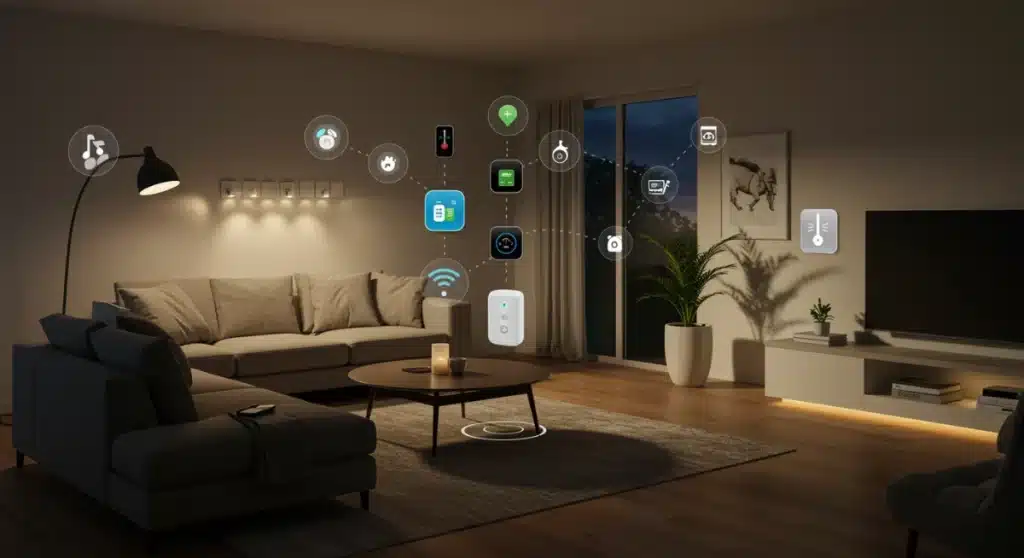
The 2026 Matter protocol update unifies 15 smart home device categories, enabling seamless cross-brand interoperability that eliminates ecosystem lock-in and simplifies smart home setup for US homeowners.
The Smart Home Compatibility Checker has become an essential tool for anyone building a modern connected home. With the 2026 Matter update now live across the United States, the promise of a truly unified smart home ecosystem has arrived. This comprehensive guide explores 15 device categories that now work together effortlessly, regardless of the manufacturer. Whether you’re starting fresh or expanding an existing setup, understanding these compatibility improvements will save you time, money, and frustration.
Understanding the Matter 2026 Protocol Update
The Matter protocol represents the most significant advancement in smart home technology since WiFi became ubiquitous. Developed by the Connectivity Standards Alliance, Matter creates a universal language that allows devices from different manufacturers to communicate seamlessly. The 2026 update builds on earlier versions by adding support for additional device categories, improving energy management features, and enhancing security protocols that protect your home network.
This update addresses the most common complaint smart home users have expressed for years: the frustration of being locked into a single ecosystem. Previously, a user who purchased Philips Hue lights faced limitations when trying to integrate them with Google Home or Apple HomeKit in certain configurations. With Matter 2026, these barriers have largely disappeared, creating a truly open ecosystem where devices can discover and control each other across platforms.
Key Improvements in the 2026 Update
- Expanded device support for 15 new device categories
- Enhanced multi-admin functionality allowing devices to work with multiple hubs simultaneously
- Improved energy reporting for sustainability-conscious homeowners
- Stronger security encryption using the latest standards
- Better handling of offline scenarios with local automation
The protocol now supports more complex automation scenarios that run entirely locally, meaning your smart home continues functioning even when internet service is interrupted. This reliability improvement has been particularly important for users in rural areas of the United States where connectivity can be inconsistent.
Smart Lighting Solutions That Integrate Perfectly
Smart lighting forms the foundation of most modern smart homes, and the 2026 Matter update has made these devices more versatile than ever. The compatibility checker now recognizes a wide range of bulbs, strips, and fixtures from dozens of manufacturers as fully interoperable. This means you can mix and match brands without sacrificing functionality or dealing with complicated setup procedures.
When selecting smart lighting for your Matter-enabled home, look for the Matter certification logo on packaging. Products from major brands including Philips Hue, LIFX, Nanoleaf, and Govee now carry this certification, ensuring they work immediately with any Matter-compatible hub. The days of wondering whether a specific bulb will work with your preferred voice assistant are essentially over.
Top Matter-Compatible Lighting Options
- Full-color bulbs with adaptive lighting capabilities
- Light strips for ambient and accent lighting
- Smart switches that control traditional bulbs
- Recessed lighting fixtures for whole-room solutions
- Outdoor lighting for porches and landscapes
Energy monitoring has become a standard feature in Matter-certified lighting, allowing you to track consumption patterns and optimize usage. Many users find that the detailed energy reports help identify opportunities to reduce electricity costs while maintaining comfortable lighting levels throughout their homes.
Climate Control and Thermostats
Heating and cooling represent the largest energy expense for most American households, making smart thermostats one of the most valuable additions to any Matter-enabled home. The 2026 update has brought nearly all major thermostat brands into the Matter ecosystem, giving homeowners unprecedented choice in how they control their indoor climate.
The integration capabilities now extend beyond simple temperature adjustment. Modern Matter-compatible thermostats coordinate with other devices to create comprehensive climate management systems. When a smart thermostat detects that rooms are unoccupied, it can communicate with smart vents to redirect airflow, while smart blinds raise or lower to optimize natural heating and cooling. This level of coordination was previously possible only through complex third-party automation setups.
Compatibility extends to both central HVAC systems and more specialized solutions like mini-split systems, radiant floor heating, and heat pumps. The universal nature of Matter means that regardless of your home’s heating and cooling setup, you can find compatible controls that work together seamlessly.
Security Cameras and Smart Locks
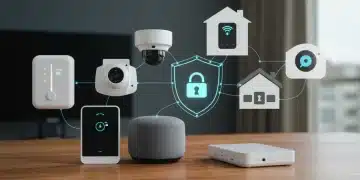
Home security devices have seen remarkable improvements in the Matter 2026 update, with camera systems and smart locks now able to share information and trigger coordinated responses. This integration creates security experiences that feel truly intelligent rather than simply connected.
When a Matter-compatible camera detects motion, it can instantly communicate with smart locks to secure doors, trigger lighting changes to deter potential intruders, and send notifications to multiple family members simultaneously. These automations work across brands, so a Ring camera can trigger a Yale lock and vice versa without any special configuration.
The smart lock category has particularly benefited from Matter improvements. Battery life has been extended through more efficient communication protocols, and the multi-admin feature allows both homeowners to control locks through different apps without conflicts. Guest access has become simpler to manage, with time-limited codes that work seamlessly with calendar apps and voice assistants.
Smart Speakers and Entertainment Integration
Audio and entertainment devices form the voice control backbone of most smart homes, and Matter 2026 has made significant strides in this category. The multi-assistant capability means your smart speakers can respond to commands from Alexa, Google Assistant, and Siri simultaneously, giving every household member their preferred interaction method.
Stereo pairing and multi-room audio have become dramatically simpler with Matter certification. Setting up a whole-home audio system no longer requires matching brands or using proprietary apps. You can pair a Sonos speaker with a Bose system, control them all through a single app, and still maintain voice control through your assistant of choice.
Television integration has also improved substantially. Smart TVs with Matter support can now receive commands from any certified hub or voice assistant, and they can communicate with soundbars, streaming devices, and gaming consoles to create unified entertainment experiences. Turning on your TV can automatically dim the lights, activate your soundbar, and start your preferred streaming service through simple voice commands.
Smart Plugs, Switches, and Power Management
Smart plugs and switches remain the most accessible entry point into Matter-enabled smart homes, and the 2026 update has expanded their capabilities significantly. These simple devices transform ordinary appliances into connected devices that can be controlled, scheduled, and monitored through your preferred platform.
The energy monitoring features in modern smart plugs have become remarkably sophisticated. You can now track the power consumption of individual appliances in real-time, identify energy-hungry devices, and create automations that turn off equipment when not in use. Many homeowners discover that their entertainment systems, office equipment, and kitchen appliances consume significant standby power that adds up over monthly bills.
Smart Plug Applications
- Controlling coffee makers and kitchen appliances
- Managing entertainment system power
- Scheduling holiday lights and decorations
- Monitoring device energy consumption
- Creating vacation mode simulations
Smart switches offer more permanent solutions for lighting control and can replace traditional wall switches to provide app and voice control for any connected bulb. The neutral wire requirements that limited early smart switches have been addressed in newer models, making installation possible in older homes throughout the United States.
Robotic Vacuums and Cleaning Devices
Robot vacuums have evolved from simple floor cleaners into sophisticated home mapping and monitoring systems, and Matter 2026 has integrated them fully into the smart home ecosystem. These devices now communicate with other Matter devices to create cleaning routines that respond to your lifestyle patterns and home conditions.
When integrated with smart thermostats, robot vacuums can avoid cleaning rooms during peak heating or cooling periods to maximize energy efficiency. They can coordinate with smart locks to pause cleaning when someone arrives home unexpectedly, and they can trigger air purifiers to increase filtration when dust sensors detect particles kicked up during cleaning.
The mapping capabilities of modern robot vacuums have become valuable inputs for other smart home functions. Rooms identified by your vacuum can automatically populate zone configurations for your thermostat, lighting scenes, and security settings, creating a home that understands its own layout without manual configuration.
Using the Smart Home Compatibility Checker
The Smart Home Compatibility Checker has become an indispensable tool for planning and maintaining Matter-enabled homes. These online tools allow you to verify that devices you’re considering will work together before making purchases, preventing the frustration of bringing home incompatible equipment.
Modern compatibility checkers go beyond simple yes or no answers. They provide detailed information about what features will work, what limitations might exist, and what additional equipment you might need for full functionality. Many checkers also offer upgrade recommendations when newer versions of devices become available.
When using compatibility checkers, it’s important to verify that both the devices and your hub support the same Matter version. The 2026 update introduced features that aren’t backward compatible with earlier Matter versions, so ensuring all components use current standards prevents integration issues.
| Device Category | Matter 2026 Integration Benefits |
|---|---|
| Smart Lighting | Cross-brand color control and energy monitoring |
| Climate Control | Unified thermostat and vent coordination |
| Security Devices | Cross-brand camera and lock automation |
| Entertainment | Multi-assistant voice control and stereo pairing |
Frequently Asked Questions
Not necessarily. Many devices released after 2022 can receive Matter updates through firmware upgrades, though older hardware may not support all 2026 features. Check with your device manufacturer to confirm update availability, and use the Smart Home Compatibility Checker to verify functionality.
Major hubs including Apple HomePod, Google Nest Hub, Amazon Echo (4th generation and newer), and Samsung SmartThings stations support Matter 2026. Ensure your hub firmware is current, and consider whether you need multiple hubs for optimal coverage in larger homes.
Yes, Matter 2026 emphasizes local automation. Core functions like lighting control, thermostat adjustments, and lock operations continue working during internet outages. However, remote access through smartphone apps and some cloud-based routines require internet connectivity.
During initial setup, when prompted to add the device to a platform, select the option to add to multiple platforms rather than limiting to one. This enables devices to work with several hubs simultaneously, allowing different household members to use their preferred apps and voice assistants.
Matter devices can bridge communication with older devices through compatible hubs, but functionality may be limited. Using the Smart Home Compatibility Checker helps identify which integrations will work smoothly and which may require additional equipment or have reduced capabilities.
Conclusion
The Matter 2026 update represents a turning point for smart home technology in the United States. The 15 device categories now supported create genuine interoperability that removes the friction previously associated with building unified smart homes. By using the Smart Home Compatibility Checker and selecting certified devices, you can build a connected home that works seamlessly regardless of brand or platform. The future of smart home technology is open, secure, and more accessible than ever before.