Drugstore vs Premium Foundations 2026: Complete Comparison Guide
Ads
This guide evaluates the 10 highest-rated foundations of 2026, comparing drugstore and premium options across coverage, finish, longevity, and value to determine which delivers the best return on investment.
Walking down the makeup aisle today feels overwhelming. You spot familiar drugstore staples alongside luxury bottles that cost five times more. Is the premium price tag justified, or are you simply paying for packaging? The answer isn’t straightforward, and that’s exactly why I spent weeks testing ten top-rated foundations to give you a clear picture of what works, regardless of your budget.
Understanding the Foundation Market in 2026
The beauty industry has shifted dramatically over the past few years. What once was a clear line between affordable and luxury has blurred considerably. Drugstore brands now offer advanced formulas with skincare benefits, while premium lines compete on innovation and inclusivity. Understanding this landscape helps you make smarter purchasing decisions.
2026 has brought significant innovations across both segments. Clean beauty ingredients have become standard, with hyaluronic acid, niacinamide, and peptides appearing in formulas at every price point. Extended shade ranges now accommodate undertones that were historically neglected, though some brands still lead this charge more than others.
What Drives Foundation Prices
- Ingredient quality and sourcing complexity
- Research and development investment
- Packaging technology and sustainability efforts
- Marketing and brand positioning
- Distribution and retail markup
Premium foundations often allocate more budget to R&D, resulting in proprietary formulas that claim longer wear or better skincare benefits. However, drugstore brands have caught up significantly, partnering with specialty ingredient suppliers and improving their development processes. The gap has narrowed, though meaningful differences remain in specific performance areas.
What Actually Defines Drugstore vs Premium Foundations
The distinction between drugstore and premium isn’t always about quality. It encompasses formulation philosophy, target audience, and the overall experience. Drugstore foundations typically cost under $15 and are available at pharmacies, mass retailers, and increasingly, direct-to-consumer websites. Premium options start around $35 and climb to $65 or more, sold at department stores, specialty retailers, and brand boutiques.
Both categories have evolved beyond simple price differentiation. You’ll find drugstore foundations with SPF, lightweight textures, and buildable coverage that rivals luxury options. Simultaneously, premium brands have introduced accessible lines and reformulated classics to compete in an increasingly crowded market.
Key Differences to Consider
- Shade range availability and undertones
- Formula longevity and transfer resistance
- Skin type compatibility and ingredient transparency
- Packaging quality and functionality
- Return policy and sample availability
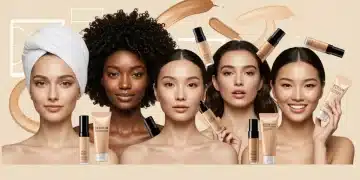
The most significant gap often lies in shade inclusivity and undertone matching. Premium brands generally lead in offering diverse options with precise undertones, though drugstore leaders like Fenty Beauty and CoverGirl have dramatically improved their ranges. When choosing, consider how well a brand’s shades match your specific skin tone and undertone.
Top 5 Drugstore Foundations Worth Your Attention
Drugstore foundations have shed their reputation for cakey, limited options. These five represent the best the mass market offers in 2026, consistently earning high marks for performance, shade range, and value.
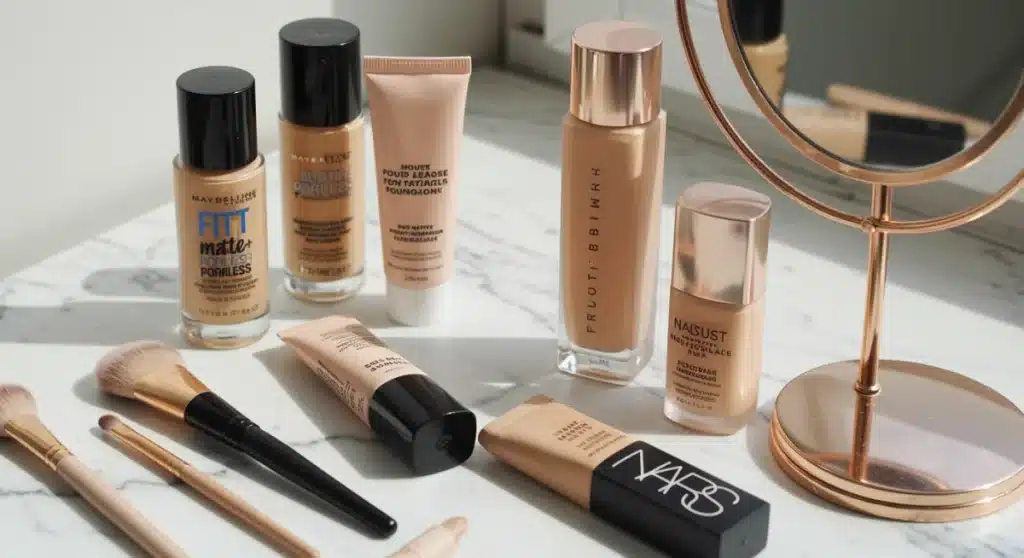
Maybelline Fit Me Matte + Poreless remains a staple for good reason. Its lightweight formula provides medium coverage that builds beautifully without settling into fine lines. The shade range has expanded significantly, now offering over 40 options with both warm and cool undertones. At around $8, it delivers exceptional value for everyday wear.
Revlon ColorStay Visible Wear excels for those needing long-lasting coverage. This formula survives humidity, long workdays, and emotional moments without requiring constant touch-ups. The combination oily skin version controls shine while maintaining a natural appearance, though dry skin types might find the finish slightly drying.
CoverGirl Clean Fresh Skin Milk represents the clean beauty movement hitting the mass market. The lightweight, milk-textured foundation provides sheer to light coverage with a natural, skin-like finish. It feels breathable and contains skin-loving ingredients like vitamin E, making it ideal for sensitive or minimal-makeup days.
L’Oreal True Match Super Blendable continues impressing with its extensive shade range and buildable coverage. The formula blends effortlessly and works well with various application methods, from fingers to brushes to sponges. It’s particularly praised for matching undertones accurately, a historical weakness for drugstore options.
e.l.f. Cosmetics Hydrating Camo Concealer doubles effectively as a foundation for those seeking higher coverage. The creamy, pigmented formula covers imperfections while feeling comfortable on the skin. While technically a concealer, many use it as a full-coverage foundation with excellent results.
Top 5 Premium Foundations That Justify the Price
Premium foundations offer sophisticated formulations that often include advanced skincare ingredients and innovative application systems. These five represent the gold standard in luxury base products for 2026.
Estée Lauder Double Wear Stay-in-Place has earned its reputation as a professional favorite. The buildable, full-coverage formula stays put for 24 hours without oxidizing or transferring. It handles humidity and movement exceptionally well, making it ideal for events, long workdays, or anyone needing reliable coverage. The trade-off is a slightly heavier feel that requires proper blending.
Charlotte Tilbury Beautiful Skin Foundation delivers the coveted “your skin but better” effect. This medium-coverage formula enhances natural radiance while providing hydration from skincare ingredients. The finish appears airbrushed yet maintains a healthy glow, perfect for special occasions or everyday sophistication.
NARS Sheer Glow Foundation continues impressing with its luminous finish and buildable coverage. The formula improves with time, settling into the skin for a natural, radiant appearance. While the name suggests sheer coverage, it builds to medium with excellent blendability. The shade range, though extensive, runs slightly warm overall.
Tom Ford Traceless Soft Matte Foundation offers a unique velvet finish that photographs beautifully. The formula provides medium coverage with a soft-focus effect that blurs imperfections. Application requires working quickly, as the formula sets fast, but the finish justifies the technique learning curve.
Dior Backstage Face & Body Foundation bridges the gap between photo finish and everyday wear. Originally designed for professional use, it performs excellently in real-world conditions. The water-resistant formula survives sweat and humidity while remaining comfortable enough for all-day wear. The pump packaging adds convenience missing from many premium options.
Performance Comparison: Coverage and Finish
Coverage and finish determine how a foundation looks on your skin throughout the day. Testing across both categories reveals nuanced differences that impact daily wear.
Drugstore foundations generally excel in the lightweight, natural finish category. Options like Maybelline Fit Me and CoverGirl Clean Fresh provide breathable coverage that suits everyday wear. The trade-off involves less coverage for significant imperfections and potential fading by day’s end.
Premium foundations lead in coverage consistency and finish longevity. Formulas like Estée Lauder Double Wear maintain their appearance for hours without breaking down or separating. The finish quality tends to be more refined, with better light reflection and skin-blurring properties. However, this comes with a heavier feel that some users find uncomfortable.
Coverage Level Breakdown
- Sheer: Allows skin to show through, minimal coverage
- Light: Evens skin tone, hides minor imperfections
- Medium: Covers blemishes and discoloration effectively
- Full: Complete coverage, hides tattoos and significant issues
- Buildable: Allows layering from sheer to full coverage
Finish types also vary significantly. Matte finishes control shine but can appear flat on dry skin. Dewy finishes provide radiance but may emphasize texture on oily skin. Satin and natural finishes offer balance but require finding the right formula for your skin type.
Price Analysis and Value for Money
Understanding true value requires looking beyond the price tag to cost-per-use and performance over time. A $60 foundation that lasts six months delivers better value than a $10 option that expires in three months.
Drugstore foundations typically provide excellent value for everyday wear. At $8-14 per bottle with six-month average lifespan, the cost comes to roughly $1-2 per month for daily use. For casual makeup users or those building a collection, this makes drugstore options financially sensible.
Premium foundations justify their prices through specialized performance and enhanced experience. At $35-65 per bottle with eight to twelve-month lifespan, the monthly cost increases but often includes superior longevity, better ingredients, and improved shade matching. For special occasions or daily wear where performance matters most, the investment makes sense.
Hidden costs deserve consideration. Premium foundations often include better packaging, more precise shade matching, and access to samples. Drugstore purchases might require trying multiple shades before finding the right match, potentially increasing overall spending.
Value Calculation Factors
- Purchase price and expected lifespan
- Coverage needed and formula efficiency
- Skin type compatibility and potential waste
- Sample availability and return policies
- Frequency of makeup wear
The smart approach involves matching your investment to your priorities. Daily wear benefits from drugstore value, while special occasions might warrant premium performance. Many makeup users successfully combine both, using drugstore options for routine and premium products for important events.
Making Your Final Foundation Decision
Choosing between drugstore and premium ultimately depends on your specific needs, preferences, and circumstances. Neither category universally outperforms the other. The best foundation for you depends on skin type, coverage requirements, budget constraints, and personal priorities.
For combination to oily skin, both drugstore and premium options perform well. Drugstore winners include Revlon ColorStay and Maybelline Fit Me Matte. Premium alternatives like Estée Lauder Double Wear and Tom Ford Traceless offer enhanced longevity. Dry skin types might prefer Charlotte Tilbury Beautiful Skin or NARS Sheer Glow from the premium side, while CoverGirl Clean Fresh and L’Oreal True Match provide hydrating drugstore alternatives.
Consider testing before committing, regardless of price point. Many premium brands offer samples, while drugstore options allow easy at-home testing. Pay attention to how your skin responds throughout a full day, not just the initial application. The foundation that looks perfect at 8 AM but breaks down by noon isn’t truly the best value, regardless of its category.
| Category | Best For |
|---|---|
| Drugstore | Everyday wear, budget-conscious buyers, casual makeup users seeking natural coverage |
| Premium | Special occasions, long-lasting events, precise undertone matching, advanced skincare benefits |
| Price Range | Drugstore: $7-15 | Premium: $35-65+ |
| Key Advantage | Drugstore: Value and accessibility | Premium: Longevity and finish refinement |
Frequently Asked Questions
Modern drugstore foundations perform impressively close to premium options for everyday wear. The gap exists primarily in longevity, finish refinement, and shade range precision. For casual use, drugstore options like Maybelline Fit Me and L’Oreal True Match deliver excellent results at a fraction of the cost. Premium foundations excel in extended wear situations and when precise undertone matching matters most.
A standard 1-ounce foundation bottle typically lasts 4-6 months with daily use. Premium formulas might extend to 8-12 months due to higher pigment concentration requiring less product per application. Factors affecting longevity include how often you wear makeup, the amount applied, and whether you use the recommended amount versus heavier coverage. Pump bottles help control dispensing and prevent product waste.
Mixing foundations is common and often beneficial. You can combine formulas to adjust coverage, change finish, or customize shade. Many makeup artists mix a full-coverage premium foundation with a sheer drugstore option to create custom coverage. Just ensure both formulas are compatible—avoid mixing water-based with silicone-based products, as they can separate or pill.
Oily skin benefits most from matte or oil-control formulas. Drugstore options like Revlon ColorStay Visible Wear and Maybelline Fit Me Matte + Poreless control shine effectively. Premium choices like Estée Lauder Double Wear and Tom Ford Traceless Soft Matte provide superior longevity without excessive drying. Look for keywords like “matte,” “oil-free,” or “pore-reducing” when selecting formulas for oily skin.
Finding your perfect shade requires testing on bare skin in natural lighting. Apply potential matches to your jawline and check in daylight—the best match disappears into your skin. Consider both depth and undertone: cool (pink or red), warm (yellow or golden), or neutral. Many brands now offer virtual try-on tools, though in-person testing remains most reliable. Sample sizes and return policies make testing multiple options more accessible.
Conclusion
The drugstore versus premium foundation debate has no universal winner. Both categories offer excellent products that serve different needs and preferences. Drugstore foundations provide remarkable value for everyday wear, with formulas that have legitimately improved to rival premium performance in many areas. Premium foundations justify their prices through enhanced longevity, refined finishes, and often superior shade matching. The smartest approach involves understanding your priorities—whether that’s budget, occasion, or specific skin needs—and selecting accordingly. Your perfect foundation exists in both categories; finding it requires knowing what matters most to you.