Sustainable Home Decorating: 15 Eco-Friendly Materials for US Homes
Ads
Explore 15 eco-friendly materials revolutionizing sustainable home decorating across American homes in 2025, from reclaimed wood and bamboo to organic textiles and recycled glass.
Welcome to the definitive guide on The Complete Guide to Sustainable Home Decorating: 15 Eco-Friendly Materials Transforming US Homes This Year. If you have been searching for ways to beautify your living space while minimizing your environmental footprint, you have landed in the right place. This year, American homeowners are embracing sustainable materials like never before, driven by environmental awareness, desire for healthier indoor environments, and the timeless appeal of natural aesthetics. From the Pacific Coast to the Atlantic seaboard, eco-conscious design is reshaping how we think about our homes. Let us dive into the materials making the biggest impact in 2025.
Reclaimed Wood: Timeless Character Meets Environmental Responsibility
Reclaimed wood has emerged as the cornerstone of sustainable home decorating across the United States. This material carries a rich history, featuring unique grain patterns, weathered textures, and a character that newly manufactured wood simply cannot replicate. Homeowners in Austin, Portland, and Denver have particularly embraced reclaimed barn wood for accent walls, ceiling beams, and custom furniture pieces.
The environmental benefits of reclaimed wood extend far beyond its aesthetic appeal. By salvaging wood from old barns, warehouses, and demolished buildings, we prevent valuable materials from ending up in landfills while eliminating the need for new timber harvesting. This practice preserves forests and reduces the carbon footprint associated with wood production.
Popular Applications for Reclaimed Wood
- Accent walls: Create stunning focal points in living rooms and bedrooms
- Furniture: Dining tables, coffee tables, and shelving units with unique character
- Ceiling beams: Add architectural interest and rustic charm
- Flooring: Durable, beautiful hardwood floors with historical provenance
When sourcing reclaimed wood, look for suppliers who verify the material’s origin and properly treat it for safety. Many companies now offer certified reclaimed wood that has been cleaned, processed, and tested to ensure it meets modern quality standards while maintaining its authentic charm.
Bamboo: The Fast-Growing Champion of Sustainable Design
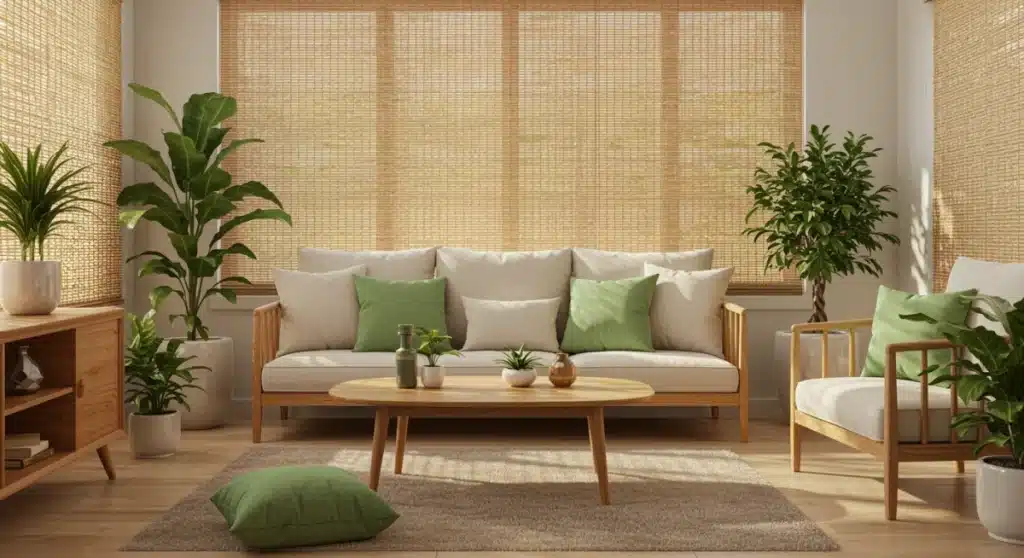
Bamboo has secured its position as one of the most versatile and rapidly renewable materials in sustainable home decorating. This remarkable grass reaches maturity in just three to five years, compared to the decades required for traditional hardwood trees. Bamboo flooring, cabinetry, and decorative elements have become staples in eco-conscious homes throughout the United States.
Beyond its rapid renewability, bamboo offers exceptional durability and water resistance when properly processed. Modern manufacturing techniques have transformed bamboo from a niche sustainable option into a mainstream design material available at major home improvement retailers nationwide.
Where Bamboo Shines in Home Decor
- Flooring: Hardness ratings comparable to traditional hardwoods
- Cabinetry: Modern kitchen and bathroom cabinets in contemporary finishes
- Window treatments: Bamboo blinds and shades for natural light control
- Furniture: Chairs, tables, and decorative accessories with sleek profiles
California and Washington have seen particularly strong adoption of bamboo products, reflecting the West Coast’s commitment to sustainable living. When selecting bamboo items, opt for products using formaldehyde-free adhesives and sustainable manufacturing processes to maximize environmental benefits.
Organic Textiles: Comfort Without Compromise
The textile industry has undergone a significant transformation toward sustainability, and organic fabrics are now accessible to American homeowners seeking healthier sleep environments and chemical-free living spaces. Organic cotton, linen, hemp, and Tencel have replaced conventional materials in bedding, curtains, upholstery, and decorative accents.
Organic textiles eliminate exposure to harmful pesticides, synthetic fertilizers, and toxic dyes that conventional fabric production introduces into our homes. For families with children, allergy sufferers, and environmentally conscious individuals, organic textiles represent a meaningful improvement in indoor air quality and overall wellness.
Organic Textile Options for Every Room
- Bedroom: Organic cotton sheets, hemp blankets, and linen duvet covers
- Living areas: Organic cotton throw pillows and blankets
- Windows: Organic linen curtains and roman shades
- Upholstery: Organic cotton and hemp fabric options for furniture
Organic certification labels such as GOTS (Global Organic Textile Standard) provide assurance that textiles meet rigorous environmental and social criteria throughout the production chain. Investing in certified organic textiles supports sustainable farming practices and fair labor conditions while providing lasting comfort for your family.
Recycled Glass: Beauty from Bottles
Recycled glass has emerged as a sophisticated option for countertops, tiles, and decorative elements in sustainable home design. Manufacturers transform post-consumer glass bottles and containers into stunning surfaces that rival natural stone in beauty while requiring significantly less energy to produce.
The versatility of recycled glass extends to backsplashes, bathroom vanities, and decorative vases. Color options range from clear and neutral tones to vibrant blues and greens derived from bottle collection programs across American communities.
Applications for Recycled Glass
- Countertops: Durable, non-porous surfaces in various colors
- Backsplashes: Mosaic tiles and glass sheets for kitchen and bathroom
- Decorative items: Vases, bowls, and art pieces
- Lighting: Glass fixtures and pendant lights
Cities like San Francisco and Boulder have pioneered glass recycling programs that supply material for local manufacturers, creating closed-loop systems that benefit both the environment and local economies. Choosing recycled glass products supports these circular economy initiatives while adding distinctive beauty to your home.
Cork: The Underrated Sustainable Wonder
Cork remains one of the most underutilized sustainable materials in American home decorating, despite its remarkable environmental credentials and practical benefits. Harvested from cork oak trees without harming the trees themselves, cork is a renewable resource that continues regenerating for up to 200 years.
The unique cellular structure of cork provides exceptional sound absorption, thermal insulation, and natural water resistance. These properties make cork ideal for flooring, wall coverings, and decorative accessories in high-traffic areas and moisture-prone spaces.
Cork Applications for Modern Homes
- Flooring: Comfortable, hypoallergenic, and antimicrobial flooring options
- Wall tiles: Acoustic panels and decorative wall coverings
- Furniture: Bulletin boards, coasters, and decorative accessories
- Underlayment: Sound and thermal insulation beneath other flooring materials
Portugal remains the world’s leading cork producer, but American manufacturers have increasingly incorporated this material into their sustainable product lines. Cork flooring has gained particular popularity in home offices and bedrooms where comfort and noise reduction are priorities.
Recycled Metal: Industrial Chic Meets Sustainability
Recycled metal fixtures and decorative elements have become synonymous with industrial-chic aesthetics in American homes. Aluminum, steel, copper, and iron can be recycled indefinitely without losing their properties, making metal one of the most sustainable material choices available.
From reclaimed steel beams in modern lofts to recycled copper pendant lights and aluminum furniture, metal elements add structural interest and visual drama while supporting environmental stewardship. The durability of metal products also means longer replacement cycles and reduced consumption over time.
Recycled Metal in Home Design
- Lighting: Pendant lights, chandeliers, and wall sconces
- Furniture: Tables, chairs, and shelving units
- Hardware: Door handles, cabinet pulls, and fixtures
- Architectural elements: Stair railings and decorative panels
Detroit and Philadelphia have seen particular growth in recycled metal design elements, reflecting the industrial heritage of these cities while embracing sustainable manufacturing practices. When selecting metal products, look for certifications indicating recycled content and responsible production methods.
Natural Stone: Timeless Beauty With Responsible Sourcing
Natural stone remains a premium choice for sustainable home decorating when sourced responsibly. Granite, marble, slate, and limestone offer unparalleled durability and timeless beauty, making them worthwhile investments for countertops, flooring, and architectural features.
The key to sustainable stone selection lies in choosing quarries and suppliers committed to environmental restoration and ethical labor practices. Locally sourced stone reduces transportation emissions, while reclaimed stone from demolition sites provides another sustainable option for environmentally conscious homeowners.
Responsible Stone Sourcing Strategies
- Locally sourced stone: Reduce transportation emissions by choosing regional materials
- Reclaimed stone: Salvage materials from demolition and renovation projects
- Certified quarries: Select suppliers with environmental certifications
- Quarry restoration: Support companies that restore mining sites
Texas and Vermont have established reputations for producing high-quality natural stone with relatively low environmental impact. Working with stone suppliers who can document their sourcing practices ensures your investment supports sustainable extraction methods.
Low-VOC Paints and Finishes: Healthy Air, Beautiful Walls
Indoor air quality has become a central concern for American homeowners, driving widespread adoption of low-VOC (volatile organic compound) paints and finishes. Traditional paints release harmful chemicals into home environments for months after application, while low-VOC alternatives provide similar coverage with minimal off-gassing.
The paint industry has responded to consumer demand with impressive innovations, offering zero-VOC options in virtually every color and finish previously available only in conventional products. These advances make healthy, environmentally responsible painting accessible without sacrificing aesthetic choices.
Benefits of Low-VOC Paints
- Improved indoor air quality: Reduced harmful chemical emissions
- Faster curing time: Lower VOC products dry more quickly
- Wide color selection: Extensive palette options now available
- Professional results: Performance comparable to traditional paints
New York, Los Angeles, and Seattle have led adoption of low-VOC paints, reflecting urban awareness of indoor air quality issues. When planning your next painting project, request products with certification from organizations like Green Seal or SCS Indoor Advantage to ensure genuine environmental benefits.
| Material | Key Benefits |
|---|---|
| Reclaimed Wood | Unique character, prevents landfill waste, reduces deforestation |
| Bamboo | Fast-growing renewable, durable, water-resistant, versatile applications |
| Organic Textiles | Chemical-free, hypoallergenic, supports sustainable farming, healthier indoor air |
| Recycled Glass | Diverts bottles from landfills, energy-efficient production, stunning aesthetics |
Frequently Asked Questions About Sustainable Home Decorating
A truly sustainable material meets several criteria: renewable or recycled sourcing, minimal environmental impact during production, durability for long-term use, and safe composition for indoor environments. Look for certifications like FSC for wood, GOTS for textiles, and Cradle to Cradle for overall sustainability. The material should also support local economies when possible and be recyclable at the end of its useful life.
The cost difference varies significantly by material and product category. Some eco-friendly options like bamboo flooring and low-VOC paints now compete directly with conventional alternatives. Premium sustainable materials like reclaimed wood or certified natural stone may cost 20-40% more initially, but their durability often makes them more cost-effective over time. Many homeowners find the health benefits and environmental value justify the investment.
Major home improvement retailers like Home Depot and Lowe’s now carry certified sustainable products, though selection varies by location. Specialty retailers focusing on green building materials offer broader selections. Online marketplaces including Etsy, Wayfair, and dedicated eco-friendly stores provide access to artisan and certified products nationwide. Always verify certifications and research company sustainability practices before purchasing.
Sustainable home decorating does not require a complete overhaul. You can start gradually by replacing items as they need updating or adding sustainable accents to existing decor. Beginning with high-impact changes like switching to low-VOC paints, adding organic textiles, or selecting sustainable lighting fixtures creates meaningful change without overwhelming your budget or lifestyle. Every eco-friendly choice contributes to larger environmental benefits.
Look for recognized third-party certifications rather than relying on marketing claims. For wood products, FSC certification ensures responsible forestry. GOTS certification verifies organic textiles. Energy Star indicates energy efficiency. Green Seal and SCS Indoor Advantage certify low-VOC products. Research manufacturers and suppliers to understand their supply chains and production practices. Be skeptical of vague terms like “green” or “eco-friendly” without supporting documentation.
Conclusion
The transformation toward sustainable home decorating represents one of the most meaningful ways American homeowners can reduce their environmental impact while creating beautiful, healthy living spaces. The fifteen materials explored in this guide demonstrate that eco-friendly choices never require sacrificing style, quality, or budget. From reclaimed wood’s timeless character to bamboo’s rapid renewability, from organic textiles‘ health benefits to recycled glass’s stunning aesthetics, sustainable options now rival conventional materials in every category. As we move through 2025, the choice to decorate responsibly has never been clearer or more accessible. Start with one material category that resonates with your style and budget, and gradually expand your sustainable practices throughout your home. Your family, your community, and our planet will thank you for making thoughtful choices that last for generations.