
Ads
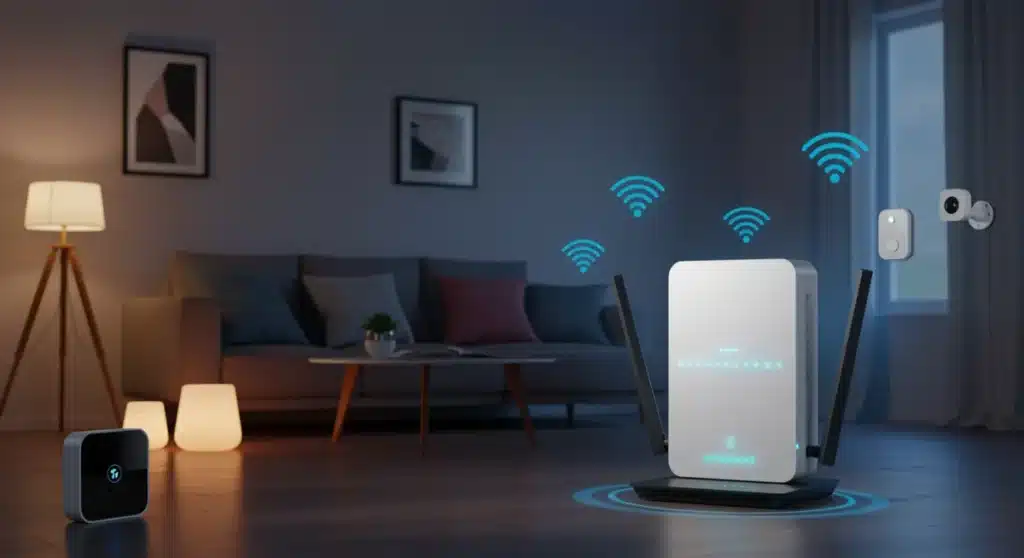
WiFi 7 routers are becoming essential for smart homes as 67% of current networks will fail to handle the exponential growth in connected devices and bandwidth demands expected by 2026.
Ads
The smart home landscape is undergoing a dramatic transformation, and the wireless infrastructure powering these connected spaces is reaching a breaking point. If you have ever experienced laggy video calls, delayed smart thermostat responses, or buffering security camera feeds, you are witnessing firsthand the limitations of current network technology. WiFi 7 router requirements for smart homes are not just marketing buzzwords—they represent the technical specifications that will determine whether your home network can keep pace with modern demands. Industry projections suggest that 67% of existing home networks will struggle to deliver reliable performance by 2026, making the case for upgrading sooner rather than later clearer than ever.
Understanding the Smart Home Bandwidth Explosion
The average smart home now contains far more connected devices than most people realize. What started with a few smart bulbs and a voice assistant has evolved into complex ecosystems featuring security systems, entertainment devices, climate controls, and countless sensors communicating continuously. This proliferation has created unprecedented demands on home network infrastructure that previous WiFi generations were never designed to handle.
Ads
Modern households increasingly operate dozens of devices simultaneously, each competing for limited bandwidth. When family members stream 4K content, while smart appliances upload data, security cameras record continuously, and gaming consoles run online multiplayer sessions, the cumulative bandwidth requirements easily overwhelm conventional routers. The congestion on traditional frequency bands has become so severe that many users experience performance degradation during peak usage hours, even when they have subscribed to high-speed internet plans.
Device Density Challenges
The number of connected devices per household continues its exponential climb, with predictions indicating an average of 50 or more devices by 2026. This density creates significant challenges for network management:
- Interference from overlapping WiFi networks in densely populated neighborhoods
- Increased latency when multiple devices transmit simultaneously
- Reduced coverage areas as older routers fail to penetrate multiple floors and walls effectively
- Security vulnerabilities from outdated firmware and limited router processing power
These challenges compound as homes grow more sophisticated, making the case for infrastructure upgrades increasingly compelling.
Key WiFi 7 Specifications That Matter for Smart Homes
WiFi 7 introduces several technical advancements that directly address the limitations plaguing current smart home networks. Understanding these specifications helps homeowners make informed decisions about their next router purchase and recognize why waiting to upgrade could prove costly.
The most significant improvement comes from the expanded use of the 6GHz frequency band, which provides substantially more spectrum space compared to the crowded 2.4GHz and 5GHz bands used by previous generations. This new spectrum allows for cleaner connections with less interference, enabling devices to operate at full potential without competing for bandwidth with neighboring networks.
Channel Width and Data Throughput
WiFi 7 supports channel widths up to 320MHz, more than double the 160MHz maximum of WiFi 6. This wider channel translates directly to higher throughput capabilities, allowing data to flow more efficiently between routers and connected devices. For smart homes, this means smoother streaming, faster file transfers, and more responsive smart device communications.
- Maximum theoretical throughput reaches 46Gbps, compared to WiFi 6’s 9.6Gbps
- Multi-Link Operation (MLO) allows devices to transmit across multiple bands simultaneously
- 4096-QAM modulation increases data density per transmission cycle
- Improved MU-MIMO supports more simultaneous device connections without degradation
These specifications might seem abstract, but their practical impact on daily smart home usage proves substantial and immediately noticeable.
Why Current Networks Will Struggle by 2026
Industry analysts project that 67% of current home networks will experience significant performance issues by 2026, and this forecast rests on several converging factors that extend beyond simple bandwidth limitations. Understanding these pressures helps clarify why waiting to upgrade carries real costs.
First, the continued rollout of 8K video content and immersive virtual reality applications will demand bandwidth levels that strain even recently purchased routers. Second, the expansion of AI-powered smart home devices that require real-time processing and cloud connectivity will create persistent background traffic that compounds existing congestion. Third, the growing adoption of home automation systems that coordinate across dozens of sensors and actuators will generate continuous network activity that older hardware simply cannot handle efficiently.
The Processing Power Gap
Modern routers contain processing components that age similarly to computers, and routers purchased even three years ago often lack the computational capacity to handle current smart home demands. As security protocols become more sophisticated and network management becomes more complex, older processors struggle to keep pace, resulting in dropped connections, increased latency, and reduced range.
- Older routers cannot effectively manage Quality of Service (QoS) for multiple simultaneous streams
- Limited RAM prevents efficient handling of numerous concurrent connections
- Outdated firmware creates security vulnerabilities that smart home devices exploit
- Single-band or dual-band limitations restrict flexibility in managing device traffic
These hardware limitations become particularly apparent as homes add new devices, creating a compounding problem that eventually reaches a breaking point.
Essential Features in a WiFi 7 Router for Smart Homes
Selecting the right WiFi 7 router requires understanding which features deliver genuine value for smart home applications. While marketing materials highlight impressive specifications, the practical benefits for everyday smart home usage focus on specific capabilities that improve reliability and performance.
Mesh networking capability stands as perhaps the most critical feature for larger homes, as it allows multiple access points to work together seamlessly, eliminating dead zones that plague single-router setups. This becomes particularly important as smart home devices spread throughout properties and require consistent coverage across multiple floors and outdoor areas.
Security and Management Features
Modern smart home routers must provide robust security features that protect increasingly vulnerable connected devices. Built-in firewalls, automatic security updates, and network segmentation capabilities help isolate smart devices from sensitive personal data while maintaining protection against external threats.
- WPA3 encryption support provides the latest wireless security standards
- Automatic firmware updates ensure protection against newly discovered vulnerabilities
- Guest network isolation prevents compromised devices from affecting main networks
- Integrated VPN support enables secure remote access to home networks
Additionally, advanced Quality of Service settings allow homeowners to prioritize traffic for critical applications like security cameras or video calls while limiting bandwidth for less time-sensitive devices.
Planning Your WiFi 7 Upgrade Strategy
Transitioning to WiFi 7 requires thoughtful planning that considers both immediate needs and future growth. The investment in new routing infrastructure pays dividends over many years, making it worthwhile to select equipment that accommodates expanding smart home ecosystems.
Assessing current and projected device counts helps determine appropriate router specifications. Homes with 20 or fewer devices might function adequately with mid-range WiFi 7 routers, while properties with extensive smart home deployments benefit from premium models with greater processing power and capacity. The goal is selecting equipment that provides headroom for growth without overspending on capabilities that remain unused.
Installation and Configuration Considerations
Proper router placement significantly impacts performance, and WiFi 7’s higher frequency bands offer both advantages and limitations. The 6GHz band provides excellent throughput but reduced range compared to lower frequencies, making central positioning even more important for maximizing coverage.
- Position routers centrally to maximize coverage area
- Elevate routers above furniture to reduce signal obstruction
- Minimize interference from physical obstacles and competing electronics
- Configure separate networks for different device types to optimize performance
Taking time to optimize placement and configuration during initial setup prevents frustration and ensures the network performs at its full potential from day one.
The Cost of Delayed Upgrade Decisions
Postponing router upgrades carries hidden costs that often exceed the price of new hardware. Network performance degradation affects productivity, entertainment quality, and the reliability of safety-critical smart home features like security systems and water leak detectors. These impacts compound over time as device ecosystems grow more complex.
Additionally, older routers increasingly lack compatibility with newer smart home devices that require updated wireless standards. Manufacturers gradually phase out support for legacy devices, creating situations where new purchases cannot integrate seamlessly with existing setups. Investing in WiFi 7 infrastructure protects against these compatibility issues while providing a foundation for future smart home expansion.
Long-Term Value Considerations
The durability of router investments varies significantly based on quality and features. Premium WiFi 7 routers designed for smart home applications typically remain relevant for five to seven years, providing better long-term value than budget options that require frequent replacement.
- Higher-quality components ensure consistent performance over extended periods
- Regular firmware updates maintain security and feature compatibility
- Expandable mesh systems accommodate growing coverage needs
- Advanced management features simplify network administration over time
When viewed from this perspective, the initial investment in quality WiFi 7 equipment represents a sensible approach to long-term smart home infrastructure management.
Making the Transition: Practical Steps Forward
Upgrading to WiFi 7 need not be overwhelming. Most homeowners can accomplish the transition with minimal technical knowledge by following established best practices and taking advantage of manufacturer support resources. The key is approaching the upgrade systematically rather than randomly purchasing equipment that might not meet actual needs.
Begin by documenting current smart home devices and their connectivity requirements. This inventory reveals patterns in usage and helps identify priorities for the new network. Next, research router options that specifically advertise smart home optimization, as these models typically include features designed for managing numerous simultaneous connections. Finally, plan the installation to minimize disruption, potentially running新旧 networks in parallel during transition periods.
Testing and Optimization
After installation, taking time to test network performance across different areas and use cases reveals whether the upgrade meets expectations. Speed tests, latency measurements, and real-world usage during typical activities confirm proper functionality and identify any areas requiring adjustment.
- Run speed tests at multiple locations throughout the home
- Test smart device responsiveness under various network conditions
- Verify security features are functioning correctly
- Adjust QoS settings based on observed performance patterns
These verification steps ensure the investment delivers the expected improvements and provide baseline information for future optimization.
| Key Point | Brief Description |
|---|---|
| 67% Network Struggle | Current home networks will face significant performance issues by 2026 due to increased device density and bandwidth demands. |
| 6GHz Band Advantage | WiFi 7 utilizes the 6GHz frequency band, providing cleaner connections with less interference from neighboring networks. |
| Multi-Link Operation | MLO allows devices to transmit across multiple bands simultaneously, improving reliability and reducing latency. |
| Mesh Networking | Essential for larger homes, mesh systems eliminate dead zones and provide consistent coverage across multiple floors. |
Frequently Asked Questions
WiFi 7 introduces the 6GHz band, providing more spectrum and less interference than WiFi 6’s 2.4GHz and 5GHz bands. It also supports 320MHz channel widths and Multi-Link Operation, allowing devices to use multiple bands simultaneously for improved reliability and reduced latency—critical for managing numerous smart home devices.
Premium WiFi 7 routers can handle 200 or more simultaneous connections, compared to approximately 50-100 for older WiFi 6 models. This capacity accommodates the growing number of smart home devices expected in average households by 2026, making WiFi 7 a future-proof investment.
No, WiFi 7 routers maintain backward compatibility with WiFi 6, WiFi 5, and even older devices. However, only newer devices can take full advantage of WiFi 7 features like the 6GHz band and Multi-Link Operation. The router automatically adjusts to provide the best possible connection for each device.
Smart home-focused WiFi 7 routers typically range from $200-$600 depending on features and capacity. Mid-range options around $300-$400 work well for homes with 20-40 devices, while premium models ($500+) suit larger properties with 50+ devices and extensive mesh requirements.
The ideal time to upgrade is when current router performance becomes noticeably inadequate or when planning significant smart home expansion. With 67% of networks projected to struggle by 2026, upgrading now provides immediate benefits and protects against future compatibility issues with newer devices.
Conclusion
The transition to WiFi 7 represents more than a routine technology upgrade—it marks a fundamental shift in how smart homes function and scale. With 67% of current networks projected to struggle by 2026, the case for upgrading now rather than waiting becomes compelling from both practical and financial perspectives. WiFi 7 routers provide the bandwidth, capacity, and advanced features that modern smart homes require, ensuring reliable performance as device ecosystems continue their exponential growth. Investing in proper networking infrastructure today protects against the frustration of inadequate performance tomorrow while establishing a foundation for future smart home innovations that will inevitably demand even greater network capabilities.
