
How to Wash Cashmere Sweaters at Home Without Shrinking

Ads
You can wash cashmere sweaters at home safely by using cool water, a mild wool detergent, and gentle hand submersion instead of dry cleaning. This method helps anyone looking to save money on professional garment cleaning and preserve delicate animal fibers, provided that you avoid hot water, heavy friction, and standard drying cycles.
Cashmere comes from the soft undercoat of cashmere goats, and its individual fibers are exceptionally fine, light, and susceptible to sudden temperature changes. When exposed to heat and agitation, these delicate strands lock together through a process called felting, which causes the fabric to shrink permanently and lose its soft drape. Understanding the basic science of natural animal fibers allows you to clean your winter knitwear thoroughly without altering the fit or compromising the integrity of the yarns.
Understanding what makes cashmere shrink
Natural wool fibers, including fine cashmere, feature microscopic scales along the outer surface of each strand. When the garment is dry, these scales lie relatively flat and slide against each other smoothly, creating the soft texture associated with luxury knitwear. However, when you immerse the sweater in warm or hot water, the moisture causes the outer scales to lift and flare outward.
Ads
If mechanical agitation occurs while the scales are raised, the individual fibers snag on one another. The scales interlock like microscopic barbs, pulling the yarns tighter and tighter together. This phenomenon is known as felting, and once it takes place, it cannot be reversed because the fibers have physically intertwined into a dense, solid mat. Shrinkage in cashmere is rarely caused by water alone; it is almost always the combination of high water temperature, excess friction, and rough movement during the wash cycle.
Commercial laundry detergents formulated for standard cottons or synthetics often contain harsh enzymes such as proteases. These enzymes are engineered to break down protein stains like sweat, food, and blood. Because cashmere is an animal hair composed entirely of natural keratin protein, these standard detergents actively degrade the structural proteins of the sweater. Over time, enzyme-heavy detergents weaken the yarn, leading to pilling, thinning, loss of elasticity, and fiber breakage.
Preparing your sweater before washing
Before introducing any water to your sweater, take a few minutes to inspect and prepare the garment. Rushing the preparation phase can lead to uneven cleaning or accidental snags that worsen once the wool becomes wet and heavy.
Ads
Pre-wash inspection steps
- Check the care label inside the garment to confirm the fiber content and identify any special trim materials such as silk panels, leather patches, or metal buttons.
- Inspect the high-friction areas around the armpits, collar, and cuffs for visible surface pilling or loose debris.
- Gently remove existing fuzz pills using a manual sweater comb or a cashmere brush rather than an electric fabric shaver that might cut healthy strands.
- Turn the entire garment inside out so that the outer display surface experiences minimal contact and zero friction during the soak.
Spot-treating isolated spots before a full soak prevents the need for vigorous rubbing later. If you notice a food spot or coffee drop, dab the area gently with a drop of specialized wool wash diluted in cold water. Press the spot between two fingers with a damp microfiber cloth to lift the residue. Never scrub the spot with a stiff brush or rub the knit against itself, as localized rubbing creates permanent fuzzy patches or uneven thinning in the knit.
The step-by-step hand washing method
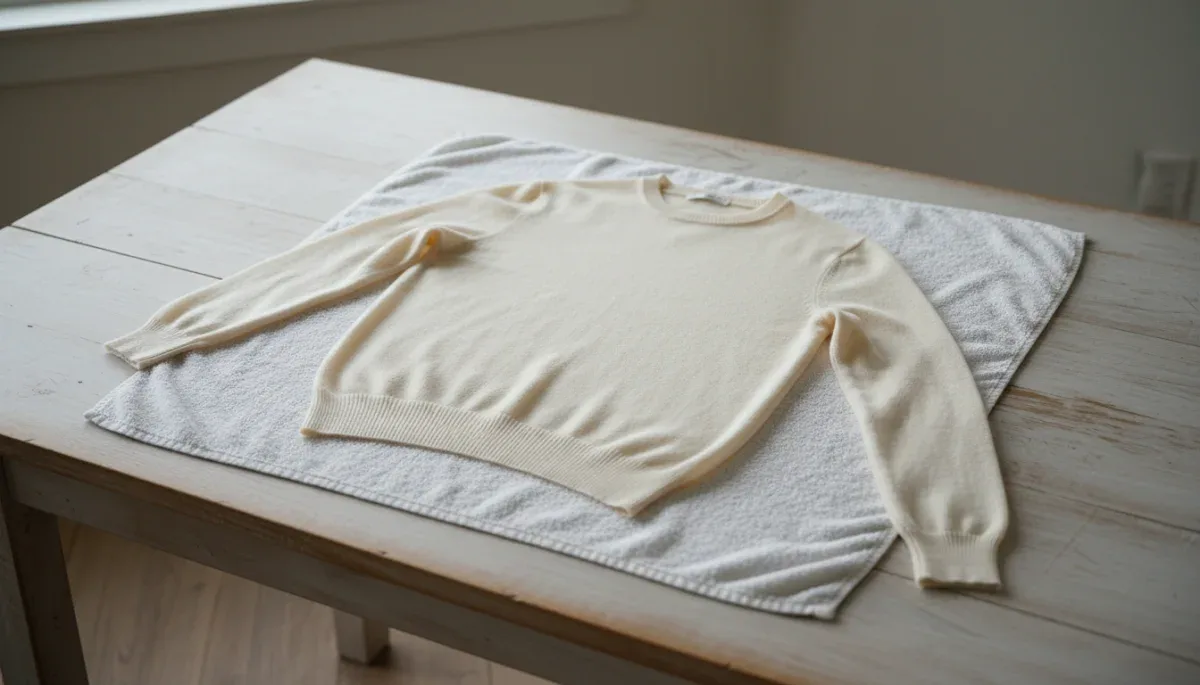
Hand washing remains the safest and most reliable way to wash cashmere sweaters at home without shrinking fabric. It grants you total control over water temperature and movement, ensuring the fine fibers remain undisturbed throughout the cleaning process.
Begin by thoroughly cleaning and sanitizing a bathroom sink, plastic wash basin, or clean bathtub. Any leftover traces of bleach, facial cleanser, or abrasive household cleaning agents can permanently discolor or strip natural wool. Fill the clean basin with cool or lukewarm water. The temperature should feel neutral to slightly cool to your touch, staying well below body temperature to prevent heat shock to the yarn fibers.
Add a small amount of a gentle, pH-neutral wool cleanser or a no-rinse delicate wash formulated specifically for fine knits. A teaspoon or two is typically sufficient for a single garment; excess soap requires excessive rinsing, which increases fabric handling. Swirl the cleanser thoroughly into the water before adding your sweater so the product dissolves evenly rather than settling into one concentrated spot on the fabric.
Submerge the inverted sweater gently into the soapy water, pressing down with flat palms until the knit is fully saturated. Gently squeeze the suds through the fibers using a slow pulsing motion. Do not twist, wring, or stretch the sweater while it is submerged. Allow the garment to soak quietly for ten to fifteen minutes. Soaking gives the surfactant enough time to dissolve natural body oils and dust without mechanical action.
Rinsing and removing excess moisture safely
Once the soaking time is complete, draining and removing the water must be handled with deliberate care. Wet cashmere becomes heavy because natural wool fibers absorb a significant percentage of their weight in liquid. Lifting a soaking wet sweater out of the water by its shoulders or collar will stretch the seams and distort the silhouette permanently.
Gather the entire sweater together in a compact bundle at the bottom of the basin with both hands before draining the soapy water. While holding the bundled garment against the base of the basin, gently press downward with open hands to let the bulk of the water escape. If you are using a detergent that requires rinsing, refill the basin with fresh cool water of identical temperature, submerge the bundled sweater again, and press gently to clear the soap. Repeat this gentle rinse until the water runs clear.
The towel roll technique
- Lay a clean, dry, lint-free bath towel flat on a hard, waterproof surface like a table or clean counter.
- Place the damp bundled sweater flat on top of the towel, smoothing out large folds without pulling on the sleeves or hem.
- Roll the towel and sweater up together from one end to the other, creating a tight cylinder similar to a jelly roll.
- Gently press down on the rolled towel with your forearms or walk along the roll with flat hands to transfer the trapped moisture from the sweater into the towel.
- Unroll the towel to reveal a damp, lightweight sweater that has released most of its water without experiencing any spinning or wringing forces.
Drying and reshaping your cashmere sweater
The drying phase determines whether your sweater retains its original tailored proportions. Natural wool fibers have high moisture memory; whatever shape they hold as they dry is the shape they will maintain when completely dry. Never place cashmere sweaters in a heated tumble dryer, and never hang a damp sweater on a hanger, as gravity will pull the shoulders out of shape and leave unsightly hanger bumps.
Set up a flat drying rack or place a fresh, completely dry towel over a flat surface in a well-ventilated room out of direct sunlight. Direct sunlight and proximity to baseboard heaters, radiators, or hot air vents can dry the fibers unevenly and cause fiber brittleness. Lay the damp sweater flat on the dry surface and begin the blocking process by gently nudging the garment back into its original dimensions.
Square the shoulders, align the side seams, straighten the sleeves alongside the torso, and push the ribbed cuffs and hem together so they dry crisp and tight. If you measured your sweater before washing, you can align it precisely to those initial dimensions. Leave the sweater undisturbed until the top surface feels completely dry to the touch, which typically takes twelve to twenty-four hours. Once dry on top, flip the sweater over onto a dry towel to let the underside finish drying thoroughly.
Can you use a washing machine for cashmere
While hand washing is the safest practice, modern front-loading and high-efficiency washing machines often feature dedicated wool cycles that can accommodate delicate knitwear. However, using a washing machine always carries some risk of accidental shrinkage or mechanical friction if the settings or equipment are incorrect.
Never wash cashmere in a top-loading machine that contains a center agitator, as the plastic fins will snag, stretch, and abrade delicate wool yarns. If you choose to use a front-loading machine, place the sweater inside a zippered mesh laundry bag designed for delicates to prevent the sleeves from tangling around the drum or other garments. Wash only with other lightweight, soft items of similar colors to prevent abrasion.
Select the machine's dedicated wool, hand-wash, or delicate cycle, ensuring that the water temperature is manually locked to cold or tap cold. Ensure the spin speed is dialed down to low or gentle (around 400 to 600 RPM) to avoid excessive centrifugal force pulling on wet seams. Add a specialized wool wash into the detergent tray and start the cycle. As soon as the cycle ends, remove the sweater immediately and follow the standard towel-roll and flat-drying procedure described above.
At a glance
| Care factor | Best practice |
|---|---|
| Water temperature | Use cool or lukewarm water below body temperature to prevent fiber felting. |
| Detergent selection | Choose a specialized pH-neutral wool cleanser free of protease enzymes and optical brighteners. |
| Moisture removal | Roll the wet knit in a dry bath towel rather than wringing or using a heated dryer. |
| Drying position | Lay completely flat on a fresh towel away from direct sunlight and heat sources. |
Frequently asked questions
How often should you wash cashmere sweaters?
Wash your cashmere sweater after every three to five wears under normal conditions. Natural cashmere is naturally odor-resistant and breathable, meaning airing out the garment between wears on a flat surface often refreshes the fibers without requiring a full wash each time.
Can you unshrink a cashmere sweater that already shrank?
You can sometimes relax mild shrinkage by soaking the sweater in lukewarm water mixed with hair conditioner or baby shampoo for thirty minutes. The conditioner softens the fibers, allowing you to gently block and stretch the damp knit back to shape on a flat towel.
Is it safe to use regular laundry detergent on cashmere?
Standard laundry detergents are not safe for cashmere because they contain harsh enzymes and alkaline agents designed for cottons. These enzymes break down natural keratin proteins in animal hair, causing the knit to become scratchy, brittle, thin, and prone to tearing over time.
Can you steam or iron a cashmere sweater after washing?
Steaming is safe and recommended for removing wrinkles because it relaxes the wool fibers without crushing them. If you must use an iron, set it to the lowest wool setting and always place a damp pressing cloth between the iron plate and the cashmere fabric.
The bottom line
Caring for fine knitwear at home is straightforward when you respect the natural properties of delicate wool. By keeping water temperatures cool, choosing a dedicated wool-safe wash, avoiding physical friction, and drying the garment flat on a clean surface, you protect the soft texture and original fit of your knitwear for years to come. Before starting, check the care label on your specific sweater to verify that it does not contain structural elements that strictly mandate dry cleaning.
Written by
Lucas Bastos
Lucas Bastos writes about fashion & beauty, seasonal decor and smart home tech for papalions.com. Each article explains how things work, compares published details such as prices, policies and program rules, and points readers to the official source before they decide.