
Warm white vs cool white: choosing color temperature for living spaces
Ads
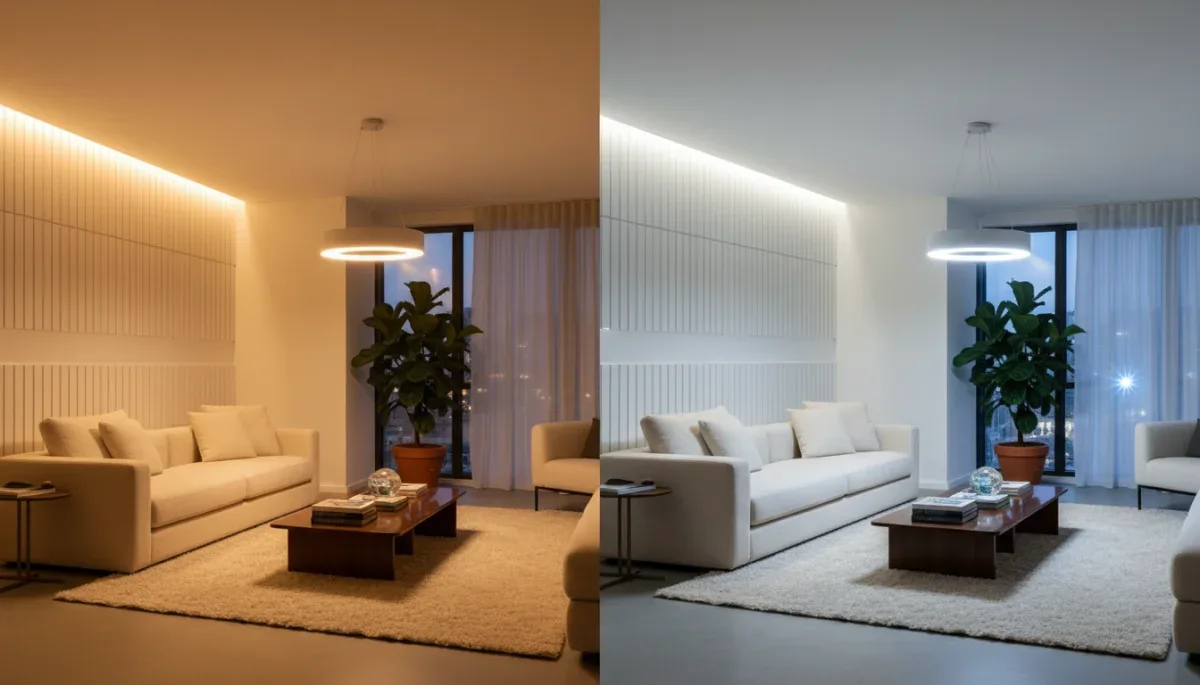
Choosing between warm white and cool white lighting comes down to matching the color temperature of the bulb to the primary activities in each room. Warm white produces a soft, yellow-toned glow that encourages relaxation, while cool white provides a brighter, bluer illumination that improves visibility for detailed tasks.
This guide helps homeowners and renters select the most flattering color temperatures for every space, though achieving balanced results requires checking product packaging carefully because manufacturer labels are not always standardized.
Understanding color temperature and the Kelvin scale
Color temperature measures the warmth or coolness of light emitted by a bulb. It is measured in units of Kelvin (K), ranging generally from 1,000K to 10,000K for commercial lighting products. The lower the Kelvin rating, the warmer and more yellow the light appears. Higher numbers indicate a cooler, bluer light that resembles natural midday sun.
Ads
The standard residential Kelvin scale covers three primary ranges:
- Warm white (2700K to 3000K): Delivers a soft, golden hue similar to traditional incandescent bulbs and candlelight.
- Neutral white (3500K to 4100K): Offers a balanced, clear light without heavy yellow or blue undertones.
- Cool white or daylight (5000K to 6500K): Emits a crisp, bright, blue-tinged light suitable for high-focus utility tasks.
Under Federal Trade Commission (FTC) labeling rules in the United States, light bulb packaging must feature a Lighting Facts label. This label lists the bulb's light appearance in Kelvins along with brightness measured in lumens, making it easier to verify exact specifications rather than relying on descriptive marketing terms.
Where warm white light works best in living spaces
Warm white light creates an inviting, comfortable atmosphere that promotes rest and downtime. Because human visual systems associate warm amber tones with sunset and firelight, this color range supports natural wind-down routines in the evening. As a result, warm white is the standard recommendation for spaces dedicated to leisure and quiet conversation.
Ads
Primary areas that benefit most from warm white bulbs include:
- Living rooms and dens: Table lamps and floor lamps in the 2700K range produce gentle ambient light that flatters skin tones and softens shadows.
- Bedrooms: Soft 2700K illumination keeps lighting low-contrast and restful before sleep.
- Dining rooms: Warm overhead chandeliers and pendant fixtures accentuate the warm tones in prepared food and tabletop wood finishes.
When selecting warm white bulbs for shared living areas, using 2700K creates an intimate, traditional look, whereas 3000K adds a touch more visual clarity without losing warmth.
When to choose cool white light for task areas
Cool white light provides higher visual contrast, which makes fine details easier to distinguish. When working with tools, reading small text, or preparing meals, cool lighting reduces eye strain by increasing sharpness. It also mimics bright morning sunlight, which helps support alertness during active daytime hours.
Spaces that perform best with cool white lighting include:
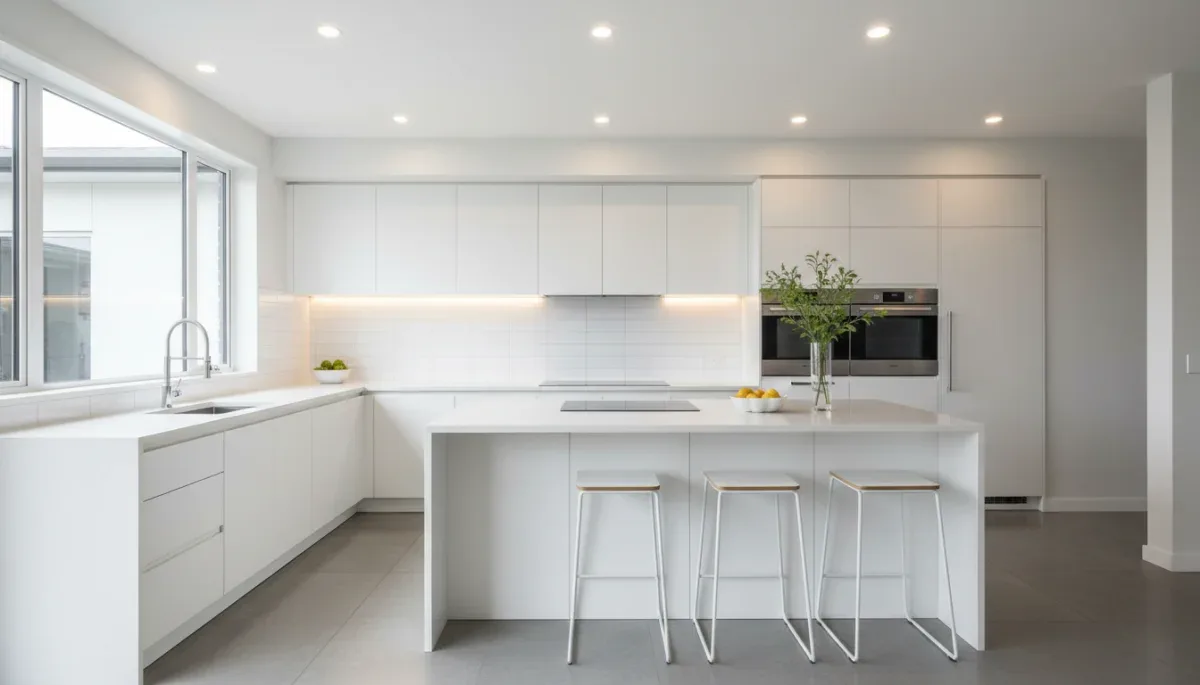
- Kitchens: Recessed ceiling fixtures and under-cabinet task bars at 4000K keep food prep areas crisp and clean.
- Home offices: Desk lamps and general overhead lighting between 4000K and 5000K improve concentration on printed documents and computer screens.
- Bathrooms: Vanity mirrors lit with neutral to cool light (3500K to 4000K) provide accurate color representation for grooming and makeup application.
- Garages and laundry rooms: Utility spaces benefit from 5000K illumination for sorting fabrics, finding tools, and general safety.
Using cool white bulbs above 5000K in relaxing areas is generally discouraged because the pronounced blue spectrum can make living rooms feel clinical or harsh.
How wall paint and decor interact with light color
The color temperature of your light source directly affects how paint colors, wood stains, and fabrics appear inside your home. A paint swatch that looks appealing in a retail store under commercial fluorescent light may look completely different under a 2700K living room fixture. Light with strong yellow wavelengths intensifies warm pigments and dulls cool ones, while blue-toned light does the reverse.
When decorating around specific color palettes, consider these visual effects:
- Warm wall colors: Tones such as beige, terracotta, cream, and warm wood grains appear rich and vibrant under 2700K to 3000K light.
- Cool wall colors: Grays, blues, and pure whites look crisp and true under 3500K to 4000K light, whereas warm lighting can give cool grays a muddy or yellowish cast.
- Color rendering: Check the Color Rendering Index (CRI) on the packaging. A CRI rating of 90 or higher ensures that colors appear accurate regardless of the Kelvin temperature.
Layering light temperatures across an open floor plan
Open floor plans present a common decorating challenge because distinct zones, such as an open kitchen and an adjacent living room, share the same visual field. Abruptly switching between 2700K in the seating area and 5000K over the kitchen island can create an uncoordinated and jarring transition across the room.
To maintain balance across an open layout, select a cohesive baseline temperature. A neutral 3000K to 3500K for general overhead recessed lighting bridges the gap between spaces. You can then layer functional lighting on separate electrical circuits or switches. Use 2700K accent lamps on end tables for evening relaxation, and add dedicated 4000K under-cabinet task fixtures in the kitchen that remain switched on only during active meal preparation.
At a glance
| Factor | What to know |
|---|---|
| Warm white range | 2700K to 3000K provides a cozy, relaxing glow suitable for living rooms and bedrooms. |
| Cool white range | 4000K to 5000K provides bright, high-contrast light for kitchens, offices, and utility rooms. |
| Color interaction | Warm light enhances red and wood tones, while cool light keeps whites and grays crisp. |
| Open floor plans | Use 3000K to 3500K for shared overheads and add dedicated fixtures for task zones. |
Frequently asked questions
Can you mix warm white and cool white in the same room?
You can mix temperatures if you assign them to different layers of light. Keep all overhead ceiling fixtures at a consistent Kelvin rating, such as 3000K. You can then use warmer accent lamps for reading areas and cooler directional task lights over specific work surfaces.
Is warm white or cool white better for reading?
Cool white between 3500K and 4000K is generally better for sustained reading because it provides higher contrast between printed text and white pages. However, for casual reading in bed before sleep, a warm 2700K light helps minimize sleep disruption.
Which light color makes a small room look bigger?
Cool white and neutral white lighting (3500K to 4000K) tend to make compact spaces feel more open. Cool light reflects cleanly off pale walls and bright surfaces, reducing heavy shadow zones and visually expanding the boundaries of the room.
What is the difference between soft white and warm white?
Soft white and warm white often refer to the same Kelvin range, typically between 2700K and 3000K. Because marketing terms vary by brand, always check the exact Kelvin number on the Lighting Facts label rather than relying on descriptive package names.
The bottom line
Choosing between warm white and cool white lighting comes down to defining how each room is used throughout the day. Opt for 2700K to 3000K to create calming living and sleeping areas, and reserve 4000K to 5000K for functional work zones like kitchens, desks, and bathrooms. Before purchasing bulbs in bulk, check the Lighting Facts label on the package to verify the exact Kelvin rating across all fixtures.
Written by
Maria Eduarda
Maria Eduarda writes about fashion & beauty, smart home tech and seasonal decor for papalions.com. Each article explains how things work, compares published details such as prices, policies and program rules, and points readers to the official source before they decide.