
Thread vs Zigbee: How Smart Home Networks Work
Ads
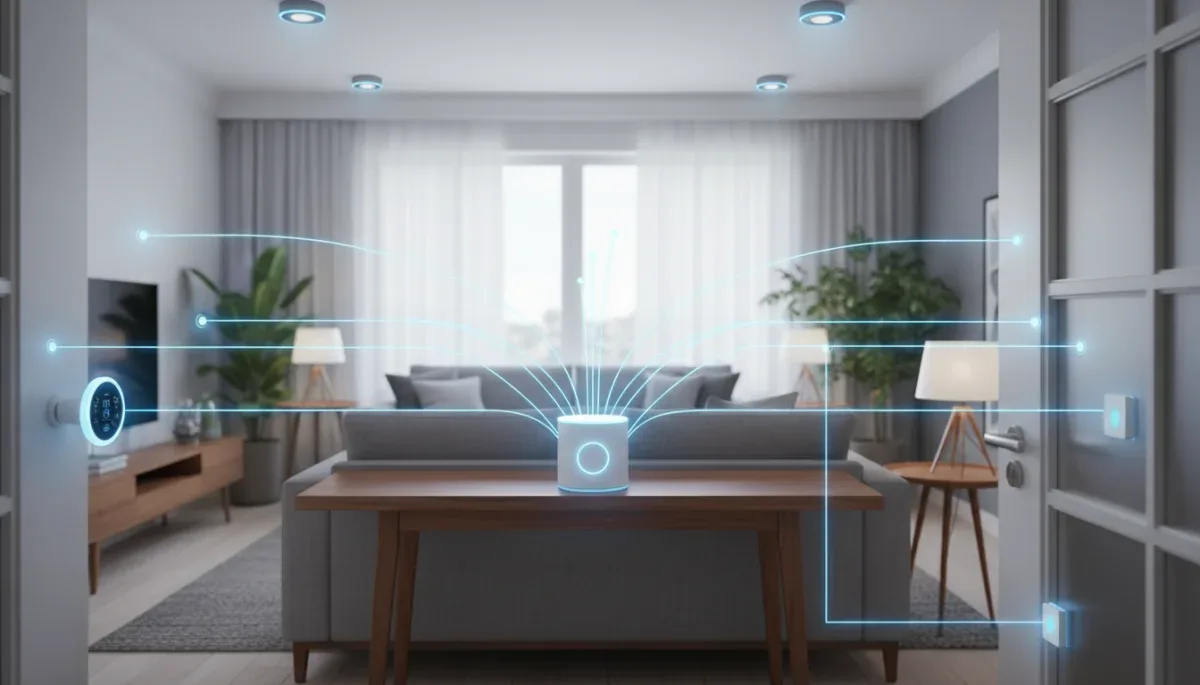
Thread and Zigbee are low-power wireless networking standards designed to connect smart home accessories without burdening your home Wi-Fi router. Understanding the operational differences between these protocols helps homeowners choose reliable devices that respond quickly and stay connected throughout a large living space.
Both standards build a self-healing mesh architecture where mains-powered devices relay messages across the house, but they handle network translation, bridge hardware, and internet protocol addressing differently. Choosing the right system depends on the smart home hub you already own and whether you plan to build around open standards like Matter.
How mesh networking functions in smart homes
Standard home Wi-Fi connects every accessory directly to a central router in a star topology. When you add dozens of light bulbs, switches, and sensors, the router must manage each connection independently, which can lead to network congestion and dead zones in distant rooms. Mesh networking solves this by allowing individual smart devices to pass signals to their neighbors, extending the reach of the entire network.
Ads
In a low-power mesh setup, battery-powered accessories like contact sensors and motion detectors act as endpoints that sleep to conserve energy. Mains-powered devices, including hardwired wall switches and smart plugs, serve as routers that forward packets across the system. If one routing device goes offline, the network automatically discovers an alternative path to deliver the command without user intervention.
Key components of wireless mesh systems
- End devices: Low-power sensors that send or receive data only when triggered and do not forward traffic for other hardware.
- Router nodes: Continuously powered devices that relay commands between neighbors to maintain range and reliability.
- Central coordinators: The hardware interface responsible for forming the network and managing secure device registration.
The architecture of Zigbee networks
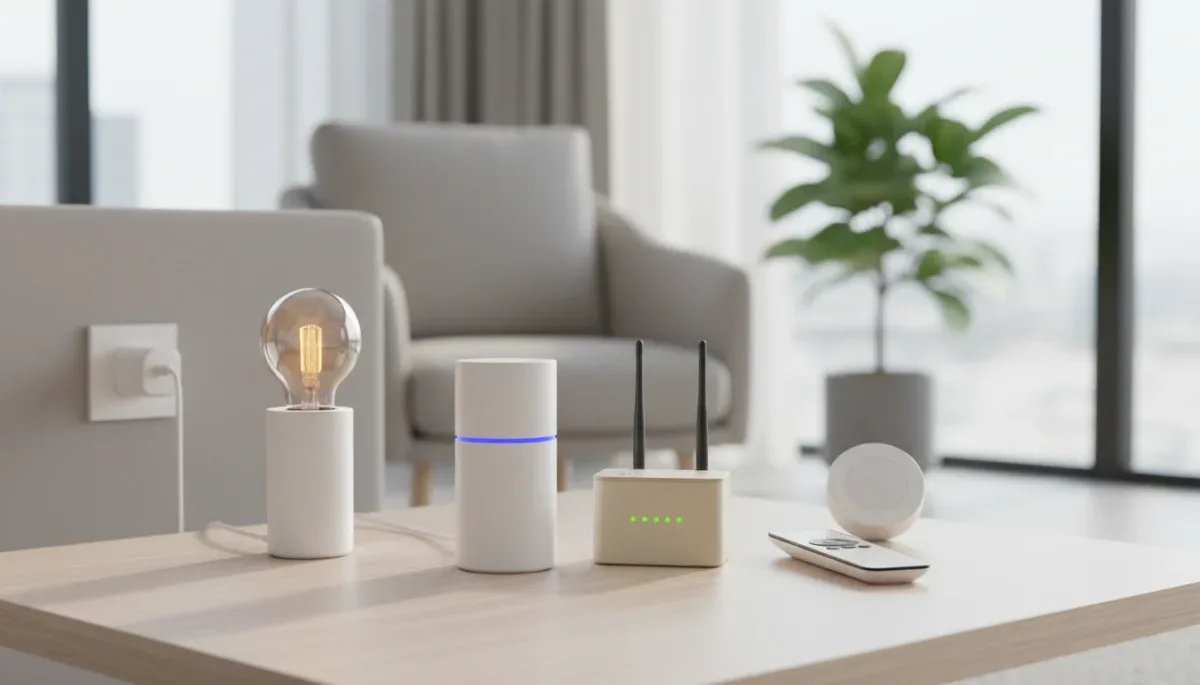
Zigbee has operated as an established smart home standard since the mid-2000s under the stewardship of the Connectivity Standards Alliance, formerly known as the Zigbee Alliance. The protocol runs on top of the IEEE 802.15.4 physical radio standard, typically utilizing the globally available 2.4 GHz radio frequency band to transmit data at rates up to 250 kilobits per second.
A conventional Zigbee network requires a dedicated hardware coordinator, commonly referred to as a hub or gateway. Because Zigbee uses its own proprietary application layer and network language, standard home computers, smartphones, and Wi-Fi routers cannot understand Zigbee signals directly. The Zigbee coordinator must receive the non-IP signal from your sensors, translate it into standard internet protocols, and pass the command to your home network or cloud service.
Ads
This architectural requirement means that devices linked to a proprietary Zigbee hub from one manufacturer often cannot communicate with a hub made by a different brand, unless both manufacturers follow identical application profiles like Zigbee 3.0 or connect through an open-source bridge platform.
How Thread approaches low-power connectivity
The Thread Group developed Thread specifically to modernize mesh communication for smart accessories. Like Zigbee, Thread uses low-power IEEE 802.15.4 wireless radios. However, Thread differs fundamentally at the networking layer by incorporating IPv6 natively through the 6LoWPAN standard, giving every connected accessory its own unique internet protocol address.
Because Thread operates on IP, devices speak the same fundamental networking language as your smartphone, home computer, and Wi-Fi router. Thread networks do not require a translating hub to interpret commands. Instead, they rely on a Thread Border Router, an ambient hardware component that simply routes IP packets between the 802.15.4 mesh network and your local Wi-Fi or Ethernet network without modifying the underlying data.
Built-in advantages of Thread Border Routers
- No application translation: Packets flow directly between your home network and the mesh device using standard IPv6 addressing.
- Multiple border routers: If you have several compatible smart speakers or streaming boxes in the home, they can share routing duties automatically.
- No single point of failure: If one border router is unplugged, another active border router on your network takes over message delivery without resetting paired accessories.
Matter and cross-ecosystem interoperability
Discussions regarding Thread vs Zigbee mesh networks often intersect with Matter, the universal smart home connectivity standard published by the Connectivity Standards Alliance. Matter is an application layer, meaning it defines the language devices use to turn lights on, adjust thermostats, or read sensor values across Apple Home, Google Home, Amazon Alexa, and Samsung SmartThings.
Thread was chosen as one of the primary transport layers for low-power Matter accessories alongside Wi-Fi and Ethernet. When you buy a Matter-over-Thread sensor, it joins your existing Thread mesh and communicates with any Matter controller on your home network regardless of brand. Zigbee, by contrast, is not a native transport layer for Matter, although many manufacturers sell bridging hubs that expose existing Zigbee sensors to Matter networks.
Reliability and power consumption differences
Both Zigbee and Thread provide low latency and extended battery life compared to standard Wi-Fi accessories. A coin-cell battery inside a Zigbee or Thread door contact can operate for one to three years under normal household usage because the radio remains in a low-power sleep state until an event triggers transmission.
Latency is practically imperceptible across both standards when the mesh topology is healthy, with commands executing in fractions of a second. However, Thread maintains a slight structural edge in large installations because its border router redundancy prevents network-wide blackouts if a single hub malfunctions. In a Zigbee setup, if the primary coordinator fails or loses power, the entire Zigbee mesh stops functioning until that specific hub is restored.
At a glance
| Feature | What to know |
|---|---|
| Network addressing | Thread assigns native IPv6 addresses to each accessory, while Zigbee relies on non-IP network translation. |
| Hardware bridge needs | Zigbee requires a dedicated brand coordinator, whereas Thread uses standardized border routers built into existing smart speakers. |
| Matter compatibility | Thread supports Matter natively out of the box, while Zigbee accessories require a manufacturer bridge to join Matter setups. |
| Radio frequency | Both protocols use low-energy IEEE 802.15.4 radios, primarily operating across the standard 2.4 GHz spectrum. |
Frequently asked questions
Can Zigbee devices communicate directly with Thread devices?
No, Zigbee and Thread devices cannot talk directly to one another. Although both use similar IEEE 802.15.4 wireless radios, they operate on completely different software protocols and network layers. To make them work together, you must use a smart home platform or bridging hub that supports both standards.
Do I need a separate hub for every Thread product?
No, you do not need separate hubs for individual Thread products. A single Thread Border Router from any certified brand can route signals for all your Thread accessories. Many current smart speakers, televisions, and streaming hubs already function as border routers out of the box.
Does a Thread network slow down home Wi-Fi?
No, Thread networks do not congest your home Wi-Fi bandwidth. Thread traffic travels across a dedicated, low-power mesh frequency rather than your standard Wi-Fi channels. Only the compact border router interface connects to your main router to exchange lightweight device commands.
Are Zigbee devices becoming obsolete?
No, Zigbee devices remain widely produced, stable, and cost-effective for large installations. Many established smart lighting and sensor brands continue to support Zigbee ecosystems. Existing Zigbee setups can also connect into modern setups through manufacturer hubs that feature Matter bridge support.
The bottom line
Both Thread and Zigbee provide responsive, energy-efficient mesh networking that keeps smart accessories from overwhelming your home Wi-Fi router. While Zigbee offers a mature ecosystem with hundreds of affordable sensors, Thread provides direct IPv6 connectivity and native alignment with the Matter standard for long-term platform flexibility. Before purchasing new accessories, check the specifications of your existing smart speakers or hubs to confirm whether they already contain an active Thread Border Router or a Zigbee coordinator.
Written by
Lucas Bastos
Lucas Bastos writes about fashion & beauty, seasonal decor and smart home tech for papalions.com. Each article explains how things work, compares published details such as prices, policies and program rules, and points readers to the official source before they decide.