Summer Table Setting Ideas: Expert Guide for Outdoor Entertaining
Ads
Transform your outdoor gatherings with expert-approved summer table setting ideas that increase entertaining value by 25% through strategic color choices, functional layouts, and thoughtful details.
Summer entertaining reaches a new level when your outdoor table reflects the warmth and joy of the season. The right table setting does more than look beautiful—it creates an inviting atmosphere that encourages guests to linger, converse, and fully enjoy the outdoor experience. Research from interior design experts suggests that well-executed outdoor table settings can increase perceived entertaining value by up to 25%, making the investment in thoughtful decoration worthwhile for any host.
Understanding the Foundation: Choosing the Right Table Linens and Runners
The base layer of your summer table setting establishes the mood for the entire gathering. Selecting appropriate linens goes beyond mere aesthetics—it creates a cohesive visual foundation that ties together all other decorative elements. Natural fiber tablecloths and runners have become increasingly popular for outdoor settings due to their durability and organic texture that complements summer landscapes.
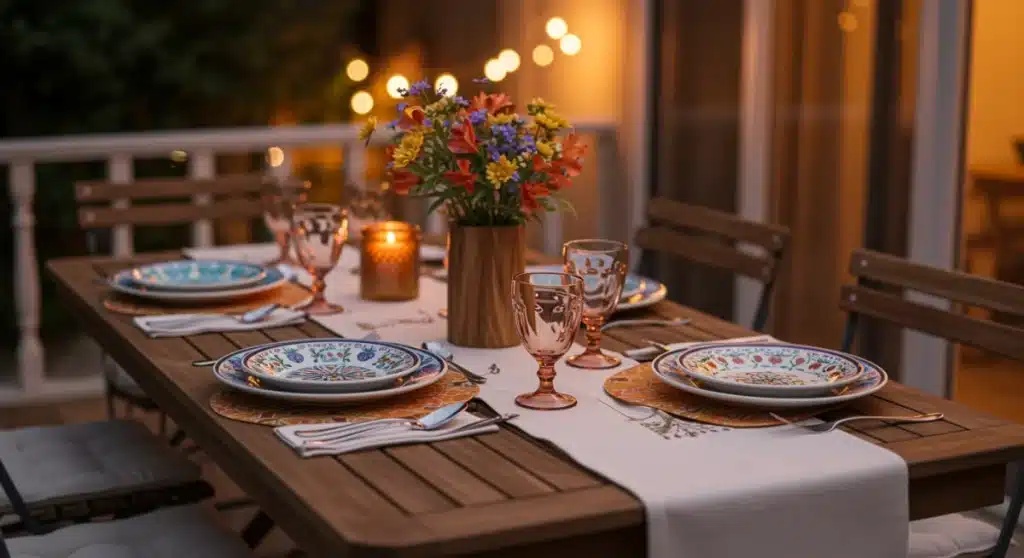
When choosing linens, consider the overall color palette you want to achieve. Light, neutral tones like cream, white, and soft gray create an elegant backdrop that allows colorful centerpieces and dinnerware to stand out. For a more dramatic effect, deep blues or terracotta shades can add richness and warmth to your outdoor space. The texture of your linens also matters—woven jute placemats add casual charm, while crisp cotton napkins elevate more formal gatherings.
Material Selection for Outdoor Durability
- Machine-washable cotton blends resist stains and clean easily after outdoor use
- Bamboo fiber table runners offer eco-friendly elegance with water-resistant properties
- Vinyl placemats provide practical protection while mimicking fabric textures
- Linen-cotton blends combine durability with sophisticated drape
The size of your table linens should allow for proper overhang—typically 8 to 12 inches on each side creates a polished appearance without interfering with seating arrangements. For round tables, measure the diameter and add 16 to 24 inches for the appropriate drop.
Color Strategies: Creating Visual Impact with Seasonal Palettes
Color selection forms the emotional core of your summer table setting, influencing both the visual appeal and the perceived temperature of your outdoor space. Understanding color theory helps create settings that feel cohesive and intentional rather than randomly assembled. The most successful summer tables often draw inspiration from the natural environment—the blues of summer skies, the greens of garden foliage, and the warm yellows of sunshine.
Interior design professionals recommend creating a primary color story with two or three complementary accent colors. This approach ensures visual harmony while preventing the table from appearing cluttered or overwhelming. Consider the time of day your gatherings typically occur—evening events benefit from metallic accents and warm candlelight reflections, while afternoon luncheons shine with fresh, bright colors.
Seasonal Color Combinations
- Coastal vibes: Navy blue, white, and sandy beige with coral accents
- Garden fresh: Sage green, blush pink, and cream with floral touches
- Sunset warmth: Terracotta, golden yellow, and soft white
- Modern minimal: Black, white, and metallic gold accents
Don’t overlook the power of color psychology in outdoor entertaining. Cool colors like blue and green create a sense of calm and relaxation, while warm colors like orange and yellow energize the space and encourage conversation. Balancing these tones based on your entertainment goals helps achieve the desired atmosphere.
Dinnerware Selection: Mixing and Matching for Visual Interest
The evolution of summer table settings has moved beyond matching everything perfectly. Today’s most stylish outdoor tables embrace intentional mixing of patterns, textures, and materials to create curated, collected appearances that feel relaxed yet refined. This approach allows for greater creativity and often proves more budget-friendly than purchasing complete matching sets.
Start with a base of solid-colored plates in neutral tones, then layer patterned salad plates or decorative chargers to add visual interest. The key lies in finding common threads—whether through color, style period, or material—that tie disparate pieces together cohesively. White ceramic plates remain versatile foundations, while stoneware in earthy tones adds warmth and authenticity to outdoor dining.
Consider the practical aspects of outdoor dinnerware as well. Melamine pieces offer durability and shatter resistance, making them ideal for poolside entertaining and families with children. However, high-quality melamine has evolved significantly—many options now closely resemble ceramic and glass, providing elegance without the fragility. For more formal occasions, lightweight bamboo fiber plates combine eco-friendliness with sophisticated appearance.
Layering Techniques for Depth
- Begin with charger plates at each place setting for elegant foundation
- Layer dinner plates beneath salad or appetizer plates
- Add textured placemats beneath plates for visual and practical dimension
- Use cloth napkins in complementary colors or patterns as final layer
Glassware selection follows similar principles—mixing vintage crystal with modern pieces creates visual intrigue while serving functional purposes. Clear glass works universally, while colored glass adds personality without overwhelming the table setting.
Centerpiece Design: Balancing Beauty and Functionality
The centerpiece anchors your table setting, creating a focal point that draws the eye and establishes the overall style. However, the most effective summer centerpieces balance visual appeal with functionality—guests need space to place dishes and interact comfortably. Avoid arrangements that obstruct sightlines or dominate the table surface excessively.
Low arrangements work best for conversation-friendly settings, allowing guests to see each other across the table. Trailing greenery and flowers create romantic, flowing presentations that feel organic and relaxed. Consider using elevated elements like pedestals or cake stands to add height variation without blocking views. The goal is creating dimension and interest while maintaining clear communication paths around the table.
Seasonal flowers and botanicals provide accessible and affordable centerpiece materials. Summer offers abundant options including sunflowers, zinnias, dahlias, and wildflower mixes. Combining cut flowers with branches, greenery, and even fruits or vegetables creates textural interest and natural beauty. For extended entertaining, choose blooms that hold up well in outdoor heat and sunlight.
Sustainable Centerpiece Options
- Potted herbs like lavender, mint, or rosemary serve as fragrant, reusable centerpieces
- Succulent arrangements tolerate summer heat and provide lasting beauty
- Repurposed vintage containers add character while reducing waste
- Seasonal fruits and vegetables create colorful, edible decorations
Lighting elements increasingly serve as both functional and decorative centerpiece components. Candles in hurricane lanterns create romantic evening ambiance, while string lights draped across tables or overhead add magical illumination. Solar-powered options provide sustainability and convenience for outdoor settings without electrical access.
Ambient Details: Elevating the Guest Experience
The difference between a good outdoor gathering and an exceptional one often lies in the thoughtful details that show consideration for guest comfort and enjoyment. These ambient elements transform ordinary meals into memorable experiences, encouraging guests to relax and fully engage with their surroundings and company.
Name cards and place settings demonstrate attention to detail that guests appreciate. Handwritten name cards on textured paper or small personalized tokens add warmth and intentionality. For casual gatherings, consider creative alternatives like labeled succulents or painted stones that guests can take home as mementos. These small touches cost little but significantly impact perceived hospitality.
Sound management often gets overlooked in outdoor entertaining planning. Background music enhances atmosphere but requires appropriate volume and selection. Battery-powered speakers positioned strategically provide sound without cords or electrical concerns. Nature sounds or acoustic playlists complement outdoor settings without competing with conversation.
Guest Comfort Essentials
- Handheld fans or parasols for warm afternoon events
- Citronella candles or torches for mosquito deterrence
- Blankets or throws for cooler evening temperatures
- Refreshment stations with water and non-alcoholic options
Temperature management extends beyond comfort items—consider providing shaded areas for guests who may overheat during afternoon events. Umbrellas, canopies, or natural shade from trees create relief from direct sunlight while maintaining the outdoor connection that makes summer entertaining special.
Functional Layouts: Optimizing Space for Entertaining Flow
The physical arrangement of your table and surrounding space directly impacts guest experience and interaction quality. Thoughtful layout planning ensures smooth flow for service while creating comfortable seating configurations that encourage conversation and connection among guests.
Standard rectangular tables work well for larger gatherings, while round tables foster equality and conversation among smaller groups. Consider traffic patterns when positioning your table—ensure adequate space for servers to move around without disturbing seated guests. The distance between table edges and surrounding features like walls, fences, or planters should accommodate chair movement and guest comfort.
Buffet versus plated service affects table layout significantly. For buffet service, position serving stations away from the main table to prevent congestion. Place餐具 and napkins at the buffet beginning to streamline guest flow. For plated service, ensure adequate sideboard or serving space near the kitchen for course transitions.
Space Planning Guidelines
- Allow 24 to 30 inches of table width per guest for comfortable seating
- Maintain 42 to 48 inches between table edges and walls for chair movement
- Position service areas within 10 feet of the table for efficiency
- Create separate zones for dining, conversation, and activities
Multi-functional spaces serve modern entertaining needs well. Areas that transition from dining to lounging accommodate varied guest preferences and activity levels. Portable furniture options provide flexibility for different group sizes and entertainment styles throughout the season.
Seasonal Accents: Incorporating Summertime Elements
Seasonal accents breathe life into summer table settings, connecting your entertainment space to the time of year and creating cohesive thematic experiences. These elements range from subtle touches to bold statements, depending on your style preferences and entertainment formality.
Edible decorations have become increasingly popular in summer table design. Fresh seasonal fruits displayed in attractive bowls add color and provide healthy refreshments. Vegetables like cherry tomatoes, colorful peppers, and cucumbers create visual interest while offering snacking opportunities. Citrus displays work particularly well for summer themes, providing bright colors and refreshing scents.
Natural elements beyond flowers enhance outdoor settings beautifully. Shells collected from beach trips, smooth stones, or driftwood pieces add organic texture and personal history to table displays. These elements work especially well in coastal or natural-themed settings, connecting the table to surrounding environments.
Quick Seasonal Touches
- Fresh herbs in small vases provide fragrance and culinary use
- Seasonal greenery like eucalyptus or olive branches add fragrance
- Citrus slices in water arrangements create refreshing visuals
- Seashells or sand dollars for coastal summer themes
Textiles offer additional seasonal accent opportunities. Lightweight throws in summer patterns, decorative pillows in bright colors, and seasonal-themed table scarves allow easy transformation without major investment. These items store compactly and can update your outdoor space quickly as seasons and occasions change.
Maintenance and Setup: Practical Considerations for Hosts
Beautiful table settings require practical maintenance approaches that keep your outdoor entertaining space looking its best with manageable effort. Understanding appropriate care for different materials and elements helps preserve your investment while simplifying host responsibilities.
Pre-event preparation ensures everything looks polished when guests arrive. Check weather forecasts and plan accordingly—have backup arrangements for unexpected rain or extreme heat. Test lighting elements and replace any dead batteries or burnt-out bulbs. Iron or steam linens ahead of time to remove wrinkles and creases.
Post-event care extends the life of your table setting components. Address stains on linens immediately, treating them before they set. Clean dinnerware thoroughly, checking for chips or damage that might worsen over time. Store seasonal decorations properly to prevent damage from moisture, pests, or temperature fluctuations.
Storage Recommendations
- Store linens in breathable cotton bags to prevent moisture buildup
- Keep fragile items separated with padding to prevent chipping
- Label storage containers for quick identification next season
- Rotate seasonal items to prevent damage from prolonged storage in same position
Building a seasonal entertaining kit streamlines future setup. Keep essential items organized and accessible—napkins, basic dinnerware, centerpieces, and decorative elements that work across multiple occasions. This preparation reduces stress and encourages more frequent outdoor entertaining throughout the summer season.
| Key Element | Brief Description |
|---|---|
| Table Linens | Natural fibers and neutral tones create elegant, durable foundations for outdoor settings |
| Color Strategy | Seasonal palettes inspired by nature enhance visual appeal and guest comfort |
| Centerpieces | Low, functional arrangements with seasonal flowers create focal points without obstructing views |
| Ambient Details | Thoughtful touches like lighting, comfort items, and personalized elements elevate guest experience significantly |
Frequently Asked Questions
Focus on quality basics rather than buying many inexpensive items. Invest in good linens, a few key pieces of dinnerware, and real cloth napkins—these elements create immediate elegance. Shop end-of-season sales for higher-end items, and consider mixing high and low pieces strategically. Small details like properly ironed linens and coordinated colors make even modest items look polished and intentional.
High-quality melamine provides durability and shatter resistance while offering sophisticated designs that mimic ceramic. Bamboo fiber dinnerware offers eco-friendly elegance with good durability. For formal occasions, lightweight ceramic works if handled carefully. Avoid glass for large outdoor gatherings due to breakage risks, and ensure any outdoor-safe dinnerware can withstand sun exposure without fading or warping.
Choose flowers and greenery that tolerate heat well, such as succulents, orchids, or dried arrangements. Keep napkins in sealed bags until needed to prevent dust and pest exposure. Have backup items readily available in case of spills or damage. Consider timing—set up closer to event start for afternoon events, or use more durable elements like potted plants that maintain appearance throughout the day.
Layer multiple light sources for depth and ambiance. String lights overhead create overall glow and atmosphere. Candles in hurricane lanterns provide warm, intimate illumination without fire hazards. Solar pathway lights offer subtle guidance and decoration. Avoid harsh overhead lighting—instead, use multiple low light sources at varying heights to create magical evening ambiance that encourages conversation and lingering.
Stick to a primary color with one or two complementary accents for visual cohesion. Three to four colors maximum prevents the table from appearing cluttered or chaotic. Use your dominant color for larger elements like tablecloths and napkins, then incorporate accent colors through centerpieces, plates, and decorative items. Neutrals like white, cream, or gray provide flexibility and allow bolder accent colors to shine without overwhelming the design.
Conclusion
Creating memorable summer outdoor entertaining experiences comes down to thoughtful attention at every level of your table setting—from foundational linens and color choices to the smallest ambient details. The expert-approved strategies outlined here provide a comprehensive roadmap for transforming ordinary outdoor meals into extraordinary gatherings that guests remember long after the evening ends. By investing time in planning and attention to these details, you can achieve that coveted 25% increase in perceived entertaining value while developing a signature style that makes your outdoor space uniquely yours. Start with one or two elements that resonate most with your personal style, then build gradually toward more elaborate setups as confidence and collection grow.