How to Maximize Small Spaces: 12 Furniture Arrangement Rules From Professional Stagers
Ads
Professional stagers transform cramped spaces into inviting rooms using strategic furniture placement, multi-functional pieces, and visual tricks that create the illusion of more square footage without sacrificing style or comfort.
Living in a compact apartment or small house doesn’t mean you have to feel claustrophobic or sacrifice functionality. Professional home stagers work with limited square footage every day, and they’ve developed proven techniques that make rooms feel significantly larger. The secret lies not in buying new furniture, but in understanding how placement, scale, and visual weight affect perception. Whether you’re decorating a studio apartment or trying to make a small living room work for a family, these 12 rules from professional stagers will help you maximize every inch of your space while creating a home that feels open, inviting, and remarkably spacious.
Understanding the Psychology of Space in Small Rooms
The way we perceive space depends heavily on visual cues that our brains process automatically. Professional stagers understand these psychological triggers and use them to their advantage when arranging furniture. One of the most fundamental principles involves creating clear pathways through the room that allow the eye to travel freely without obstruction. When furniture blocks natural walkways or clusters too tightly together, the room feels cramped even if it has decent dimensions.
Professional stagers also consider what they call the “breathing room” concept. Every piece of furniture needs a certain amount of negative space around it to prevent the room from feeling overwhelming. This doesn’t mean you need huge gaps between items, but rather intentional spacing that allows each piece to stand out while contributing to an overall sense of openness.
Key Psychological Triggers That Affect Space Perception
- Visual boundaries created by furniture placement define how we navigate and experience a room
- Symmetrical arrangements tend to feel more spacious and put-together than asymmetrical ones
- Consistent sight lines throughout the space create continuity and flow
- Light-colored furniture and decor reflect more light, making rooms appear larger
The height of your furniture also plays a crucial role in space perception. Lower pieces tend to open up the upper portion of the room, creating a sense of airiness, while taller pieces can make ceilings feel lower. For small spaces, stagers generally recommend keeping the visual bulk of furniture lower to the ground, which draws the eye upward and creates the illusion of higher ceilings.
Rule One: Measure Twice, Arrange Once
Before moving a single piece of furniture, professional stagers always measure the room and create a scaled floor plan. This initial step prevents the common mistake of pushing furniture against walls simply because it seems like the logical place for it. In reality, floating furniture away from walls often creates better flow and makes the room feel more substantial.
When measuring, note the location of windows, doors, electrical outlets, and any architectural features that affect furniture placement. These elements determine traffic patterns and functional zones within the room. A common error in small spaces is placing all furniture against walls, which creates a narrow walkway effect and leaves the center of the room empty and unused.
Instead, consider pulling seating groups away from the walls to create intimate conversation areas. This arrangement actually makes the room feel larger because it creates multiple focal points and utilizes the full square footage. The space between furniture and walls doesn’t go unnoticed—it contributes to the overall sense of openness when handled correctly.
Rule Two: Establish a Clear Focal Point
Every room needs a focal point that draws the eye and provides visual anchor. In small spaces, this becomes even more critical because it prevents the room from feeling chaotic or overwhelming. Professional stagers identify the natural focal point—whether it’s a fireplace, large window with a view, or architectural feature—and arrange furniture to complement rather than compete with it.
When no natural focal point exists, create one deliberately. This could be a gallery wall, a statement piece of furniture, or an accent wall with bold color. The focal point gives the eye a place to rest and provides a starting point for furniture arrangement. All other pieces should relate to this anchor point, creating a cohesive and intentional look.
Avoid placing furniture in front of windows whenever possible, as this blocks natural light—the most powerful tool for making small spaces feel larger. If you must place seating near a window, choose low-back chairs or benches that won’t block the light entirely. The goal is to maximize the beneficial effects of natural light while maintaining functional furniture arrangements.
Rule Three: The Power of Floating Furniture
One of the biggest mistakes people make in small spaces is pushing all furniture against the walls. While this might seem logical for maximizing floor space, professional stagers often recommend “floating” furniture away from walls to create distinct zones and improve traffic flow. This technique works particularly well in open-concept living areas where you need to define different functional spaces.
Floating a sofa in the middle of a small living room creates a natural division between the seating area and other parts of the room. It also allows you to place a console table behind the sofa, adding storage and display space without cluttering walls. The key is ensuring there’s still enough clearance around the furniture for comfortable movement—generally at least 30 inches for main traffic paths.
In dining areas, floating the table away from walls encourages better flow during meals and makes the space feel more intentional. It also creates opportunities for adding chairs on multiple sides, which works well for entertaining. The visual breathing room created by floating furniture actually makes the floor appear larger because the eye can travel across the entire space without hitting walls immediately.
Rule Four: Choose the Right Scale Furniture
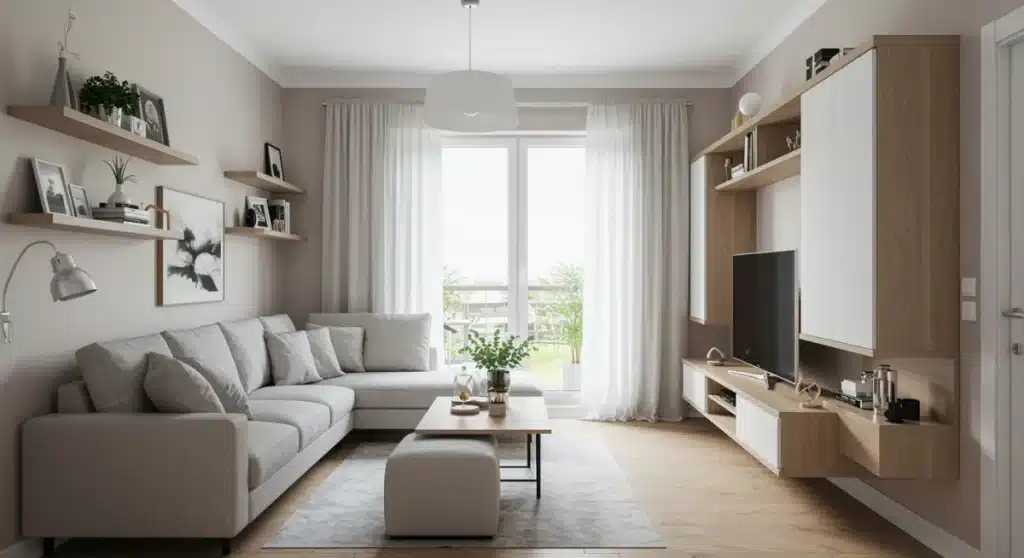
Perhaps the most critical rule for small spaces involves selecting furniture that’s appropriately scaled to the room. Professional stagers often advise clients to downsize their furniture expectations slightly. A large sectional might work beautifully in a spacious family room, but it can overwhelm a small apartment living room entirely.
Measure your space carefully and understand the difference between actual dimensions and visual weight. A piece with exposed legs and open space underneath appears lighter than a solid, boxy piece of the same size. Transparent materials like acrylic chairs or glass tables take up minimal visual space, making them ideal for small areas. When shopping for small space furniture, look for pieces with slender profiles, exposed legs, and transparent elements.
Consider the height-to-width ratio of furniture as well. A tall, narrow bookshelf takes up less floor space than a short, wide one while providing the same storage capacity. Similarly, a tall headboard draws the eye upward, making the bedroom feel larger vertically. Understanding these proportions helps you choose pieces that maximize functionality without overwhelming the space.
Rule Five: Embrace Multi-Functional Pieces
In small spaces, every piece of furniture should earn its place by serving multiple purposes. Professional stagers are fans of ottomans with hidden storage, coffee tables that convert to desks, and sofas that fold out into beds. These versatile pieces allow you to maintain flexibility without cluttering the room with extra items.
The key is choosing multi-functional furniture that doesn’t look like a compromise. Many modern pieces now offer seamless transitions between functions, so guests won’t even realize your coffee table hides a storage compartment or your dining table can expand for dinner parties. Look for clean lines and quality materials that blend with your overall design aesthetic.
Consider vertical storage solutions as well. Floor-to-ceiling shelving units maximize storage without consuming valuable floor space. Wall-mounted desks fold away when not in use, creating a workspace that disappears completely. The goal is finding furniture that adapts to your changing needs throughout the day, allowing one room to serve multiple functions without feeling crowded or chaotic.
Best Multi-Functional Furniture for Small Spaces
- Storage ottomans that provide seating and hidden storage for blankets or magazines
- Extendable dining tables that expand for entertaining and contract for daily use
- Wall beds or sofa beds that transform living areas into guest bedrooms
- Nesting tables that can be spread out when needed and stacked when not in use
Rule Six: Create Intentional Traffic Flow
Professional stagers always consider how people will move through the room when arranging furniture. In small spaces, this becomes especially important because poor traffic flow is immediately noticeable and can make the space feel cramped and uncomfortable. The goal is creating clear pathways that connect different areas of the room without requiring people to navigate around furniture.
Identify the natural entry and exit points of the room, then arrange furniture so that traffic flows around the perimeter or through established pathways. Avoid placing furniture in the direct line between doorways, as this creates awkward obstacles. The main traffic path through a room should be at least 36 inches wide, though 48 inches is ideal for comfortable movement.
In multi-functional spaces, use furniture arrangement to define different zones while maintaining visual connection between them. A living area might flow into a dining space through a natural opening created by furniture placement. The key is ensuring that transitions between zones feel logical and intentional rather than accidental or cramped.
Rule Seven: Use Rugs to Define Spaces
Rugs are incredibly powerful tools for defining spaces in open floor plans or small rooms. Professional stagers use rugs to anchor furniture groupings, create visual boundaries between different functional areas, and add warmth and texture to the space. In small rooms, a well-chosen rug can make the difference between a space that feels cohesive and one that feels scattered.
Choose rugs that are appropriately sized for your furniture arrangement. A common mistake in small spaces is choosing rugs that are too small, which makes the room feel even smaller and disconnected. Ideally, all main furniture pieces in a grouping should sit either completely on or completely off the rug. At minimum, the front legs of seating should rest on the rug to create visual unity.
Consider the color and pattern of rugs as well. Light-colored rugs reflect more light and make spaces feel larger, while dark colors add coziness but can make rooms feel smaller. Patterned rugs can add visual interest and help disguise wear, but choose patterns that complement rather than compete with other elements in the room. In very small spaces, consider using multiple smaller rugs to define different areas rather than one large rug that might overwhelm the space.
Rule Eight: Maximize Vertical Space
When floor space is limited, thinking vertically becomes essential. Professional stagers always look up when assessing small spaces, identifying opportunities to use walls and vertical surfaces for storage and display. Floor-to-ceiling shelving, wall-mounted cabinets, and tall bookcases all maximize storage without consuming precious square footage.
Don’t neglect the space above doors and windows, which often goes unused in small apartments. Floating shelves above doorways provide storage for items that aren’t used daily. Window walls can accommodate shelves or cabinets that take advantage of the vertical space without blocking light. The key is finding storage solutions that go upward rather than outward.
Consider the visual impact of vertical elements as well. Floor-length curtains hung close to the ceiling draw the eye upward, making ceilings appear higher. Tall plants or vertical art pieces create similar effects. In bedrooms, tall headboards or floating nightstands with pendant lighting above can transform a cramped space into one that feels open and sophisticated.
Vertical Storage Solutions for Small Spaces
- Floor-to-ceiling shelving units that maximize storage capacity
- Wall-mounted hooks and rails for vertical hanging storage
- Tall, narrow dressers that provide storage without taking up much floor space
- Hanging organizers for closets and pantry doors
Rule Nine: Master the Art of Layering Lighting
Lighting plays a crucial role in how spacious a room feels, and professional stagers always incorporate multiple light sources to create depth and dimension. A single overhead light creates flat, shadows-free illumination that can make small rooms feel like boxes. Layered lighting with ambient, task, and accent lights adds visual interest and makes spaces feel more refined.
In small spaces, avoid relying solely on overhead lighting. Instead, incorporate table lamps, floor lamps, and wall sconces that add light at different heights. This creates pools of light that define different areas and add warmth to the space. Dimmable switches allow you to adjust lighting levels throughout the day, creating different moods and making the space feel more versatile.
Consider the color temperature of your light bulbs as well. Warmer tones (2700-3000K) create cozy, inviting atmospheres, while cooler tones can feel clinical. In small spaces, warmer lighting often feels more welcoming and can make the space feel more like home. Avoid cool fluorescent lighting that creates harsh shadows and makes spaces feel sterile.
Rule Ten: Declutter Ruthlessly
No amount of furniture arrangement can overcome the negative impact of clutter. Professional stagers know that small spaces require ruthless editing, keeping only items that serve a functional purpose or bring genuine joy. The goal is creating a curated collection of belongings that enhances rather than overwhelms the space.
Before arranging furniture, go through every item in the room and make hard decisions about what to keep. Consider whether each item is used regularly, serves a specific purpose, or contributes to the room’s aesthetic. Items that don’t meet at least one of these criteria should be stored elsewhere, donated, or discarded. This process can be emotional, but the results are worth it—a clutter-free space feels immediately larger and more peaceful.
Once you’ve edited your belongings, find smart storage solutions for the items you need to keep. The key is having a designated place for everything, so items don’t accumulate on surfaces or in walkways. Built-in storage, furniture with hidden compartments, and creative organizational systems all help maintain the clean, spacious feel you’re working to achieve.
Rule Eleven: Use Mirrors Strategically
Mirrors are perhaps the most powerful tool for making small spaces feel larger. Professional stagers use mirrors strategically to reflect light, create the illusion of depth, and add visual interest to rooms. A well-placed mirror can effectively double the perceived size of a space by reflecting the opposite wall.
The key is placement. Hang mirrors opposite windows to reflect natural light deep into the room. Use large mirrors on feature walls to create the illusion of additional space beyond. Even small mirrors grouped together can make a significant impact. Consider mirrored furniture as well—dressers or coffee tables with mirrored surfaces add light-reflecting properties while serving their functional purposes.
Be strategic about mirror shapes as well. Vertical mirrors make ceilings appear higher, while horizontal mirrors can make narrow rooms feel wider. Avoid placing mirrors where they’ll reflect clutter or awkward views, as this defeats the purpose of creating a spacious feel. The reflected content should be something attractive that contributes to the overall sense of openness.
Rule Twelve: Edit and Refine Continuously
Professional stagers know that arranging furniture is rarely a one-time project. Spaces evolve as our needs change, and achieving the perfect arrangement often requires ongoing tweaking and refinement. After initially arranging furniture according to these rules, spend time living in the space and noting what works and what doesn’t.
Pay attention to how you actually use the room versus how you thought you would use it. The ideal arrangement might differ from your initial plan based on daily habits and lifestyle needs. Don’t be afraid to make adjustments—even small changes in furniture placement can significantly impact how the space feels and functions.
Take photos of your arrangement from different angles and study them objectively. Sometimes seeing the room from a different perspective reveals issues that aren’t obvious when you’re moving through the space daily. Ask friends for honest feedback about flow and functionality. The goal is creating a space that works for your specific needs while maximizing the perceived square footage.
| Key Principle | Brief Description |
|---|---|
| Scale Matters | Choose furniture proportional to your room size, prioritizing pieces with exposed legs and transparent elements |
| Float Furniture | Pull furniture away from walls to create distinct zones and improve traffic flow throughout the space |
| Multi-Functional Pieces | Select furniture that serves multiple purposes to maximize functionality without increasing clutter |
| Vertical Thinking | Use walls and vertical surfaces for storage and display to free up valuable floor space |
Frequently Asked Questions
The most common mistake is pushing all furniture against the walls. While this seems logical for maximizing floor space, it actually makes rooms feel smaller by creating narrow walkways and leaving the center empty. Professional stagers recommend floating furniture away from walls to create distinct zones and improve traffic flow, which makes the space feel more substantial and inviting.
Measure your room carefully and create a scaled floor plan before shopping. Look for furniture with slender profiles, exposed legs, and transparent elements that take up less visual space. Consider the height-to-width ratio of pieces—tall, narrow furniture often works better than short, wide pieces in small spaces. When in doubt, choose slightly smaller pieces than you think you need, as you can always add more later if the space allows.
Yes, mirrors are one of the most effective tools for creating the illusion of more space. Place mirrors opposite windows to reflect natural light deep into the room. Large mirrors on feature walls can create the illusion of additional space beyond. Vertical mirrors make ceilings appear higher, while horizontal mirrors can widen narrow rooms. Just ensure the reflected content is attractive—a mirror reflecting clutter will undermine the spacious effect.
Layered lighting works best in small spaces. Avoid relying solely on overhead lighting, which creates flat illumination. Instead, incorporate table lamps, floor lamps, and wall sconces at different heights to create depth and dimension. Use warmer color temperatures (2700-3000K) for a cozy, inviting feel. Dimmable switches allow you to adjust lighting for different activities and moods throughout the day.
Professional stagers recommend reassessing your arrangement seasonally or whenever your lifestyle changes significantly. Take photos from different angles to identify issues you might miss while moving through the space daily. Be open to making small adjustments—a few inches can make a significant difference in how functional and spacious a room feels. The goal is continuous improvement based on how you actually use the space.
Conclusion
Maximizing small spaces requires a thoughtful combination of strategic furniture selection, intentional placement, and continuous refinement. These 12 rules from professional stagers provide a comprehensive framework for transforming cramped rooms into functional, spacious-looking environments. Remember that the principles work together—appropriate furniture scale, floating arrangements, vertical storage, and layered lighting all contribute to the overall sense of openness. Start with the changes that fit your budget and lifestyle, then gradually implement more advanced techniques as you become comfortable with the process. Your small space has tremendous potential waiting to be unlocked through intelligent furniture arrangement.