
How hardwired video doorbells work with mechanical chimes
Ads
Hardwired video doorbells ring existing mechanical chimes by using a low-voltage circuit bridge that supplies constant power to the camera while selectively completing the circuit to fire the physical tone bars when someone presses the button. This hybrid design allows standard residential wiring to power Wi-Fi radios, sensors, and continuous video processing without causing the mechanical chime to buzz or strike continuously.
This integration helps homeowners keep their traditional, loud interior chime bells without installing proprietary plug-in speakers throughout the house. The main catch is that smart video doorbells require steady alternating current (AC) power, meaning older or underpowered transformers must often be upgraded to prevent system dropouts, phantom ringing, or mechanical hum.
The electrical circuit of a traditional mechanical chime
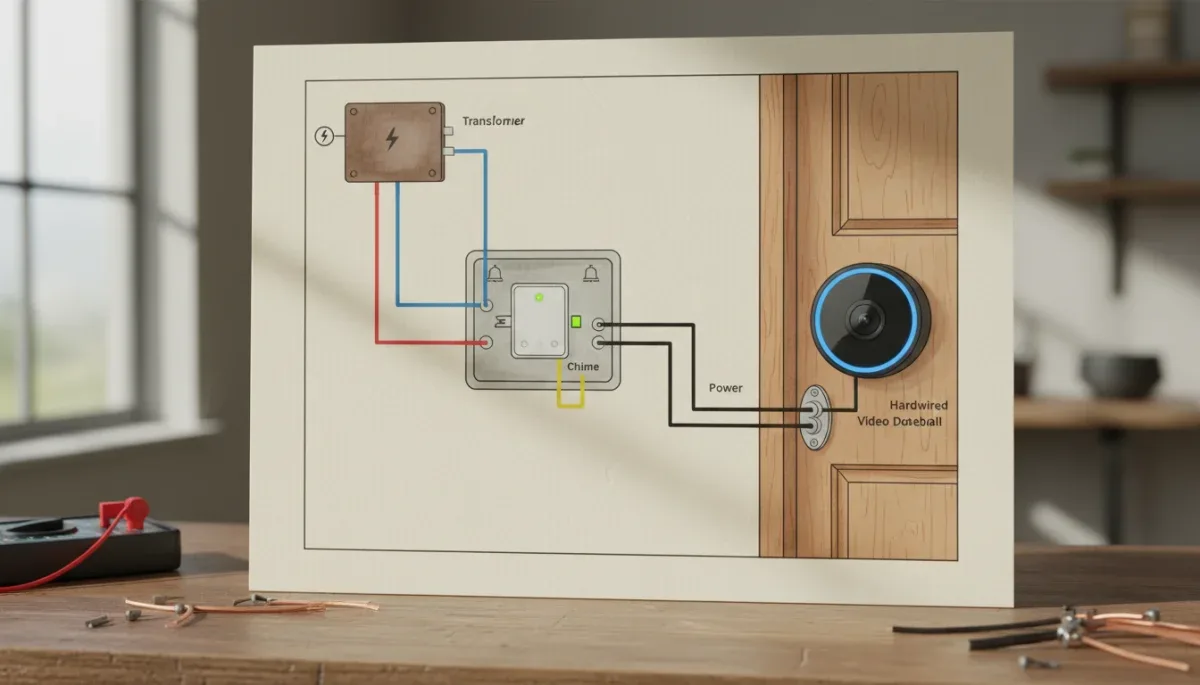
A standard mechanical doorbell system operates as a simple, normally open electrical loop powered by alternating current. The circuit consists of three fundamental components connected in series: a step-down transformer, a mechanical chime box mounted on an interior wall, and a momentary push-button switch at the exterior entryway. The transformer connects to household 120-volt mains power and steps the voltage down to a safe low-voltage range, traditionally between 10 volts and 16 volts AC.
Ads
Inside the mechanical chime enclosure, magnetic solenoids operate small spring-loaded plungers positioned between tuned metal tone bars. In an unmodified system, no electricity flows through the circuit when the button is idle. Pressing the exterior push-button closes the contact points, completing the circuit. Current rushes through the solenoid coil, creating an electromagnetic field that pulls the plunger forward to strike the first metal chime bar, producing the standard primary chime note.
Releasing the push-button immediately breaks the electrical connection. The electromagnetic field collapses, allowing an internal spring to rebound the plunger in the opposite direction against a second tone bar with a different pitch, creating the familiar two-tone sound. Because standard buttons are passive mechanical switches, they draw zero standby current from the transformer when not actively pressed by a visitor.
How video doorbells maintain continuous power without ringing
Integrating a connected smart camera into a traditional analog circuit introduces a fundamental engineering challenge. A traditional push-button only needs power during the second it is depressed. In contrast, a hardwired video doorbell contains a continuous optical camera sensor, an infrared night-vision array, microphones, status lights, and a Wi-Fi chipset that must remain active twenty-four hours a day.
Ads
If a video doorbell drew continuous operating current directly through a standard mechanical chime solenoid, the constant electrical flow would energize the electromagnetic coil continuously. This steady current would cause the chime plunger to pull inward and stay locked against the tone bar, resulting in a persistent electrical buzz, potential solenoid burnout, and a failure to produce an audible chime when visitors arrive.
To resolve this issue, modern manufacturers design hardwired video doorbells to operate with a power bypass module. The camera draws a minimal baseline current across the circuit loop to run its low-power internal electronics and trickle-charge an internal battery or supercapacitor. When a visitor pushes the doorbell button, the internal processor redirects the electrical load, signaling the system to fire the physical chime mechanism cleanly before returning to passive monitoring mode.
The role of the chime power kit module
Nearly all major smart doorbell brands, including Ring, Nest, Arlo, and Eufy, include a small power kit module inside the product packaging. This component, often called a chime adapter, power kit, or bypass connector, attaches directly to the terminal screws inside the mechanical chime enclosure. It is a critical electrical bridge that manages power distribution across the shared loop.
The power kit contains solid-state electronic switches and resistors that create an intelligent bypass path around the chime's magnetic coils. Under normal resting conditions, the module diverts the low-level standby current safely around the chime solenoid, ensuring the camera outside receives stable, uninterrupted voltage without triggering the mechanical plunger. This prevents the chime coil from humming or overheating while the camera streams live footage or records motion events.
Key functions of the power kit adapter
- Diverts standby electrical current around mechanical solenoids to prevent coil buzzing.
- Stabilizes low-voltage power flow to prevent camera reboots during Wi-Fi transmission spikes.
- Directs the full transformer voltage surge through the chime coil when the front button is pressed.
- Protects delicate video doorbell internal logic boards from inductive voltage spikes generated by collapsing magnetic fields.
Checking transformer voltage and power compatibility
Successful operation of a video doorbell mechanical chime configuration depends heavily on transformer specifications. Traditional mechanical chimes were engineered to operate on transformers rated for 10 to 16 volts AC with an output capacity of 10 volt-amps (VA). While sufficient for momentary contact buttons, this power envelope is often inadequate for smart video doorbells that transmit continuous data.
Most hardwired video doorbells require a transformer that delivers between 16 volts and 24 volts AC with a power rating of at least 30 volt-amps (VA). An underpowered transformer may power the camera during idle periods but drop voltage dramatically when the button is pressed, causing the camera to shut down, lose Wi-Fi connection, or fail to actuate the chime plunger with enough force to generate sound.
Transformers are typically located attached to the main electrical service panel, mounted inside an attic, positioned in a basement utility area, or concealed behind the mechanical chime box itself. Homeowners can determine compatibility by inspecting the metal casing of the transformer for stamped specifications, such as 16VAC 30VA, or by testing the output terminals using a standard digital multimeter set to alternating current.
Step-by-step mechanical chime wiring configuration
Installing a video doorbell into an existing mechanical circuit requires specific wiring adjustments at both the chime enclosure and the exterior door frame. Safety requires turning off the dedicated circuit breaker at the electrical service panel before touching any exposed low-voltage terminals. Even though low voltage rarely presents a severe shock hazard, accidental short circuits can blow internal transformer fuses or damage delicate video processor boards.
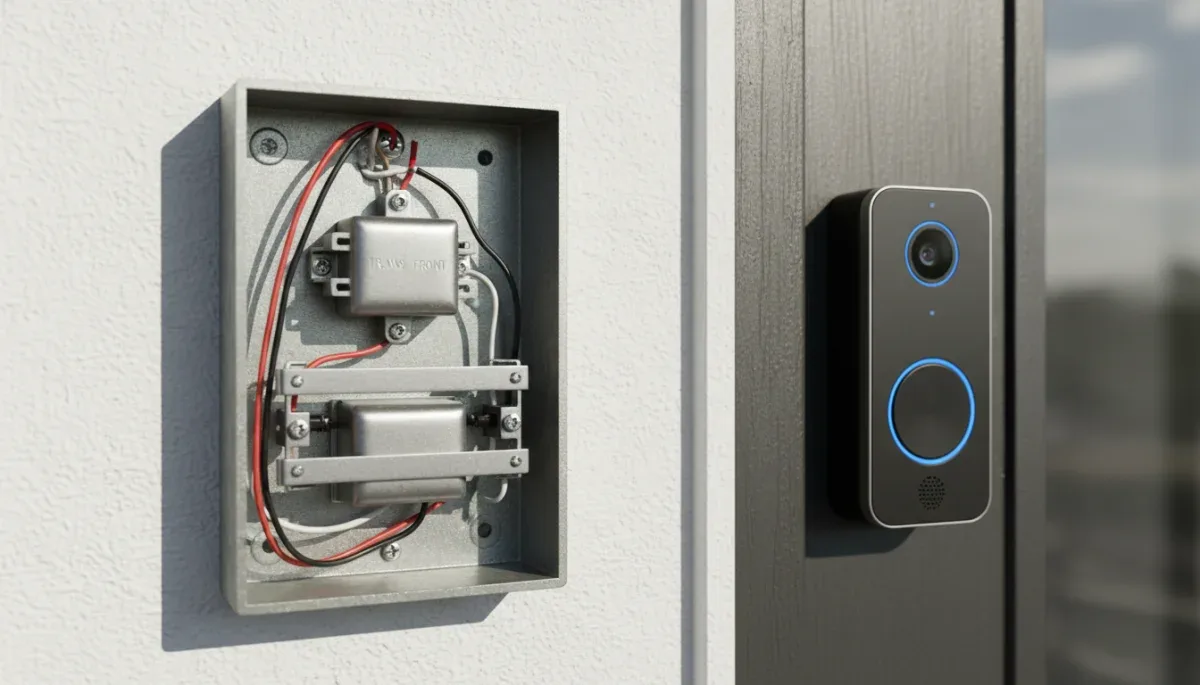
Inside the mechanical chime box, three common screw terminals are usually visible: Trans (transformer power feed), Front (front door push-button loop), and Rear (rear door push-button loop). The power kit wires attach parallel to the Trans and Front terminals, acting as the bypass path. The original house wiring remains securely seated on these terminals alongside the new power kit leads.
At the exterior door frame, the existing two low-voltage copper wires connect directly to the rear terminal screws of the smart doorbell mounting plate. Because the circuit uses alternating current, low-voltage polarity is non-directional, meaning either wire can connect to either screw terminal on the back of the doorbell mount. Once secured and powered on, the companion mobile application must be configured to select mechanical chime mode rather than digital or disabled modes.
Troubleshooting buzzing, phantom rings, and failed chimes
When a hardwired video doorbell fails to operate correctly with an existing mechanical chime, the root cause is almost always related to electrical impedance, transformer power limits, or software configuration errors. A persistent humming sound coming from the mechanical chime indicates that alternating current is leaking through the solenoid coil rather than being bypassed cleanly by the power kit.
Phantom ringing, where the mechanical chime strikes spontaneously without anyone pressing the doorbell, typically occurs when transient voltage fluctuations trick the solenoid into a partial pull. This issue frequently happens when infrared night vision engages or during heavy Wi-Fi data uploads, causing a temporary voltage drop across an aging transformer. Upgrading to a modern 16VAC/30VA transformer resolves the vast majority of phantom chime events.
If the video doorbell works on the mobile app but the physical chime never strikes, verify that the physical plunger inside the chime box moves freely. Dust accumulation, bent plunger housings, or dried lubricants can physically block the striker. Additionally, verify within the manufacturer app settings that the internal chime type is explicitly set to mechanical, as digital chime modes alter electrical pulse duration and will not actuate standard physical strikers properly.
At a glance
| System factor | What to know |
|---|---|
| Transformer rating | Requires 16V to 24V AC with at least 30VA output for reliable continuous camera and chime operation. |
| Power kit module | Mandatory adapter that routes standby power around chime coils to prevent continuous buzzing. |
| App configuration | Must be set to mechanical chime mode to ensure correct strike duration and avoid coil damage. |
| Wire polarity | Non-polarized alternating current allows either low-voltage wire to attach to either doorbell terminal. |
Frequently asked questions
Can a hardwired video doorbell work without a chime power kit?
No, most hardwired video doorbells require the power kit module when paired with a mechanical chime. Omitting the module causes the mechanical chime coil to hum continuously, overheat, or prevent the camera from receiving adequate operating voltage during live streaming.
Why does my mechanical chime buzz after installing a video doorbell?
A buzzing chime indicates that standby electrical current is leaking through the mechanical solenoid coil. This problem occurs when the power kit module is missing, wired incorrectly across the wrong terminals, or when the chime setting in the app is misconfigured.
Do I need an electrician to upgrade my doorbell transformer?
Hiring a licensed electrician is recommended if your transformer connects directly to 120-volt mains power inside an electrical junction box. While low-voltage doorbell wiring is safe to handle, replacing the transformer requires working directly with hazardous high-voltage line current.
Will my mechanical chime work if the internet goes down?
Yes, standard mechanical chimes continue to ring during internet outages. The physical button press closes the local hardwired circuit directly through the transformer and chime box, activating the physical tone bars regardless of whether local Wi-Fi connectivity is present.
The bottom line
Hardwired video doorbells successfully integrate with traditional mechanical chimes by utilizing specialized bypass power modules that feed continuous current to camera electronics without locking the mechanical plungers. This setup preserves your home physical sound alerts while adding modern smart security. Before purchasing a new video doorbell, always verify that your existing transformer delivers at least 16 volts AC and 30 volt-amps to ensure reliable chime performance.
Written by
Lucas Bastos
Lucas Bastos writes about fashion & beauty, seasonal decor and smart home tech for papalions.com. Each article explains how things work, compares published details such as prices, policies and program rules, and points readers to the official source before they decide.