
Ads
Creating a cohesive seasonal look across five main rooms in your home can be accomplished in just two weekends by planning a unified color palette, selecting versatile statement pieces, and strategically layering textures while maintaining flow between living spaces.
Ads
Your home deserves to reflect the beauty of each season, and you do not need weeks of labor or a massive budget to achieve a transformation that feels intentional and polished. How to Create a Cohesive Seasonal Look Across 5 Main Rooms in Your Home in Just 2 Weekends is the practical roadmap you have been searching for. This guide breaks down the process into manageable steps, helping you coordinate five key spaces in your home with a unified aesthetic that welcomes the season and showcases your personal style. Whether you are prepping for fall, embracing winter warmth, or welcoming spring freshness, the principles remain the same: intentional planning, strategic piece selection, and consistent execution across every room.
Understanding the Foundation: Planning Your Cohesive Look
Before purchasing a single decorative item, successful seasonal transformations require thoughtful preparation. The difference between a home that looks hastily decorated and one that feels curated lies entirely in what happens before you ever pick up a paint swatch or browse a home goods store.
Ads
Start by assessing what you already own. Walk through each of the five main rooms in your home and take inventory of items that can carry over from season to season. Neutral furniture pieces, classic vase shapes, and quality textile basics serve as anchors that make seasonal switches easier and more economical. Understanding your existing assets prevents redundant purchases and helps you identify gaps in your current collection.
Selecting Your Seasonal Palette
Every cohesive look begins with a well-chosen color palette. Rather than completely redecorating, select three to four primary colors and two to three accent colors that capture the season’s essence while complementing your existing furniture and architectural features.
- Primary colors should come from the larger furniture pieces and permanent elements in your rooms
- Accent colors can be introduced through smaller decor items, textiles, and seasonal accessories
- Neutrals provide breathing room and prevent the space from feeling overwhelming
- Consider how each color interacts with natural light in each room throughout the day
Once you have established your palette, create a reference board either physically or using a free digital tool. This visual guide keeps you focused during shopping trips and ensures every purchase supports your overall vision rather than deviating from it.
Weekend One: The Living Room and Kitchen Dynamics
The living room typically serves as the heart of seasonal transformations because it receives the most visual attention and offers the most opportunities for impactful changes. Begin your first weekend here, as success in this space builds momentum and confidence for the remaining rooms.
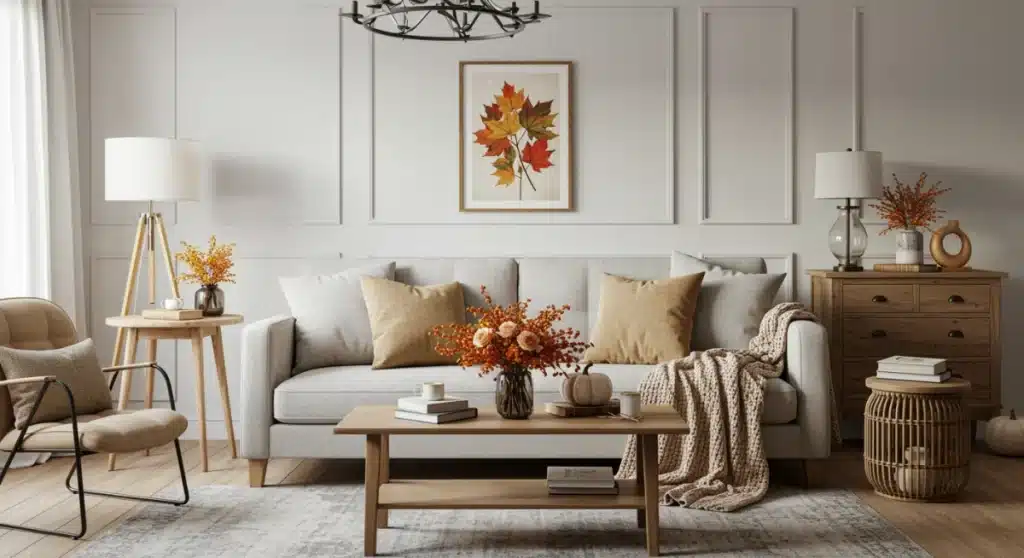
Living rooms benefit most from layered textiles and strategic accent placements. Swap out lightweight summer throws for heavier knit blankets in warm earth tones. Introduce seasonal pillows in your chosen palette, positioning them in groupings of odd numbers for visual interest. If your living room features a fireplace or mantel, this becomes your primary focal point for seasonal styling.
Creating Visual Flow
The kitchen and dining area require different approaches because these spaces must balance aesthetics with functionality. Seasonal kitchen decor often centers on accessible surfaces rather than prominent focal points.
- Update dish towels and hand towels with seasonal colors and patterns
- Add seasonal greenery or branches to existing vases on countertops or the kitchen island
- Switch out decorative bowl contents—seasonal fruits, pinecones, or rustic ornaments
- Consider seasonal candle scents that complement your chosen palette
Dining spaces respond well to table settings that can transition from everyday use to entertaining. A seasonal table runner paired with coordinating napkin rings and a simple centerpiece creates immediate atmosphere without requiring a complete overhaul of your existing dinnerware.
These two rooms share a visual boundary in many homes, making coordination between them essential. Repeat at least one element from your living room palette in the kitchen to create intentional connection without making the spaces feel identical.
Weekend One Continues: Entryway and Hallway Transitions
The entryway sets the tone for everything that follows, making it a critical space for establishing your seasonal narrative. This area often receives less attention than living spaces but offers significant impact for minimal investment.
Entryways benefit from seasonal wreaths, door hangings, or wall arrangements that welcome guests and signal the mood of your home. If your entryway features a console table or storage piece, style it with seasonal elements that coordinate with your living room while remaining appropriate for this high-traffic zone.
Maximizing Small Spaces
Hallways and transitional spaces present unique opportunities because they connect your rooms and carry your seasonal theme throughout the home. These narrow spaces respond well to consistent elements repeated at intervals.
- Use gallery wall sections to rotate seasonal art or photography
- Add seasonal vignettes on narrow console tables or floating shelves
- Layer seasonal doormats inside and outside entry points
- Consider seasonal switch plate covers or decorative hardware updates
The key to hallway success lies in restraint. These passages should feel like natural extensions of your coordinated rooms rather than cluttered transitions. Each element should serve a purpose and contribute to the overall flow rather than competing for attention.
Weekend Two: Bedrooms and Bathrooms as Serene Retreats
Bedrooms require a different approach than living spaces because they prioritize comfort and rest over entertaining. Your seasonal bedroom transformation should enhance the sanctuary feel while maintaining the cohesive palette established in other rooms.
Begin with your bedding as the foundation. Layering seasonal textiles creates immediate visual impact while providing practical temperature regulation. Swap sheets for seasonal weights, add decorative pillows in your palette, and drape seasonal throws at the foot of the bed or across benches.
Coordinating Bedroom Surfaces
Nightstands and dressers offer additional opportunities for seasonal styling without major investment. Small changes in these areas create cumulative impact.
- Update lamp shades with seasonal colors or textures
- Add seasonal books or magazines to bedside stacks
- Switch out decorative trays and their contents seasonally
- Incorporate seasonal scents through candles, diffusers, or fresh botanicals
Bathrooms present unique challenges because they often feature permanent fixtures and limited counter space. Focus on textiles and accessible accessories for the most effective seasonal updates. Seasonal towels, shower curtains in your palette, and small decorative elements on the vanity create cohesive transitions without compromising functionality.
The connection between bedroom and bathroom should feel natural, with at least one repeating element that ties these private spaces together while maintaining their distinct purposes.
Executing the Transformation: Practical Tips for Success
Successful seasonal transformations require more than beautiful items; they demand practical systems that make the process manageable and the results lasting. Understanding these underlying principles elevates your decorating from simple product arrangement to intentional design.
Time management plays a crucial role in weekend transformations. Dedicate the first half of each weekend day to larger changes—furniture arrangement, textile updates, and focal point styling. Reserve the second half for smaller details, troubleshooting, and final adjustments. This approach prevents the common trap of spending all your time on details while neglecting major impact areas.
Working Within Budgets
Creating a cohesive seasonal look does not require expensive purchases. Many high-impact elements come from thoughtful rearrangement and creative use of what you already own.
- Shop your home first—rotate items from room to room before purchasing
- Invest in versatile basics that work across multiple seasons
- Prioritize high-visibility areas over less-trafficked spaces
- Consider DIY seasonal elements that add personal touches
- Set a budget before shopping and stick to it rigorously
Quality always outweighs quantity in seasonal decorating. A few well-chosen statement pieces create more impact than numerous small items that compete for attention. Focus your resources on items that anchor each room and coordinate with your palette.
Maintaining Cohesion: The Finishing Touches
The final phase of your transformation focuses on connection and flow between spaces. Walk through your home with fresh eyes, looking for visual threads that link each room to the next.
Lighting significantly impacts how seasonal elements are perceived. Ensure your lamp placements and bulb choices complement your palette rather than conflicting with it. Candles and string lights add warmth and atmosphere while reinforcing seasonal ambiance.
Photography helps identify issues that might not be apparent during daily living. Take pictures of each room and examine them for color balance, visual flow, and spacing. Photographs often reveal imbalances that your eyes naturally compensate for in person.
Final Assessment Steps
- Check that each room contains at least one element from your palette
- Verify transitional spaces carry at least one repeating color
- Ensure larger furniture pieces do not clash with seasonal accents
- Confirm lighting enhances rather than diminishes your seasonal elements
- Test functionality—seasonal decor should not impede daily living
Making small adjustments now prevents the need for major revisions later. The goal is a home that feels considered and coordinated, where every room contributes to a unified seasonal story.
| Key Point | Brief Description |
|---|---|
| Unified Color Palette | Select 3-4 primary colors and 2-3 accent colors that work across all five rooms |
| Strategic Room Order | Begin with living room and kitchen in weekend one, then bedrooms and bathrooms |
| Textile Layering | Use throws, pillows, and bedding to introduce seasonal colors and textures |
| Visual Flow Between Spaces | Repeat at least one palette element in adjacent rooms for cohesion |
Frequently Asked Questions
Start by shopping your own home and rotating items between rooms before purchasing anything new. Focus your budget on versatile basics like neutral throws and pillows that work across multiple seasons. Prioritize high-visibility areas like the living room and entryway, and consider DIY seasonal elements like handmade wreaths or repurposed items from craft stores.
The five main rooms for seasonal transformations are the living room, kitchen, dining area, bedroom, and bathroom. These spaces receive the most daily use and offer the greatest opportunity for impact. Entryways and hallways also matter as transitional spaces that connect your main rooms and carry your seasonal theme throughout the home.
Stick to your established color palette rigorously and practice restraint in each room. Use the rule of odd numbers for decorative groupings and ensure each room has breathing room with neutral spaces. Before purchasing any item, verify it connects to your palette and serves a clear purpose. Quality always outperforms quantity in creating polished seasonal looks.
While two weekends provide more breathing room, a condensed timeline is possible with thorough preparation. Complete all planning and shopping before your decorating weekend begins. Focus on the living room, entryway, and dining area first, as these create the most impact. Bedrooms and bathrooms can wait for a subsequent weekend if time runs short.
Most homeowners update their seasonal decor four times per year to match major seasons—spring, summer, fall, and winter. However, you can create micro-updates within each season for fresh looks. The key is maintaining cohesion while allowing flexibility for personal preference and lifestyle. Listen to your home and your own desire for change rather than following rigid schedules.
Conclusion
Creating a cohesive seasonal look across five main rooms in just two weekends is entirely achievable with proper planning, strategic piece selection, and consistent execution. The secret lies not in expensive purchases but in intentional choices that connect each space through unified color palettes, repeated elements, and thoughtful layering. Your home becomes a curated reflection of each season when you approach decorating with purpose and systematic execution. Start with the living room and kitchen during your first weekend, move to bedrooms and bathrooms in the second, and enjoy the transformation that welcomes the season into every corner of your home. The result is a living space that feels cohesive, welcoming, and distinctly yours throughout the year.
