Halloween Decor ROI Guide: Maximize Impact Under $150
Ads
This guide reveals strategic approaches to maximize Halloween decor return on investment by allocating a $150 budget across high-impact items, multipurpose pieces, and smart shopping techniques that create memorable displays without overspending.
Halloween decorating doesn’t require a massive budget to make a statement. Whether you’re transforming your front porch into a spooky wonderland or creating an immersive indoor experience for trick-or-treaters, the key lies in understanding which items deliver the most visual punch for your dollar. This comprehensive guide walks you through every decision, from timing your purchases to selecting versatile pieces that work across multiple seasons, ensuring your $150 investment yields impressive results that will make your neighborhood talk.
Understanding Halloween Decor ROI Fundamentals
Return on investment in Halloween decorating isn’t just about how much you spend—it’s about the emotional impact each dollar creates. A well-placed $5 item can outperform a poorly chosen $50 piece, which is why strategic selection matters more than simply buying more decorations. The goal is creating memorable experiences for visitors while building a collection that serves you well beyond a single October.
When evaluating Halloween decor purchases, consider three factors: visual prominence (how much attention the item draws), durability (how many seasons you’ll use it), and versatility (whether it works with different themes or spaces). Items scoring high in all three categories represent your best investment opportunities. This framework helps you prioritize spending in areas that generate the most impact rather than accumulating inexpensive items that clutter storage and deliver minimal visual value.
Key ROI Factors to Consider
- Visual Impact Score: How noticeable is the item from the street or when guests enter your home?
- Cost Per Use: Divide the item price by the number of years you expect to use it.
- Storage Efficiency: Can the item collapse, fold, or pack into minimal space?
- Theme Compatibility: Does it work with classic spooky, cute kids’ themes, or elegant autumn aesthetics?
By applying this evaluation framework to every potential purchase, you build a cohesive collection rather than accumulating random items that create visual noise rather than intentional atmosphere.
Strategic Budget Allocation for Maximum Impact
With a $150 budget, how you divide your spending matters significantly. Most beginners make the mistake of spreading money too thin across too many categories, resulting in a sameness that fails to impress. Instead, concentrate your resources on areas that deliver the most visible transformation: your front exterior and primary entry points.
Allocate roughly 40% of your budget ($60) to outdoor decorations, since curb appeal creates the first impression and draws trick-or-treaters to your door. Another 35% ($52) should go toward indoor common areas where you’ll entertain or hand out candy. The remaining 25% ($38) covers accent pieces, tabletop items, and those finishing touches that elevate a good display into a great one.
Recommended Budget Breakdown
- Outdoor/Porch Decorations: $60 (40%)
- Indoor Common Areas: $52 (35%)
- Accents and Tabletop Items: $38 (25%)
This distribution ensures you’re not over-investing in areas visitors rarely notice while neglecting the spaces that create lasting impressions. Adjust slightly based on your specific situation—if you rarely host indoor Halloween gatherings, shift more toward exterior impact.
High-ROI Outdoor Decorations That Deliver
Your front yard and porch are the stage where Halloween magic happens. These areas deserve careful selection because they work 24/7 throughout October and create the anticipation that draws visitors to your home. The smartest outdoor investments combine immediate visual impact with durability and storage practicality.
LED string lights in orange, purple, or multicolor themes offer exceptional value because they transform ordinary spaces into atmospheric wonderlands with minimal effort. A single strand of 100 LED lights costs between $8 and $15 but creates ambiance that expensive inflatables often cannot match. Wrap them around porch railings, drape across doorframes, or weave through bushes for continuous glow that works whether trick-or-treaters arrive at dusk or midnight.
Yard signs and stake decorations have become increasingly sophisticated, with options ranging from cartoonish ghosts to elegant silhouettes. These pieces create depth and narrative to your display without requiring complex setup. Look for designs that stack or nest for storage—some quality signs collapse to just a few inches thick, saving precious closet space year-round.
Inflatables remain popular for good reason: they create instant focal points that read well from down the block. The key is selection—choose one statement piece rather than several smaller ones. A well-chosen 4-foot skeleton, ghost, or cauldron scene becomes a conversation starter, while multiple small inflatables can look cluttered and cheap. Spend $20-$35 on a quality centerpiece inflatable rather than $40 on three forgettable ones.
Indoor Decorating: Creating Immersive Experiences
Indoor Halloween decor serves different purposes than outdoor pieces. You’re creating an experience for closer, more engaged viewers—trick-or-treaters at your door, party guests, or family members who want to enjoy the seasonal atmosphere. This intimacy allows for more detail and complexity in your selections.
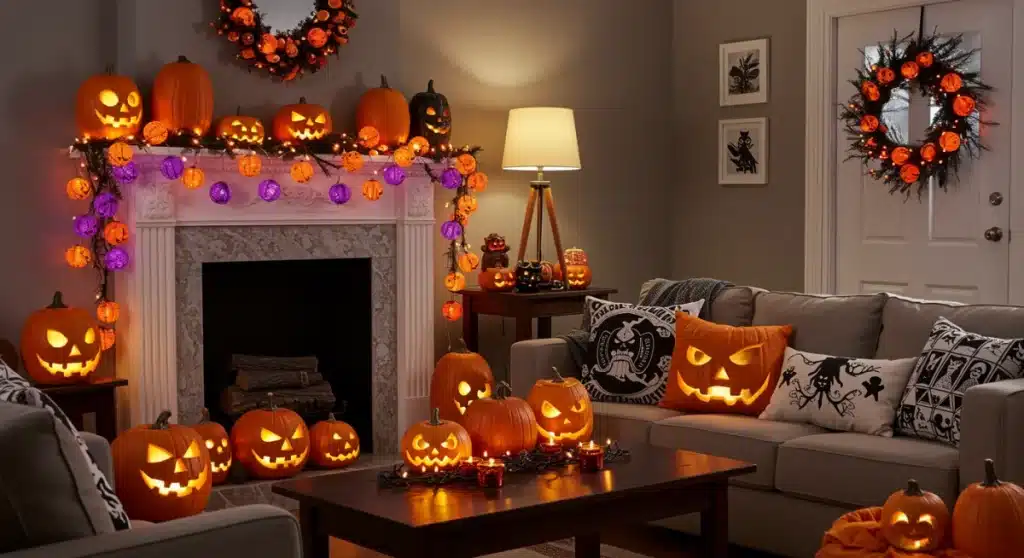
The entryway and hallway set the tone before guests reach your candy station. Consider a themed door wreath ($15-$25) that signals your Halloween spirit the moment visitors arrive. Inside, coordinate with strategically placed smaller items: a skeleton hand holding a candy bowl, themed throw pillow covers ($8-$15 each) that transform existing furniture, or window clings that create eerie silhouettes from outside.
Lighting remains your most powerful indoor tool. LED candles in various sizes and colors create safe, maintenance-free ambiance that real candles cannot match. Group several on a mantel or staircase landing with varying heights to create visual interest. Many quality LED candles now include remote controls and timer functions, adding convenience to their aesthetic value.
Don’t overlook the power of fabric elements. Themed table runners, window panels, or fabric garlands transform spaces temporarily without permanent commitment. These items often store compactly and can be rotated with other seasonal decorations, extending their cost-per-use value significantly.
Smart Shopping Strategies and Timing
When you buy matters as much as what you buy. Understanding the Halloween decor retail cycle helps you score quality items at dramatically reduced prices while avoiding the frustration of sold-out popular items.
The optimal shopping window opens in early September when stores fully stock their Halloween selections. This gives you first access to the best items while still leaving time for thoughtful placement. However, the deepest discounts appear in late October and particularly in the days following Halloween, when retailers desperately need to clear inventory. If you’re building a multi-year collection, post-Halloween sales offer extraordinary value—it’s not unusual to find items at 70-80% off.
Best Times to Buy Halloween Decor
- Early September: Full selection, regular prices, best time for specific items
- Late October: Clearance sales begin, 30-50% off selections
- Post-Halloween (November 1-7): Deepest discounts, 60-80% off, limited selection
- Year-Round Online: Amazon and specialty retailers often have scattered deals
The tradeoff is obvious: early buying ensures availability but higher prices, while late buying offers savings but limited selection. The middle ground strategy works well for many budgets: shop early for statement pieces you must have, then supplement with clearance finds as the season progresses.
Building a Versatile, Reusable Collection
Smart Halloween decorators think beyond a single October. The most valuable pieces in your collection will serve multiple seasons and potentially transition to other holidays or everyday use. This mindset transforms decorating from an annual expense into an investment in your home’s character.
Black, orange, purple, and green color schemes have broad applicability beyond Halloween. Many decorative elements work beautifully for autumn harvest themes, Thanksgiving transition, or even year-round gothic or dark academia aesthetics. When selecting items, consider their potential off-season uses: a black candleholder works for year-round decor, fabric garlands can transition to harvest themes, and quality LED lighting serves multiple purposes throughout the year.
Natural elements provide excellent value because they’re either free or inexpensive while delivering authentic seasonal feel. Mini pumpkins, gourds, dried corn stalks, and fall foliage arrangements create texture and warmth that artificial items often cannot match. These elements compost after use, creating no storage burden and requiring no investment beyond the current season.
Quality over quantity holds especially true for items that will see repeated use. A well-made decorative wreath with a sturdy frame and removable covers for different seasons costs more initially but pays dividends through years of service. Cheap alternatives often degrade after one or two seasons, creating false economy that depletes your budget without building lasting value.
Common Mistakes That Drain Your Budget
Even with the best intentions, certain patterns consistently lead to overspending without corresponding impact. Recognizing these pitfalls helps you avoid them and redirect resources toward genuine value.
Impulse purchases at checkout registers represent one of the biggest budget drains. Those small items—candy wrappers, mini decorations, novelty lights—seem harmless individually but accumulate rapidly. A $5 item feels insignificant until you’ve collected fifteen of them, spending $75 on scattered items that create no cohesive theme. Before any purchase, ask whether the item serves your overall vision or merely fills momentary urge.
Over-emphasizing quantity over quality produces cluttered displays that confuse rather than captivate. Visitors remember one stunning focal point more than a dozen scattered items. A porch with three well-chosen statement pieces creates stronger impression than one crowded with twenty mediocre decorations. This counterintuitive principle—less is more—applies especially strongly to outdoor displays visible from a distance.
Failing to consider storage needs leads to damaged items and frustrated future selves. Those elaborate paper decorations might look magical but become useless after one humid season. Quality storage containers, careful wrapping, and honest assessment of what you’ll realistically save prevents waste and protects your investment.
| Budget Category | Investment Strategy |
|---|---|
| Outdoor (40% – $60) | Focus on LED lights, one statement inflatable, and quality yard stakes for maximum curb appeal |
| Indoor (35% – $52) | Prioritize entryway impact, LED candles, and versatile fabric elements that work across seasons |
| Accents (25% – $38) | Tabletop items, window clings, and finishing touches that complete your themed spaces |
| Long-term Value | Choose quality pieces with storage durability and multi-season versatility over disposable items |
Frequently Asked Questions
Prioritize lighting elements first—LED string lights and candles create immediate atmosphere at any budget. Next, focus on your entry points: a themed wreath for the door and yard stakes or signs for outdoor visibility. These foundational items create the atmosphere that smaller accent pieces then enhance.
Absolutely. Strategic spending on high-impact items like quality LED lighting, one statement yard piece, and coordinated entry decorations often outperforms scattering $100 across numerous cheap items. Focus on creating a cohesive theme with deliberate placement rather than filling every available space.
Early September offers the best selection at regular prices, ideal for specific items you must have. Late October brings clearance sales but limited inventory. For building a multi-year collection, the week after Halloween offers the deepest discounts on remaining stock, sometimes 70-80% off.
Invest in quality storage solutions: breathable containers for fabric items, original packaging for delicate pieces, and climate-controlled storage away from moisture. Clean items before storing, and handle delicate decorations like paper elements with extra care. Quality items with solid construction naturally outlast cheap alternatives.
LED lights, inflatable decorations, yard stakes with sturdy bases, and artificial garlands work well in both settings. Some items are specifically designed for indoor or outdoor use due to weather resistance or visibility requirements, so check product specifications before purchasing.
Conclusion
Creating a stunning Halloween display within a $150 budget requires strategy, not just spending. By focusing on high-impact areas like your exterior entry points, investing in versatile lighting solutions, and building a quality collection that serves multiple seasons, you maximize every dollar spent. Remember that intentional, cohesive displays outperform cluttered, cheap arrangements every time. Start with your foundation pieces, add accent items strategically, and shop smart—whether early for selection or late for deals. Your perfect Halloween atmosphere awaits, and it doesn’t require breaking the bank to achieve it.