Foundation Shade Online 2026: US Shopper’s Ultimate Guide

Ads
Choosing the right foundation shade online in 2026 for US shoppers involves utilizing advanced virtual tools and understanding personal skin undertones to achieve a seamless, flawless match without in-person testing.
Welcome to 2026, where the world of beauty retail has evolved dramatically, especially for US shoppers looking to purchase cosmetics online. Finding the perfect foundation shade online can be a daunting task, often leading to wasted money and mismatched complexions. This comprehensive guide is designed to empower you with the knowledge and strategies to confidently select your ideal foundation shade from the comfort of your home, ensuring a flawless and natural look every time.
Understanding Your Skin’s Undertone and Surface Tone
Before diving into the myriad of online tools available, a fundamental understanding of your own skin is paramount. Your skin’s complexion isn’t just about how light or dark it is; it involves complex layers of color that contribute to its overall appearance. Identifying your undertone and surface tone correctly is the first, and arguably most crucial, step in finding your perfect foundation match.
The Importance of Undertones
Your skin’s undertone is the subtle hue beneath your skin’s surface that affects its overall color. Unlike your surface tone, which can change due to sun exposure or skin conditions, your undertone remains constant. There are typically three main categories of undertones: cool, warm, and neutral.
- Cool Undertones: Skin appears to have pink, red, or bluish hues. Typically, veins on your wrist look blue or purple. Silver jewelry tends to complement cool undertones more than gold.
- Warm Undertones: Skin exhibits golden, peachy, or yellow hues. Veins on your wrist often appear green. Gold jewelry usually looks more flattering on warm undertones.
- Neutral Undertones: A balance of both pink and yellow hues. Veins may appear a mix of blue and green, or it might be difficult to discern a dominant color. Both gold and silver jewelry tend to look good.
Accurately identifying your undertone prevents your foundation from looking too orange, ashy, or simply ‘off.’ Many online shade finders now incorporate undertone analysis, making it easier to narrow down options.
Analyzing Your Surface Tone
Your surface tone refers to the visible color of your skin, ranging from very fair to deep ebony. This is what most people initially notice. While your undertone is static, your surface tone can be influenced by external factors like sun exposure or natural tanning. When selecting a foundation online, you’ll first identify your general surface tone (e.g., fair, light, medium, tan, deep) and then refine it with your undertone. Many brands categorize their shades by both surface tone depth and undertone, such as ‘Light with Warm Undertones’ or ‘Medium-Deep with Cool Undertones.’
A helpful tip for determining your surface tone is to examine your skin in natural daylight, free from makeup. Look at your jawline, as this area often provides the most accurate representation of your natural skin color, less affected by redness or sun exposure on other parts of your face.
Leveraging Advanced Virtual Try-On Tools in 2026
The beauty tech landscape has transformed, offering sophisticated virtual try-on experiences that were once unimaginable. In 2026, these tools are more precise and widely available, making online foundation shopping significantly more reliable for US consumers.
AI-Powered Shade Matching
Many leading beauty brands and retailers now employ artificial intelligence to help you find your perfect match. These AI tools typically work in a few ways. Some require you to upload a clear selfie taken in natural light, while others use your device’s camera for a live analysis. The AI then scans your skin, identifies your undertone and surface tone, and suggests a range of suitable shades from their product line.
- Selfie Analysis: Upload a photo for a detailed skin analysis. Ensure the photo is well-lit and unedited for the most accurate results.
- Live Camera Scan: Use your phone or computer camera for real-time shade recommendations. Move to a well-lit area and follow the on-screen prompts for calibration.
- Cross-Brand Matching: Some advanced platforms allow you to input your current foundation shade from one brand and find equivalent shades across multiple other brands, a highly convenient feature for exploring new products.
These AI systems often learn from extensive databases of skin tones and product formulations, continuously improving their accuracy. However, it’s still wise to cross-reference recommendations with other methods.
Augmented Reality (AR) for Virtual Swatching
Augmented Reality has revolutionized the try-on experience. Instead of just seeing a recommendation, AR allows you to virtually ‘apply’ foundation shades to your face in real-time. Using your device’s camera, the AR technology overlays the chosen foundation shade onto your skin, allowing you to see how it looks under different lighting conditions. This immersive experience helps you visualize the coverage and finish.
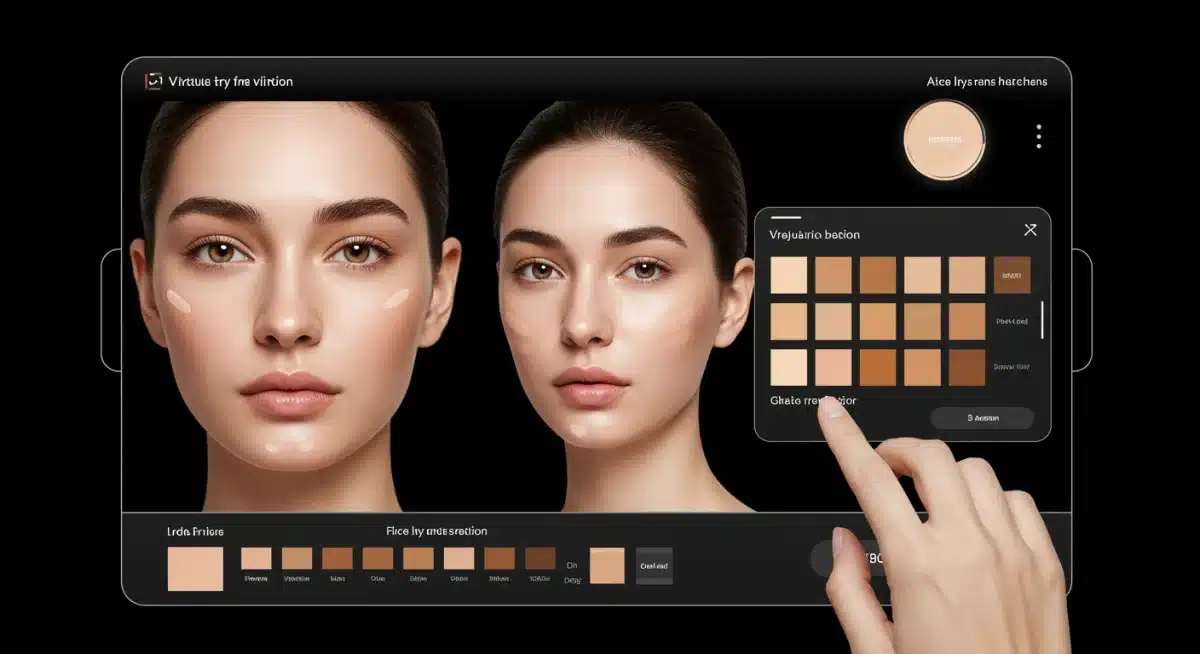
When using AR tools, pay attention to the following:
- Lighting Conditions: Test shades in various lighting environments (natural daylight, indoor lighting) within the AR app, if available, to ensure versatility.
- Zoom and Detail: Zoom in to see how the foundation blends into your jawline and neck, crucial areas for a seamless match.
- Feedback Mechanisms: Some AR tools offer feedback or allow you to compare shades side-by-side, enhancing your decision-making process.
While AR is incredibly helpful, remember that screen calibration and lighting in your physical environment can still subtly influence what you perceive. Use it as a strong indicator rather than a definitive final answer.
Decoding Product Descriptions and Swatch Galleries
Beyond technological tools, the traditional methods of scrutinizing product descriptions and swatch galleries remain vital. In 2026, brands are more meticulous with their online presentations, offering richer information to aid your decision.
Analyzing Shade Descriptions
Product descriptions provide valuable clues about a foundation’s shade. Brands use specific terminology to describe both the depth and undertone of each shade. Look for keywords such as:
- Depth Indicators: Fair, light, light-medium, medium, medium-tan, tan, deep, rich.
- Undertone Indicators: Cool (pink, rose, porcelain), Warm (golden, yellow, peach, olive), Neutral (beige, balanced).
- Specific Descriptors: Some brands use names like ‘Ivory’ (often cool/neutral fair), ‘Sand’ (often warm light-medium), or ‘Mahogany’ (often deep warm).
Pay close attention to these descriptors, especially when comparing shades from different brands. A ‘light-medium’ from one brand might be slightly different from another, but the undertone descriptor should be consistent.
Utilizing Swatch Galleries and User Reviews
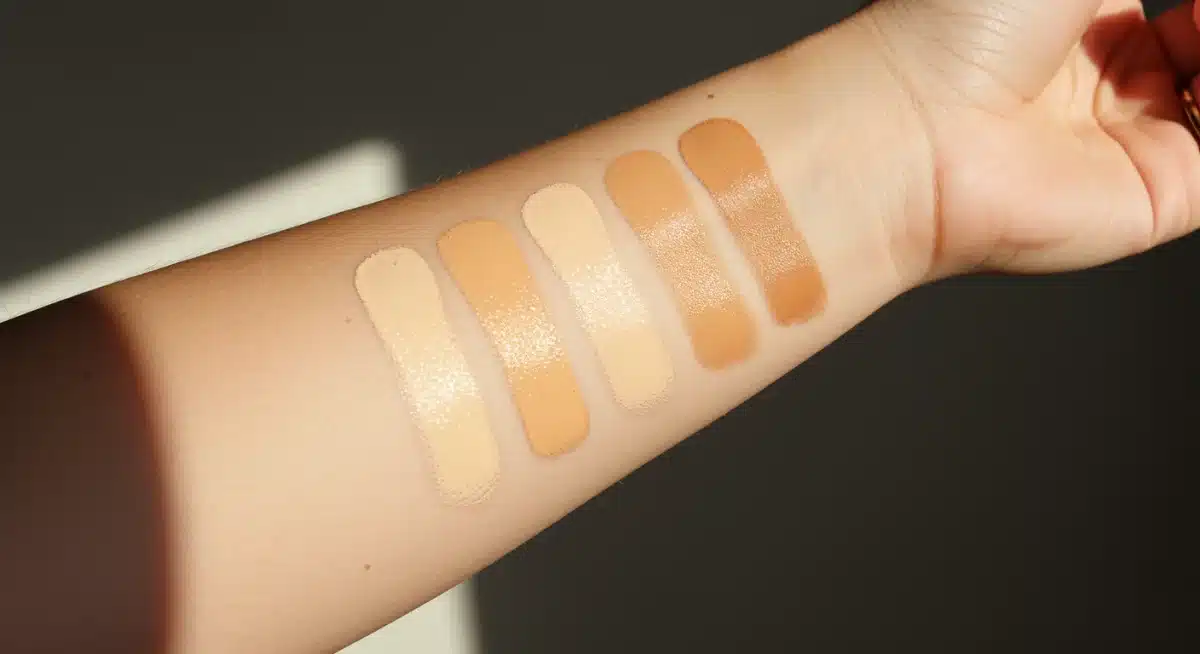
High-quality swatch galleries are indispensable. Brands often provide professional swatches on various skin tones, showing how the foundation appears on different complexions. However, don’t stop there. User-generated content, particularly reviews with photos and videos, offers even more realistic insights.
- Official Swatches: Examine swatches on models with similar skin tones to yours. Note how the shade looks under different lighting.
- Customer Photos/Videos: Search for reviews that include unedited photos or videos of individuals wearing the foundation. Pay attention to people who mention having similar skin concerns or undertones as you.
- Influencer Reviews: Many beauty influencers provide comprehensive reviews, often showcasing foundations on their skin in various lighting. Look for influencers whose skin tone and type closely resemble yours.
Remember that screen calibration can affect how colors appear. It’s always best to view swatches on multiple devices if possible, or cross-reference with other sources.
The Power of Samples and Return Policies
Even with the most advanced technology, sometimes a physical try-on is the only way to be absolutely certain. In 2026, many US retailers have adapted their policies to facilitate this crucial step for online shoppers.
Seeking Out Samples and Miniatures
Before committing to a full-sized bottle, check if brands or retailers offer samples or miniature versions of foundations. This allows you to test the shade, formula, and wear time on your skin without a significant investment. Some brands offer sample kits with multiple shades, which can be incredibly helpful for finding your perfect match.
- Direct from Brand: Many beauty brands now sell sample sizes directly on their websites or include them with other purchases.
- Subscription Boxes: Beauty subscription services often feature miniature foundations, providing an opportunity to try new brands and shades.
- In-Store Pick-up Options: If available, order samples online for in-store pickup, allowing you to quickly test them without waiting for shipping.
When testing samples, apply the foundation to your jawline and allow it to set for at least 15-20 minutes. Observe it in natural light. Check for oxidation, which is when the foundation darkens slightly as it interacts with your skin’s oils.
Understanding Return Policies
A generous return policy is your safety net when shopping for foundation online. Before making a purchase, always read the retailer’s return policy carefully. In 2026, many US beauty retailers offer hassle-free returns on foundations, even if they’ve been opened and lightly used.
- Full Refunds: Confirm if you can receive a full refund, not just store credit.
- Return Window: Note the timeframe within which you must return the product.
- Condition of Return: Understand if the product needs to be unused or if opened products are accepted for returns.
Knowing you have the option to return a product that doesn’t work out provides peace of mind and encourages experimentation, which is often necessary when finding the perfect foundation shade online.
Tips for a Flawless Online Foundation Match
Beyond the tools and policies, there are several practical tips that can significantly improve your chances of a successful online foundation purchase. These strategies focus on minimizing variables and maximizing accuracy.
Preparing Your Skin for Virtual Matching
For the most accurate virtual shade matching, your skin needs to be in its most natural state. Avoid applying any other makeup, especially color-correcting primers or tinted moisturizers, before using a virtual try-on tool or taking a selfie for AI analysis. Ensure your skin is clean and moisturized, as dehydrated skin can sometimes alter how a shade appears.
- Cleanse and Moisturize: Start with freshly cleansed and moisturized skin.
- Natural Lighting is Key: Always perform virtual try-ons or take photos in bright, natural daylight, facing a window if possible. Avoid harsh overhead lights or yellow-toned artificial lighting.
- Neutral Background: A plain, neutral background can help the AI focus solely on your skin tone, reducing distractions that might skew results.
Consistency in your preparation will yield more reliable results across different platforms and tools. Think of it as creating a controlled environment for your skin analysis.
Considering Your Skin Type and Concerns
While finding the right shade is crucial, the foundation’s formula must also suit your skin type and address any specific concerns. A perfect shade won’t look good if the formula exacerbates oiliness, clings to dry patches, or settles into fine lines.
- Oily Skin: Look for oil-free, matte, or semi-matte formulas labeled ‘long-wearing’ or ‘oil-controlling.’
- Dry Skin: Opt for hydrating, dewy, or luminous foundations that contain moisturizing ingredients like hyaluronic acid.
- Combination Skin: A satin finish or foundations designed to balance oil and dryness in different areas can be ideal.
- Sensitive Skin: Seek out hypoallergenic, fragrance-free, and non-comedogenic formulas.
- Acne-Prone Skin: Look for non-comedogenic foundations that won’t clog pores, and consider those with salicylic acid if appropriate.
Read ingredient lists and product reviews for insights into how a foundation performs on various skin types. Many online product pages now include detailed information about formula benefits and recommended skin types.
The Future of Online Foundation Shopping for US Consumers
As we look ahead, the methods for choosing foundation online are only going to become more sophisticated and user-friendly. US shoppers can anticipate even greater accuracy and personalization in their beauty purchasing journeys.
Hyper-Personalized Recommendations
Expect to see a rise in hyper-personalized recommendations driven by even more advanced AI and machine learning. These systems will not only analyze your current skin tone but also consider environmental factors, seasonal changes, and even your personal preferences for finish and coverage. Imagine an AI that suggests a slightly warmer shade for summer or a more hydrating formula for winter, based on your location and skin’s needs.
Integration with Smart Devices and Wearables
The integration of beauty tech with smart devices and wearables could revolutionize how we match foundation. Future smart mirrors or wearable sensors might be able to precisely measure your skin’s color, texture, and moisture levels in real-time, providing instant, highly accurate foundation shade recommendations. This could eliminate much of the guesswork associated with online shopping.
- Smart Mirror Scans: Mirrors equipped with advanced sensors could provide a detailed skin analysis and recommend shades directly.
- Wearable Skin Sensors: Devices that monitor your skin’s condition throughout the day could inform personalized product suggestions.
These innovations promise to make the online foundation shopping experience as reliable, if not more so, than in-person consultations, providing unprecedented convenience and accuracy for US beauty enthusiasts.
| Key Point | Brief Description |
|---|---|
| Understand Undertones | Identify if your skin has cool, warm, or neutral undertones using veins or jewelry tests. |
| Utilize Virtual Tools | Leverage AI-powered shade matchers and AR try-on features for accurate recommendations. |
| Review Swatches & Policies | Examine product swatches and understand return policies for risk-free purchases. |
| Test Samples | Whenever possible, try samples or miniatures before investing in a full-sized product. |
Frequently Asked Questions About Online Foundation Matching
AI foundation shade matchers in 2026 are highly accurate, leveraging extensive data and advanced algorithms. Their precision depends on the quality of your input (e.g., clear, well-lit photos) and the sophistication of the brand’s technology. They offer a strong starting point for finding your perfect match.
Yes, screen calibration can significantly affect how colors appear on your device. Different devices and settings can display shades with slight variations. It’s advisable to view swatches on multiple screens if possible or rely more heavily on virtual try-on tools that adjust for lighting.
The most common methods include checking the color of veins on your wrist (blue/purple for cool, green for warm, mixed for neutral) or observing how gold vs. silver jewelry looks on your skin. Many online quizzes also guide you through this process effectively.
For the most seamless blend, foundation should match your neck and décolletage, not just your face. Your face might have more redness or sun exposure. When using virtual tools, ensure your jawline and neck are visible for the most accurate assessment.
For mature skin, focus not only on shade but also on hydrating, non-creasing formulas. Look for foundations that offer a luminous or satin finish, avoiding overly matte or thick formulas that can accentuate fine lines. Always check reviews from users with similar skin type concerns.
Conclusion
Navigating the world of online foundation shopping in 2026, especially for US consumers, has become an art form perfected by technology and informed choices. By diligently understanding your skin’s unique undertones, embracing advanced AI and AR tools, critically analyzing product descriptions and user reviews, and leveraging samples and favorable return policies, you can confidently find your perfect foundation shade online. The future promises even more seamless and personalized experiences, making flawless skin just a click away. Empower yourself with these strategies, and step into a world where your ideal foundation match is always within reach, ensuring your beauty routine is as efficient as it is effective.
